- Web Desk
- 11 Minutes ago
Iranian media says US and Israel struck Natanz nuclear site, no radioactive leak reported
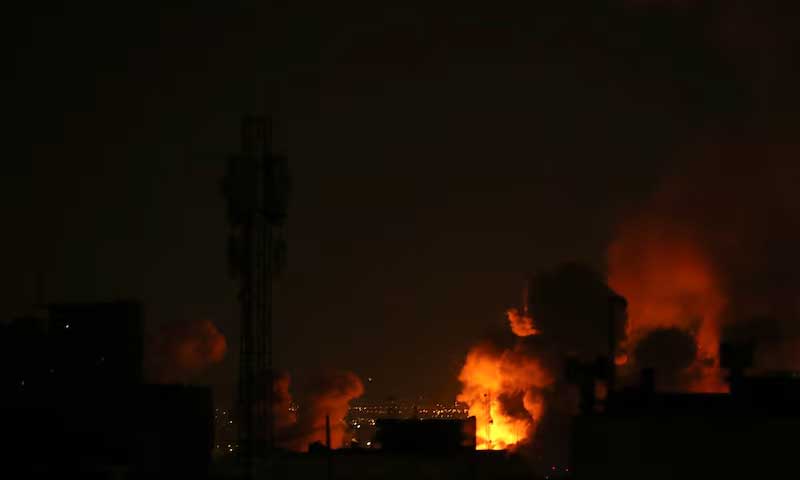
Iranian media claimed on Saturday that the United States and Israel had attacked Iran’s Natanz nuclear facility, one of the country’s most sensitive atomic sites.
According to the reports, there were no immediate indications of any release of radioactive material from the complex following the strike. Natanz has long been central to Iran’s nuclear programme, making any reported attack on the site a major escalation with potentially serious regional and international implications.
The claim, if confirmed, would mark another dangerous turn in the widening conflict, though the initial reports stressed that no radioactive leakage had been detected after the incident.
Middle East conflict widens as US sends Marines and oil shock deepens
Earlier Israel and Iran exchanged fresh attacks as the United States moved to reinforce its military presence in the Middle East, reflecting the growing risk that the war is sliding into a broader regional confrontation. The escalation comes as Washington prepares to send 2,500 Marines to the region, oil prices remain sharply elevated, and pressure mounts around the Strait of Hormuz, a vital artery for global energy supplies.
The latest round of fighting also extended beyond Iran and Israel. Israel said it struck Hezbollah-linked targets in Beirut after issuing evacuation warnings for seven neighbourhoods in the southern suburbs of the Lebanese capital. The strikes mark the deadliest spillover into Lebanon since Hezbollah entered the conflict in support of Tehran earlier this month. More than 1,000 people have been killed in Lebanon and over one million displaced, according to the report.
Fresh strikes widen the battlefield
Israeli attacks on Saturday targeted multiple locations inside Iran, including Tehran, Karaj and Isfahan, while air raid sirens sounded across Israel as Iranian missiles triggered a rush to shelters. Israeli authorities said there were no immediate reports of casualties from the latest wave, though search and rescue teams were dispatched to impact sites in central Israel. Since the war began, Iranian missile attacks have killed 19 people in Israel and the Palestinian territories.
The conflict also appeared to stretch deeper into the wider region when Iran reportedly fired two ballistic missiles at the US-British base on Diego Garcia in the Indian Ocean, though the missiles did not hit the installation. The reported strike highlighted the reach of Iran’s missile capability and added a new dimension to a war that is already straining military, diplomatic and energy systems across several regions at once.
US bolsters presence as allies hesitate
Against that backdrop, three US officials told Reuters that Washington would send 2,500 Marines, along with the amphibious assault ship Boxer and accompanying warships, to the Middle East. Their precise role has not been detailed, and officials said no decision had been made on sending troops into Iran itself. Still, the deployment is likely to deepen concerns that the United States is preparing for a longer and potentially more dangerous phase of the war.
President Donald Trump also lashed out at NATO allies, accusing them of cowardice for refusing to join efforts to reopen the Strait of Hormuz while fighting continues. Some allied governments have said they are willing to support measures to ensure safe passage through the waterway, but only if the fighting stops first. Germany and France have both taken that position, reflecting the unease among US partners over a war they say they were not consulted on before it began.
Energy, markets and leadership questions
The economic fallout is intensifying alongside the military confrontation. Oil prices have risen by around 50 per cent since the war began, while European natural gas prices surged as much as 35 per cent this week after attacks hit key energy infrastructure in Iran and Gulf states. United Airlines said it would cut scheduled flights by 5 per cent in the second and third quarters, citing the prospect of prolonged higher oil prices. Meanwhile, the Trump administration said it would temporarily waive sanctions to allow the sale of 140 million barrels of Iranian oil currently stranded on tankers, in a bid to increase supply and ease price pressure.
The war is also raising political questions inside Iran. As Muslims marked Eid al-Fitr and Iranians observed Nowruz, Supreme Leader Ayatollah Mojtaba Khamenei issued a defiant message but did not appear at Eid prayers. He has not been seen publicly since the opening Israeli strike that wounded him and killed his father, Ayatollah Ali Khamenei. His continued absence has fuelled uncertainty over Iran’s leadership at a moment of extraordinary pressure.
You May Also Like