- Web Desk
- 31 Minutes ago
Iran’s Ghalibaf, US Vance expected to lead Iran-US talks in Islamabad
-

- Web Desk
- 6 Minutes ago
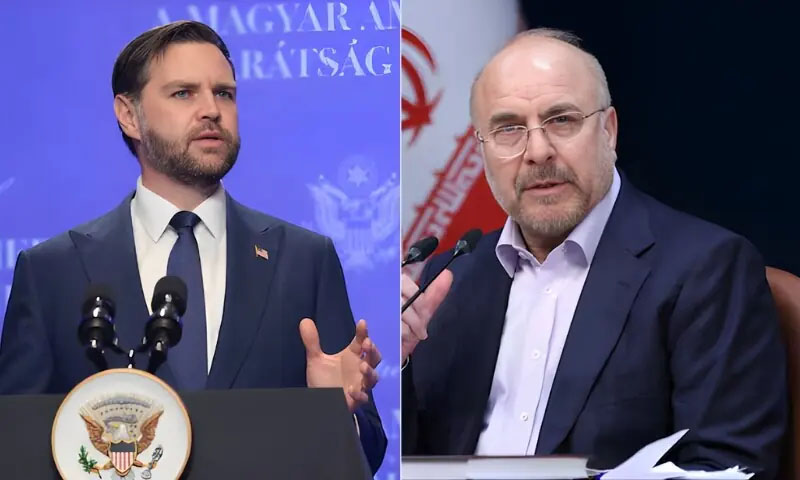
ISLAMABAD/TEHRAN/WASHINGTON: Iran’s parliament speaker Mohammad Bagher Ghalibaf and US Vice President JD Vance are expected to lead their respective delegations at high-stakes talks in Islamabad on Friday, as a fragile ceasefire between Washington and Tehran opens a narrow window for diplomacy.
Iran’s state news agency ISNA reported that Ghalibaf would head Tehran’s negotiating team, while Vance is likely to represent the United States, marking a rare high-level engagement between the two sides after weeks of escalating hostilities.
The talks follow a two-week ceasefire announced earlier after US President Donald Trump said he would halt military action against Iran following conversations with Prime Minister Shehbaz Sharif and Pakistan’s military chief Field Marshal Syed Asim Munir.
The truce, contingent on Iran ensuring safe passage through the Strait of Hormuz, has eased fears of a wider regional war and allowed diplomatic efforts to gain momentum.
Iran is expected to table a broad 10-point proposal during the Islamabad talks, covering not only its nuclear programme and regional security concerns but also the lifting of primary and secondary US sanctions imposed over the past four decades, according to ISNA.
The negotiations are likely to test whether both sides can move beyond the immediate ceasefire toward a more durable agreement, with deep mistrust still overshadowing relations.
Trump said he believed China had played a role in bringing Iran to the negotiating table, although Beijing has not provided details of its involvement. China’s foreign ministry said it welcomed the ceasefire and had consistently called for an immediate halt to hostilities and a return to political dialogue.
The ceasefire has drawn broad international support, with countries including France, Saudi Arabia and China praising Pakistan’s mediation efforts in helping secure the agreement.
The United Nations nuclear watchdog also welcomed the development, with International Atomic Energy Agency Director General Rafael Grossi saying the pause in fighting could pave the way for negotiations on Iran’s nuclear programme.
“The IAEA stands ready to support these efforts through its safeguards and verification role,” the agency said in a statement, signalling its readiness to play a part in any future agreement.
Pakistan, which facilitated backchannel contacts between Washington and Tehran, is positioning the Islamabad talks as a step toward a “conclusive agreement” to resolve longstanding disputes.
However, analysts caution that the path ahead remains uncertain, with major sticking points — including Iran’s nuclear ambitions, regional influence and sanctions relief — still unresolved.
While the ceasefire has brought temporary relief to global markets and reduced immediate risks of disruption to oil supplies, its success will ultimately depend on whether the Islamabad talks can translate a fragile truce into sustained diplomacy.
For now, the planned meeting between Ghalibaf and Vance underscores a tentative but significant shift — from confrontation toward negotiation — in one of the world’s most volatile geopolitical standoffs.
You May Also Like