- Web
- 1 Hour ago
Iran’s Guards claim strike on Netanyahu office in ‘tenth wave’ of attacks
-

- Web Desk
- Mar 02, 2026
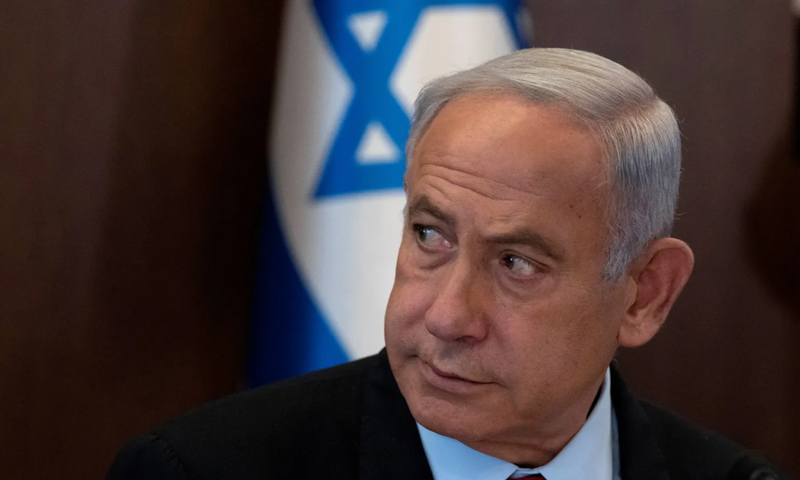
TEHRAN: Iran’s Islamic Revolutionary Guard Corps (IRGC) said on Monday it targeted the office of Israeli Prime Minister Benjamin Netanyahu and an Israeli Air Force command centre during the tenth wave of its missile strikes on Israeli territory, marking a further escalation in the widening Iran-Israel-US conflict in the Middle East.
In a statement, the elite force said missiles launched in the latest salvo successfully hit strategic sites linked to Israeli military and government leadership. Iranian claims could not be independently verified.
The developments come amid a broader regional war that has seen unprecedented strikes, counter-attacks and collateral incidents, including the downing of three U.S. F-15E fighter jets by friendly fire from Kuwaiti air defences, according to U.S. Central Command.
Conflict Background
The current hostilities erupted after joint U.S. and Israeli military strikes on Iran late last month, part of an operation Washington dubbed Operation Epic Fury, aimed at degrading Tehran’s missile, air defence and military command capabilities. Those initial strikes included attacks on Iranian cities, military installations and leadership targets, part of a sweeping campaign that foreign analysts said was planned over months.
Iran’s retaliation has been swift and far-reaching. Iranian missile and drone barrages have hit parts of Israel, Gulf Arab states hosting U.S. forces, and facilities linked to Western military presence. Explosions have been reported in cities including Dubai, Doha, Manama and Erbil, and Gulf nations have raised their internal alert levels as tensions continue to rise.
The conflict has also spilled into Lebanon, where militant group Hezbollah launched attacks into northern Israel, prompting Israeli airstrikes in Beirut that killed dozens and forced mass evacuations.
Friendly Fire Incident in Kuwait
In a stark illustration of the fog of war, a friendly-fire incident over Kuwait led to the accidental destruction of three U.S. F-15E Strike Eagle jets, U.S. Central Command said. All six crew members survived after ejecting safely and were reported stable. The mishap occurred in the course of combat operations where U.S. and allied aircraft were responding to Iranian missile and drone attacks over the Gulf.
Authorities in Kuwait said they are cooperating with U.S. forces in investigating the exact causes of the crash incidents and have reiterated that the safety of personnel is a priority.
Iran’s Strengthened Message
Iran’s latest claims reflect a significant shift in its offensive posture. Earlier waves of retaliation primarily targeted U.S. bases and allied infrastructure across the region, but striking at Israeli government and military command centres signals Tehran’s intention to escalate the conflict further.
Iranian state media and official statements have stressed that the assault on Israeli leadership installations is a direct response to what Tehran has described as “aggression” by U.S. and Israeli forces. Iran’s missile programme, including long-range Kheibar ballistic missiles, has been advanced by Tehran in recent years and is central to its claims of breaching parts of Israel’s Iron Dome defence system.
Regional and International Impact
The expanding conflict has prompted widespread concern among regional and global leaders. Airspace closures, disrupted civilian flights, and rising energy prices have underscored the economic fallout of the hostilities. International organisations and world capitals have issued urgent calls for restraint and diplomatic engagement to prevent further civilian casualties and broader instability.
Meanwhile, reports of missile barrages hitting civilian areas inside Israel have emerged, with cities such as Tel Aviv and Jerusalem experiencing explosions and air raid sirens. The Israeli government has extended its state of emergency and placed security forces on heightened alert.
Outlook
Analysts say the conflict’s trajectory remains highly uncertain, with the latest Iranian claims indicating a willingness to target critical leadership and command structures inside Israel. The unfolding crisis continues to draw in multiple actors across the Middle East, raising fears of a broader war that could further destabilise the region.
You May Also Like