- Web
- 1 Hour ago
Iran’s Revolutionary Guards take lead in wartime strategy, push hardline approach
-

- Web Desk
- Mar 04, 2026
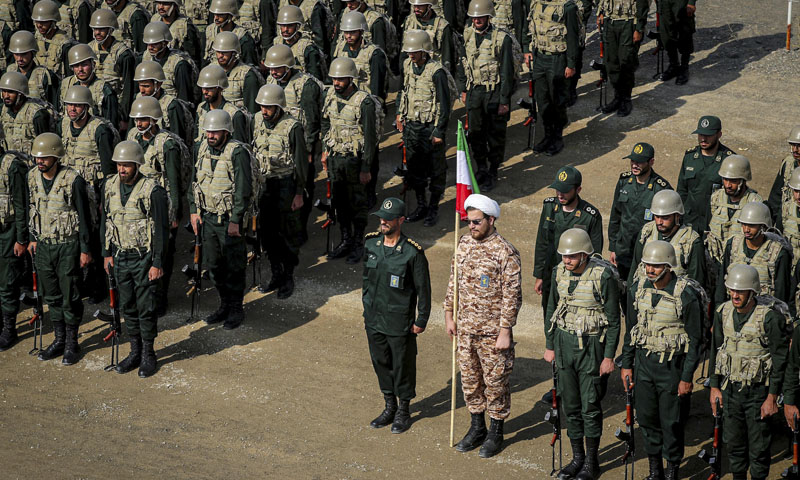
DUBAI: Iran’s elite Revolutionary Guards have tightened their control over wartime decisions, driving a hardline strategy in Tehran’s drone and missile campaign across the region, senior sources told Reuters.
The Guards had anticipated the loss of top commanders and delegated authority to lower ranks before the US-Israeli strike on Saturday. This ensures resilience but could risk miscalculation, with mid-ranking officers empowered to act, including strikes on neighbouring states. On Wednesday, Iran reportedly fired at Turkey, a NATO member.
Inside Iran, the Guards’ central role and strict internal security measures make protests or uprisings less likely, undermining hopes of regime change from foreign attacks.
The selection of the next supreme leader, after Ayatollah Ali Khamenei’s death, may further strengthen the Guards’ influence. Mojtaba Khamenei, his son and a likely successor, has close ties to the Guards and strong support from radical junior officers.
“If the conflict stops and the regime survives, the Guards will have an even bigger role,” said Kasra Aarabi, head of research on the Guards at U.S.-based policy group United Against Nuclear Iran.
Decentralised Command Key to Resilience
Sources said the Guards now play a major role in nearly every strategic decision. New head Ahmad Vahidi attends all top meetings, and the main goal is safeguarding Iran’s Islamic system.
Deputy Defence Minister Reza Talaeinik said the command structure has named successors three ranks down, ready to replace any killed commander.
The decentralisation strategy has been part of the Guards’ doctrine for nearly 20 years, developed after observing the collapse of Iraqi forces during the 2003 U.S.-led invasion.
“This ensures each province can defend itself and maintain the regime’s authority,” Aarabi said.
Guards Balance External and Internal Threats
The plan allows the Guards to lead Iran’s military response to attacks and maintain internal security. Sources say the approach has held so far, though continued strikes could test their ability to coordinate.
While the Guards have internal rivalries and factional differences, sources say they are “more united than ever under attack.” Some reports suggest command may be degrading, reflected in increasingly indiscriminate attacks on Gulf civilian targets.
Foreign Minister Abbas Araqchi told Al Jazeera the Guards operate based on pre-planned instructions, rather than direct orders from political leaders.
Political and Economic Power
Founded after the 1979 revolution, the Revolutionary Guards defend Iran’s Islamic system and act as a counterweight to regular armed forces. Reporting directly to the supreme leader, they have grown into a “state within a state,” with military, intelligence, and economic power.
The Guards gained experience during the Iran-Iraq war and have since expanded into Iran’s nuclear and energy sectors. They oversee major construction projects through Khatam al-Anbia and maintain networks of Shi’ite proxies across the Middle East. Their Basij paramilitary force enforces internal control and quells unrest.
Current top political leaders, including President Masoud Pezeshkian, Parliament Speaker Mohammad Baqer Qalibaf, and senior adviser Ali Larijani, all served with the Guards, cementing its influence in Iran’s wartime and peacetime governance.
You May Also Like