- Aasiya Niaz
- 17 Minutes ago
Israel’s escalation against Iran is producing massive economic costs: Israeli media
-

- Web Desk
- Mar 08, 2026
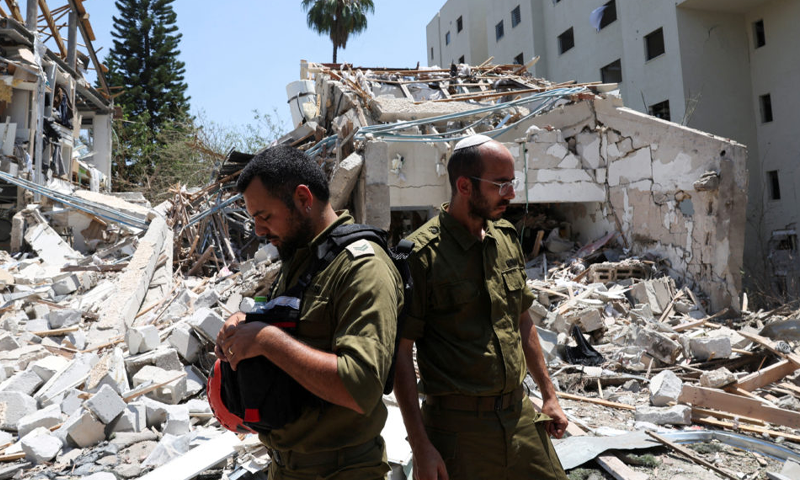
In the first week of the latest conflict with Iran, Israel’s air campaign has unleashed a torrent of military force, raising questions about the economic and strategic wisdom of its approach, said an article by Israeli newspaper Haaretz.
While Iranian missile attacks remain relatively limited, the toll on Israeli finances and infrastructure rivals – and may even surpass – the damage from the June 2025 Operation Rising Lion.
According to the Israeli Defense Forces, the air campaign, dubbed Operation Roaring Lion, has already seen around 4,000 munitions launched, roughly the total used during the entire 12-day 2025 conflict. The pace of Israeli sorties is now three times higher than during last year’s war, reflecting a massive escalation in offensive operations despite the modest scale of Iranian retaliation.
Defense Ministry officials met with executives from Israel Aerospace Industries, Elbit Systems, Rafael Advanced Defense Systems, and Tomer this week to discuss ramping up munitions production, signaling that the economic impact of Israel’s military ambitions is being actively managed for corporate as well as national benefit.
The financial burden is staggering. Each Israeli airstrike costs tens of thousands of shekels, but intercepting Iranian missiles carries far higher stakes. With over 200 ballistic missiles launched at Israel since the weekend, each Arrow 2 or Arrow 3 interceptor costs approximately $2.5 million, bringing the estimated defense expenditure to between 1 billion and 2 billion shekels. Added to this are the hundreds of millions spent on bombs and drone interceptions. Analysts note that these purchases generate significant revenue for Israel’s defense industries, blurring the line between national security and commercial interest.
The operational strain on the Israel Air Force is also apparent. Aircraft have flown roughly 1,600 sorties in the past four days – nearly matching the total from June 2025. Extended missions are now enabled by US aerial refueling support, allowing jets to spend more time in the air. While this expands Israel’s reach, it exacerbates wear and tear on aircraft and pilot fatigue, potential costs often overlooked in government briefings.
Iranian attacks, by contrast, remain relatively restrained. The largest Iranian missile salvo has involved just 15 rockets, a fraction of the 100-missile barrages seen in 2025. Yet, even this “sparse” fire has triggered nationwide alerts, imposed severe restrictions on civilian life, and disrupted commerce. Drone attacks, increasingly common, have heightened public anxiety as warning systems strain to provide real-time alerts.
Experts suggest that Israel’s defensive posture is as much a political and commercial exercise as a security necessity. Ran Kochav, a former commander of Israel’s missile defense, notes that interceptors are finite, and American support – previously focused almost exclusively on Israel – is now stretched across multiple theaters, raising both strategic and financial pressures on the country.
Even with limited Iranian strikes, Israel’s campaign is producing massive economic costs, public disruption, and military overextension. While government officials tout technological superiority and air dominance, the unfolding operation illustrates the high price of aggressive military escalation, raising doubts about whether the country’s approach is proportionate or sustainable in the long term.
You May Also Like