- WEB DESK
- October 26, 2026
JD Vance lands in Switzerland for high-stakes US-Iran peace talks
-

- Zafar Ali
- June 21, 2026

ZURICH/DUBAI/WASHINGTON: US Vice President JD Vance arrived in Switzerland on Sunday for high-stakes peace talks with Iran aimed at securing a lasting end to the two countries’ nearly four-month conflict, as uncertainty over the status of the Strait of Hormuz threatened to complicate negotiations.
The United States and Iran have agreed to observe a 60-day ceasefire during the talks. However, Iran’s Islamic Revolutionary Guard Corps announced on Saturday that the Strait of Hormuz had been closed in response to Israeli strikes in Lebanon, a claim disputed by the U.S. military, which said commercial shipping through the strategic waterway continued uninterrupted.
The dispute over the strait comes as Washington and Tehran seek to build on an interim agreement brokered by Pakistan and signed on Wednesday by U.S. President Donald Trump and Iranian President Masoud Pezeshkian to end hostilities.
Vance and Second Lady Usha Vance landed at Emmen Air Base in Switzerland early Sunday, according to a spokesperson for the vice president.
Speaking before departing from Joint Base Andrews in Maryland, Vance said he hoped the talks would produce progress on Iran’s nuclear programme and efforts to sustain the ceasefire in Lebanon.
“We’re going to hopefully make progress on the nuclear issue, make progress on the Lebanon ceasefire issue,” Vance told reporters, adding that negotiations were expected to last “a couple days.”
Iran’s Revolutionary Guards warned that ships approaching the Strait of Hormuz would face risks, accusing Israel of violating U.S. commitments under the Lebanon ceasefire through continued military action.
Despite the warning, U.S. Central Command said 55 merchant vessels carrying more than 17 million barrels of oil transited the waterway on Saturday and pledged to ensure freedom of navigation.
President Trump said commercial vessels would not face tolls for passing through the strait during the ceasefire period or afterwards unless peace negotiations collapsed.
In a social media post, Trump suggested the United States could impose a toll in the future “for services rendered as the Guardian Angel to the countries of the Middle East” if talks failed to produce a lasting peace agreement.
Mohammad Mokhber, an adviser to Iran’s supreme leader, accused Washington of failing to implement the first provision of the 14-point agreement, which calls for a ceasefire “on all fronts,” including Lebanon.
He warned that Middle East energy exports would remain disrupted until the agreement was fully implemented.
Iranian Oil Minister Mohsen Paknejad, however, said hundreds of investment opportunities would become available if Western countries honoured the spirit of the agreement.
The Iranian delegation is being led by chief negotiator Mohammad Baqer Qalibaf and includes Foreign Minister Abbas Araqchi along with senior security, central bank and energy officials, Iranian media reported.
The U.S. delegation includes Vance, special envoy Steve Witkoff and Jared Kushner, President Trump’s son-in-law.
Iranian Foreign Ministry spokesperson Esmaeil Baghaei said Tehran would press Washington to fulfil its commitments, citing previous failures to honour agreements.
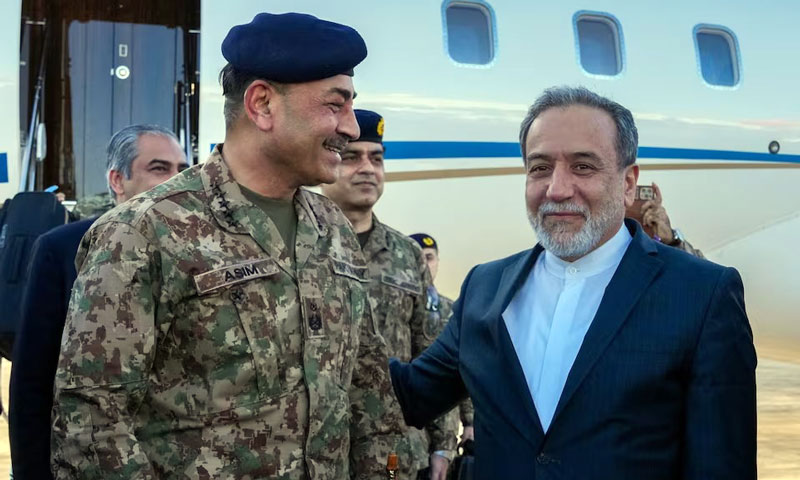
Pakistan said Prime Minister Shehbaz Sharif and Chief of Defence Staff Field Marshal Syed Asim Munir had arrived in Switzerland to participate in the weekend negotiations.
In an interview with Fox News before departing, Vance said he remained confident the ceasefire would hold and that he had seen no evidence the Strait of Hormuz had actually been closed.
Meanwhile, violence continued in Lebanon despite the ceasefire. Lebanese civil defence officials said Israeli strikes killed 20 people on Saturday, while Israel said it was responding to attacks by the Iran-backed Hezbollah group.
Hezbollah said it would not allow Israel “freedom of movement” inside Lebanon.
Israel has maintained that it is not a party to the U.S.-Iran agreement and will continue military operations against perceived threats. Its military said it remained committed to the Lebanon ceasefire while reserving the right to respond to security risks.
Israeli broadcaster Channel 12 reported that Prime Minister Benjamin Netanyahu and the defence minister had instructed the military to halt offensive operations in Lebanon but would not withdraw from territory captured during the conflict.
A poll conducted by the Hebrew University of Jerusalem and obtained by Reuters showed about 92 per cent of Israelis believe Iran emerged in a stronger position than Israel following the joint U.S.-Israeli military campaign, while fewer than one in 10 viewed Israel as the victor.
Nearly 90 per cent of respondents said Israel had failed to achieve its war objectives, and fewer than 30 per cent believed Netanyahu’s claims of major military success.
Lebanon’s health ministry says Israeli attacks have killed 4,057 people since March 2, including women, children and medical workers. Israel says at least 32 soldiers and four civilians have been killed in fighting with Hezbollah.
You May Also Like