- Reuters
- October 7, 2026
JD Vance meets PM Sharif, Field Marshal Asim Munir ahead of crucial US-Iran talks
-

- Zafar Ali
- June 21, 2026
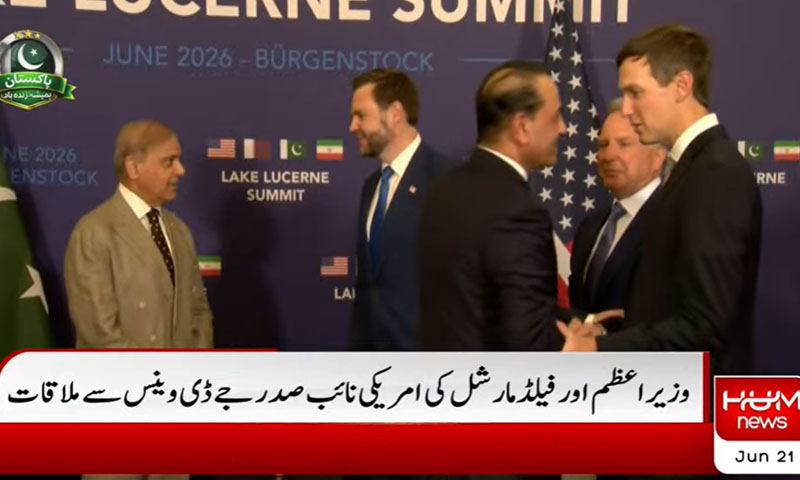
BÜRGENSTOCK, Switzerland: US Vice President JD Vance met with Prime Minister Shehbaz Sharif and Chief of Defence Forces Field Marshal Syed Asim Munir on Sunday ahead of high-stakes, technical-level peace negotiations between Washington and Tehran.
The meeting, held in a cordial atmosphere at the Swiss mountaintop resort of Bürgenstock, was also attended by senior US envoys Jared Kushner and Steve Witkoff.
According to diplomatic sources, the discussion focused on the implementation matrix of the newly finalised “Islamabad Memorandum of Understanding (MoU),” with Vance expressing appreciation for Pakistan’s pivotal mediation in bringing both global superpowers back to the negotiating table.
According to sources, JD Vance praised Pakistan’s role in facilitating peace efforts, saying Islamabad had played a “significant and constructive” part in recent diplomatic initiatives.
Vance said Pakistan had made an “important contribution” to promoting regional stability and expressed appreciation for its diplomatic engagement, officials said.
“We are grateful for what you have done,” Vance told Field Marshal Syed Asim Munir during their interaction, according to sources.
The US vice president also said, “We love Pakistan,” while acknowledging Islamabad’s role in supporting dialogue efforts, officials added.
Vance noted that Pakistan’s role in US-Iran negotiations had been “excellent,” highlighting what he described as Islamabad’s constructive diplomacy, according to participants familiar with the meeting.
Separately, US envoy Steve Witkoff referred to Field Marshal Munir as “my brother” during an interaction and embraced him, according to officials present at the meeting.
The diplomatic huddle comes immediately after the United States and Iran signed a historic framework agreement on Wednesday, aiming to end a bitter four-month military conflict that had severely disrupted global energy markets and triggered an international economic crisis.
Under the brokered terms of the Islamabad MoU, both Washington and Tehran agreed to an immediate 60-day ceasefire to iron out long-standing disputes regarding Iran’s nuclear program and regional security.
As part of the interim deal, the US agreed to lift its sweeping economic blockade of Iran and permit the reopening of the strategic Strait of Hormuz shipping lane.
Pakistan, leveraging its unique diplomatic ties with both Washington and Tehran, acted as the primary backchannel facilitator for the peace pact.
The Bürgenstock sessions represent the first formal operationalisation of the agreement, where technical delegations are working to ensure the durability of the maritime truce amid ongoing regional volatility in Lebanon.
The negotiations come under a 60-day ceasefire agreement, though tensions escalated on Saturday after Iran’s Islamic Revolutionary Guard Corps declared the Strait of Hormuz shut in response to Israeli strikes in Lebanon. The US military, however, said commercial shipping through the waterway continued uninterrupted.
The dispute threatens to complicate talks aimed at advancing an interim deal brokered by Pakistan and signed last week by US President Donald Trump and Iranian President Masoud Pezeshkian to end nearly four months of war.
Vance arrived at the scenic Buergenstock resort after landing at Emmen Air Base earlier in the day, accompanied by Second Lady Usha Vance. The venue, accessed via a narrow road lined with security checkpoints and armed guards, has been placed under tight security with helicopters seen circling overhead.
Vance hopeful of progress on nuclear, Lebanon issues
Switzerland’s Federal Department of Foreign Affairs said the talks, including mediators, were expected to begin during the morning.
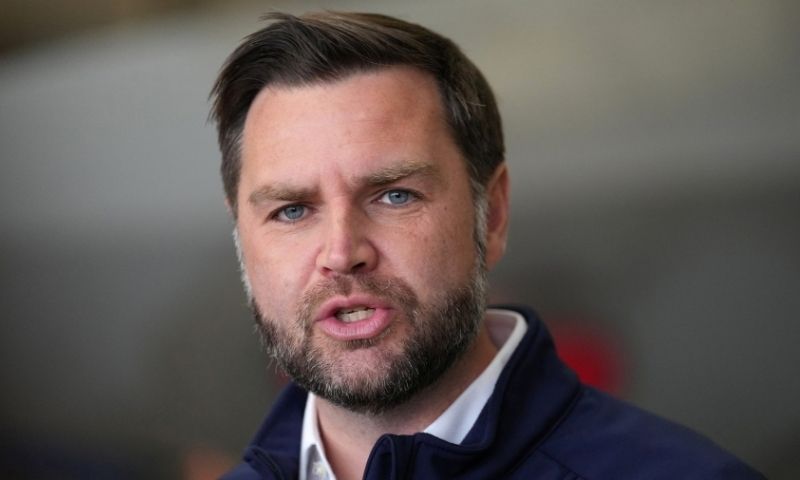
Speaking before departing Washington, Vance said he hoped the discussions would yield progress on both the nuclear file and the Lebanon ceasefire.
“I think we’re going to hopefully make progress on the nuclear issue, make progress on the Lebanon ceasefire issue,” he told reporters, adding that talks could last “a couple of days.”
Iran’s Revolutionary Guards warned that vessels approaching the Strait of Hormuz could be at risk, accusing Israel of violating ceasefire commitments through continued strikes in Lebanon.
Despite the warning, US Central Command said 55 merchant vessels carrying more than 17 million barrels of oil transited the strait on Saturday, vowing to ensure continued commercial navigation.
US President Donald Trump said there would be no toll for passage through the strait during the ceasefire or after, unless Washington decided otherwise if negotiations failed.
In a social media post, Trump suggested the US could impose a future toll “for services rendered as the Guardian Angel to the countries of the Middle East” if a peace deal is not reached.
Iran accuses US of failing commitments
Mohammad Mokhber, an adviser to Iran’s supreme leader Ayatollah Ali Khamenei, accused Washington of failing to implement key provisions of the agreement, including a ceasefire across all fronts.
He said energy flows in the region would remain disrupted until commitments were fully implemented.
Iranian Oil Minister Mohsen Paknejad, however, said hundreds of investment opportunities could open if Western stakeholders adhered to the spirit of the agreement, according to the ministry’s news outlet Shana.