- Web
- 2 Hours ago
Karachi fire inquiry highlights narrow roads, delayed response, and 17 years of negligence at Gul Plaza
-

- Web Desk
- Feb 23, 2026
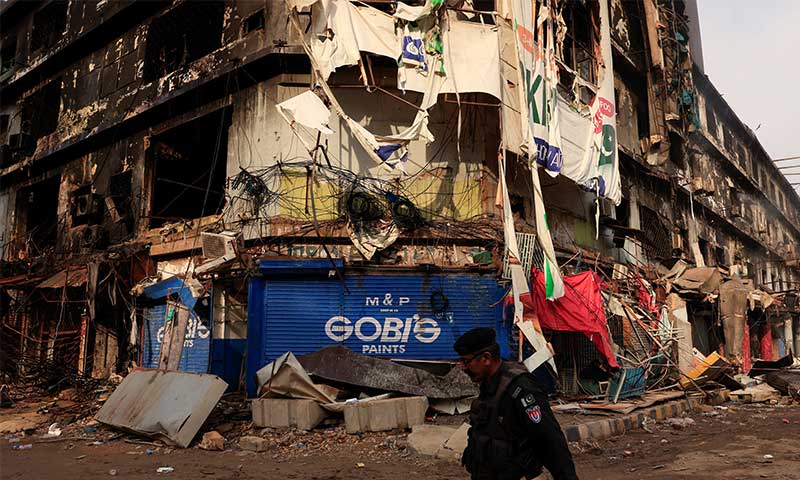
WEB DESK: The Sindh High Court’s judicial commission is carrying out detailed hearings into the Gul Plaza fire, examining the causes of the disaster, emergency response procedures, and potential lapses in construction and safety standards. The inquiry has drawn testimony from traffic and rescue officials, as well as representatives of Karachi Electric, highlighting both operational challenges and longstanding regulatory failures.
Road access and emergency deployment under scrutiny
SSP Traffic Ejaz Sheikh told the commission that roads near the site were immediately blocked following the fire. He emphasised that the affected road serves public transport and had to be cleared for fire tenders, water bowsers, and other rescue vehicles. Sheikh also raised concerns about the adequacy of road widths during emergencies, noting that while the fire-affected road measured only 15 feet, ongoing development work further restricted access.
Addressing operational protocols, Sheikh said emergency teams were dispatched promptly once the fire was reported to South Control at 11:36 am. He added that earlier practices of conflict resolution and on-the-spot mediation had now shifted to documenting incidents on video, reflecting changes in public safety procedures.
Children playing with fire identified as initial cause of Gul Plaza blaze
During testimony before the judicial commission, former SSP City Arif Aziz stated that preliminary evidence indicates the blaze was sparked when two children were playing with fire. According to Aziz, police personnel arrived at the scene immediately after the fire was reported, and he himself remained on site, with the team stationed there continuously for nine days and nights.
The children were questioned and provided statements admitting that their actions had caused the fire. When asked about CCTV footage, Aziz noted that most of the building’s DVRs had been destroyed in the blaze, though one basement DVR was recovered containing some video evidence showing the association president and others evacuating the premises. Aziz concluded that while the children’s actions were the primary cause of the fire, the materials stored inside the building contributed to the rapid spread. Gul Plaza, one of Karachi’s major commercial centres, was destroyed in the fire, resulting in multiple deaths and the loss of billions of rupees in merchandise, prompting the formation of the commission to determine the cause.
Electricity shutdown and firefighting challenges
The commission also questioned Karachi Electric’s CEO regarding the decision to cut electricity to the building after the fire broke out. The official acknowledged that water used in firefighting may have unintentionally contributed to the blaze’s intensity, but maintained that rapid deployment of teams helped save lives. He confirmed that his appointment to the role was recent and stressed adherence to emergency guidelines.
Construction lapses and long-term accountability
Separately, MQM leader Farooq Sattar informed the commission that evidence documenting 17 years of mismanagement and negligence related to Gul Plaza’s construction would be submitted. He criticised irregularities and alleged malpractice, stating that previous petitions filed on 18 February had yet to be addressed by the commission chair. Farooq Sattar urged that all shortcomings in construction, safety compliance, and oversight be thoroughly examined.
Aiming to prevent future tragedies
The hearings aim to establish accountability for the tragic loss of life, review emergency preparedness, and propose measures to prevent similar disasters. Officials reiterated the importance of learning from past lapses to safeguard public safety in densely populated areas and ensure timely access for rescue and firefighting operations.
You May Also Like