
- Web
- 19 Minutes ago
Khawaja Asif warns Rajnath Singh: War between nuclear states would have drastic consequences
-

- Web
- 3 Minutes ago
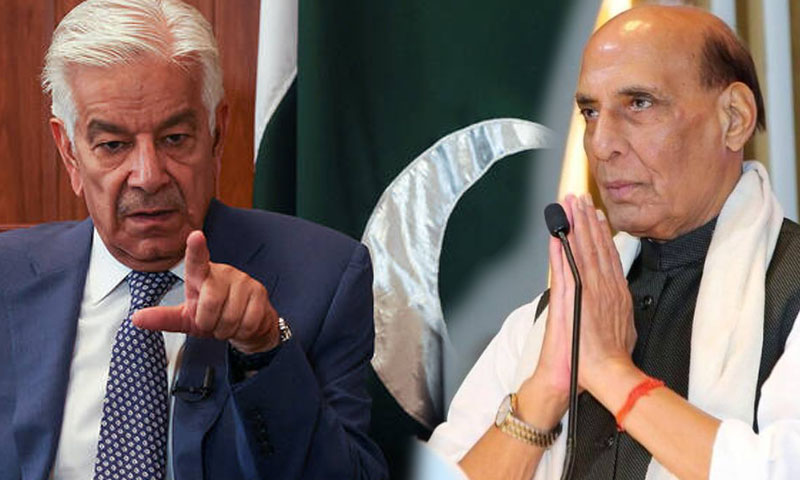
Pakistan’s Foreign Minister Khawaja Asif issued a stern warning to Indian counterpart Rajnath Singh, cautioning that any notion of war between two nuclear-armed neighbors is “inconceivable” and would carry drastic consequences.
Asif’s remarks come amid rising tensions between Pakistan and India, particularly around the anniversary of the Pahalgam attack, which Pakistan has described as a “staged False Flag Operation” that failed to withstand international scrutiny.
“Repeated rhetoric reflects not strength, but visible strategic anxiety,” Asif said, framing India’s tough statements as externalizing internal fragility rather than genuine power. He urged New Delhi to address the “growing unease within its own strategic and diplomatic space” instead of resorting to provocative posturing.
Recalling Pakistan Armed Forces’ response during last year’s Marka-e-Haq operation, Asif warned that miscalculations have consequences. “Marka-e-Haq remains fresh in our minds. The next time, our response will be even more forceful and decisive. Let there be no ambiguity,” he asserted.
While emphasizing Pakistan’s commitment to peace and regional stability, Asif made it clear that the country is fully prepared to defend its sovereignty with a “swift, calibrated, and decisive response” if provoked.
Tensions between the two nuclear neighbors escalated following the April 22 Pahalgam attack. India responded with a series of aggressive measures the next day, including suspending the Indus Waters Treaty, cancelling visas for Pakistani citizens, closing the Wagah-Attari border crossing, and shutting down the Pakistan High Commission in New Delhi. Diplomatic staff numbers were subsequently reduced on both sides.
Pakistan rejected the accusations and took reciprocal measures through its National Security Committee, including halting trade with India and closing Pakistani airspace to Indian aircraft.
The standoff intensified in early May when the Indian Air Force launched attacks on civilian targets in Pakistan, prompting the Pakistan Air Force to retaliate, shooting down at least six Indian jets, including three French-built Rafales. India escalated further with strikes on military targets, leading Pakistan to respond with Operation Bunyanum Marsoos, targeting Indian military installations, airbases, and missile storage sites.
The conflict drew international attention, and intense diplomatic efforts led by then US President Donald Trump culminated in a ceasefire on May 10. Both sides gradually reduced troop deployments along the border in the following weeks.
Asif’s statement is a direct warning to India against repeating aggressive acts, highlighting the catastrophic potential of miscalculations between nuclear states. His message underlines Pakistan’s dual stance: a commitment to peace and stability, paired with readiness to defend its sovereignty decisively.
You May Also Like