- Usman Khan
- September 16, 2026
KP issues Congo virus health alert ahead of Eidul Adha
-

- Zafar Ali
- May 26, 2026
By Manahil Faisal
PESHAWAR: The Khyber Pakhtunkhwa government has issued a health emergency alert ahead of Eidul Adha over concerns about the spread of Congo virus, directing hospitals to remain on high alert during the holiday period.
According to an advisory issued by the KP health department, all emergency and trauma services will remain operational without interruption during the Eid holidays, with 24-hour availability of doctors and medical staff.
It said that special helplines for suspected Congo virus cases would be established in hospitals to facilitate early response and treatment.
The health department said that screening systems would be activated to ensure early detection of suspected patients, while rapid response teams would remain on standby to deal with any potential outbreak.
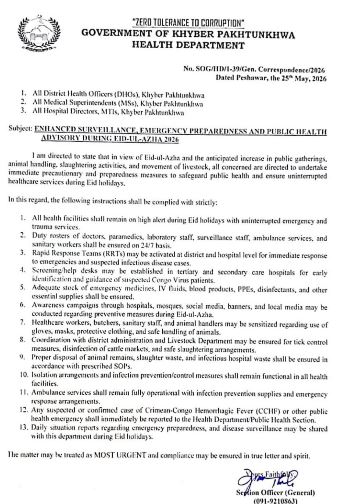
Hospitals have also been instructed to maintain sufficient stocks of medicines, blood supplies and protective equipment to handle emergencies during the festive period.
The health department said that an awareness campaign will be launched across the province to educate the public about preventive measures against the Congo virus, officials said.
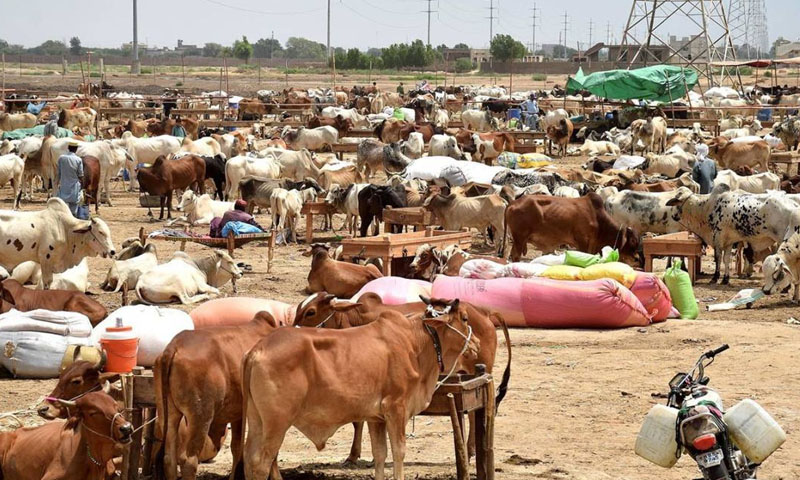
Butchers and livestock handlers have been advised to use gloves and masks, while authorities said disinfectant sprays and tick-control measures would be implemented in cattle markets.
The health department said that animal waste and hospital waste would be disposed of in accordance with standard operating procedures.
Daily situation reports will also be compiled and reviewed during the Eid period to monitor developments, it added.
According to recent health reports, Pakistan recorded 82 confirmed Congo virus cases and 20 deaths in 2025. Health experts said infections tend to rise around Eidul Adha due to increased human-animal interaction.
They cited research conducted in Khyber Pakhtunkhwa during Eidul Adha 2023, which showed a noticeable post-Eid increase in cases, with many patients reporting direct exposure to sacrificial animals.
Medical expert Dr Attaullah Muhammad Khan urged the public to follow strict hygiene measures while handling animals and during sacrifice.
“People should sanitise regularly, wear gloves during sacrifice and avoid touching animals with bare hands. It is also important to keep surroundings clean to prevent the spread of disease,” he said.
He also advised washing hands thoroughly with soap, wearing masks in crowded cattle markets, avoiding direct contact with animal blood, and ensuring proper disposal of animal waste after sacrifice.
Health experts have urged local authorities to maintain cleanliness in cattle markets and residential areas to reduce the risk of disease outbreaks during Eid celebrations.
They also advised citizens to seek immediate medical attention if they develop symptoms such as fever, body aches, bleeding or weakness after contact with animals.
With Eidul Adha approaching and livestock movement increasing across the country, experts stressed that public awareness and hygiene measures remain key to preventing the spread of infectious diseases.
You May Also Like


- WEB DESK
- September 16, 2026
Pakistan extends airspace ban on Indian aircraft until Oct 24

- Reuters
- September 16, 2026