- Web Desk
- 56 Minutes ago
Kurt Cobain may have been murdered as new report challenges suicide ruling
-

- Aasiya Niaz
- Feb 11, 2026
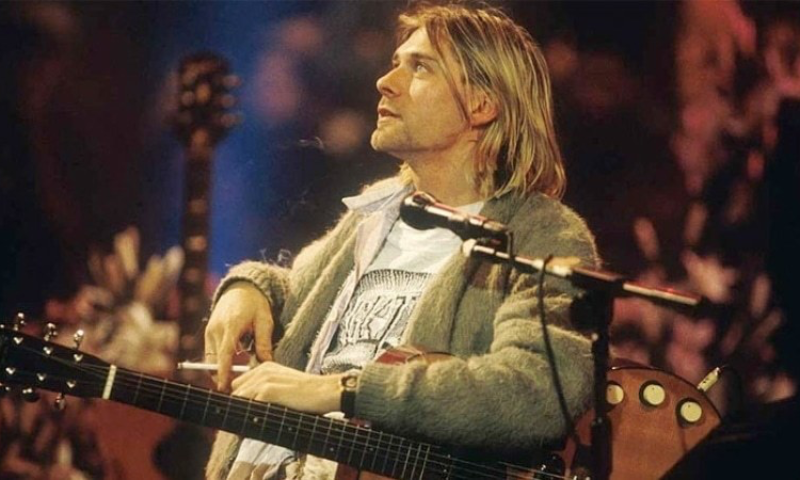
Fresh claims surrounding the death of Nirvana frontman Kurt Cobain are reigniting long-running controversy, with a forensic specialist urging authorities to reopen the case nearly three decades after his death.
Brian Burnett, a forensic expert working alongside a team of private researchers, has called on the Seattle Police Department to re-examine Cobain’s 1997 death, arguing that evidence from the autopsy does not align with a self-inflicted gunshot wound.
Cobain was found dead at his Seattle home on April 5, 1997, aged 27. The official ruling concluded that the musician died by suicide from a shotgun wound, a determination that has remained unchanged for almost 30 years.
However, Burnett and his team now claim Cobain may have been drugged without his knowledge and died from a heroin overdose before being shot, allegedly to stage the scene as a suicide.
Independent researcher Michelle Wilkins said elements of the autopsy report raised serious questions.
“There are things in the autopsy that make you pause,” Wilkins said. “The necrosis of the brain and liver occurs in an overdose. It does not happen in a shotgun death.”
Wilkins also challenged the feasibility of Cobain being physically capable of taking his own life if he had already been incapacitated.
“He’s dying of an overdose. He can barely breathe, his blood isn’t circulating properly,” she said. “He would essentially be in a coma. The logistics of him carrying this out just don’t add up.”
Despite the renewed claims, the King County Medical Examiner’s Office has dismissed the allegations, saying no new evidence has been presented that would justify reopening the case.
“Our office is always open to revisiting its conclusions if new evidence comes to light,” a spokesperson said. “However, we have seen nothing to date that would warrant reopening this case or changing our previous determination of death.”
The Seattle Police Department has also rejected multiple requests over the years to reopen the investigation.
Wilkins said the researchers are seeking verification, not speculation.
“If we’re wrong, just prove it to us,” she said. “That’s all we’re asking.”
You May Also Like