- WEB DESK
- September 2, 2026
Lahore’s traffic cacophony puts hearing and health at risk
-

- Talha Saeed
- September 2, 2026
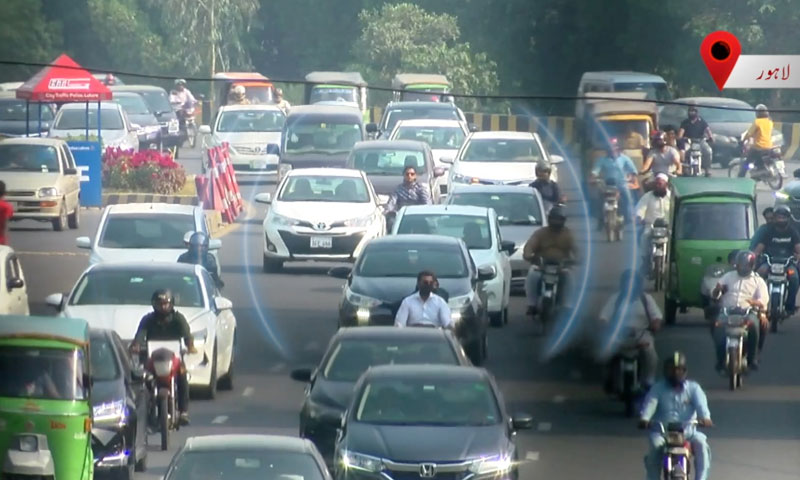
LAHORE: The roar of traffic, blaring horns and noisy rickshaws have become part of daily life in Lahore, with doctors and environmentalists warning that the city’s growing noise pollution is taking a toll on public health.
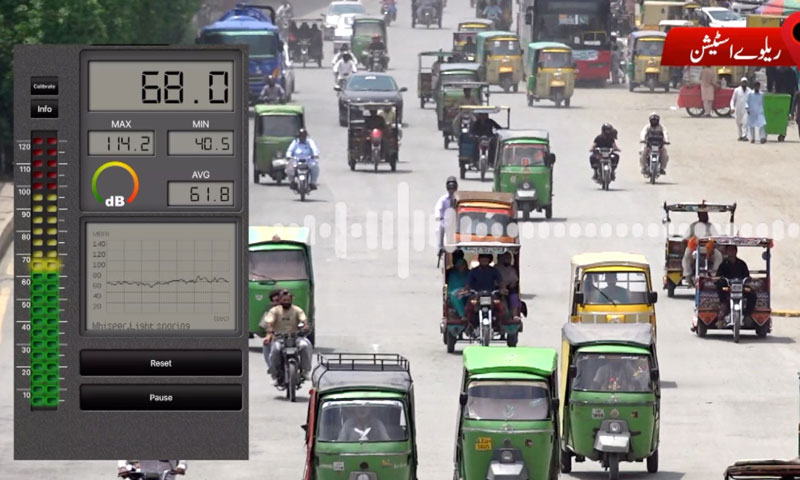
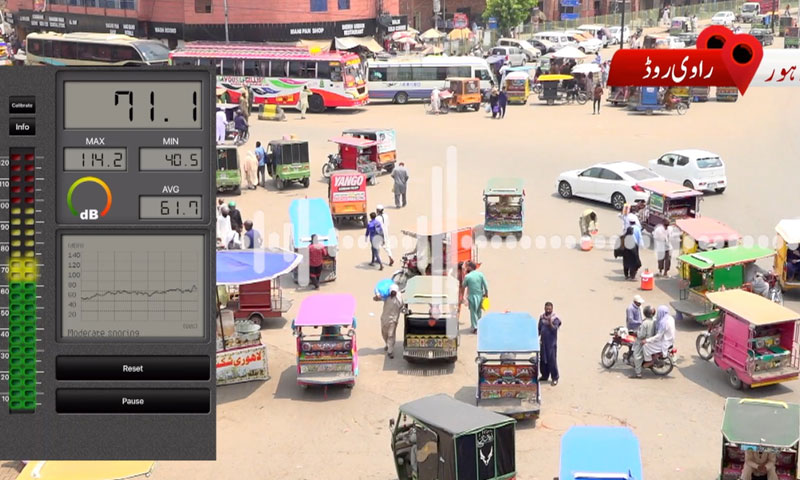
On Ferozepur Road, one of Lahore’s busiest arteries, a sound meter showed noise levels of more than 70 decibels during filming by a HUM News team.
“During recordings, we normally turn off the camera’s ambient audio. But today we are keeping it on so you can hear the noise we live with,” HUM News reporter said in a piece-to-camera.
For many residents, the noise has become so routine that it is barely noticed.
Qingqi rickshaws are among the prominent sources of noise on Lahore’s roads.
Drivers said the constant sound from their vehicles can make communication difficult and leave them exhausted.
“It is the noise of the rickshaw. Driving it all day affects your head,” one driver said.
Another driver said passengers often have to tap him on the shoulder because their voices cannot be heard over the engine noise.
The effects can be more serious for people who spend years working in noisy environments.
Muhammad Ramzan, a taxi driver, said he has lost hearing in one ear and has only limited hearing in the other.
“My hearing in one ear is completely gone. There is only a little hearing left in the other,” he said.
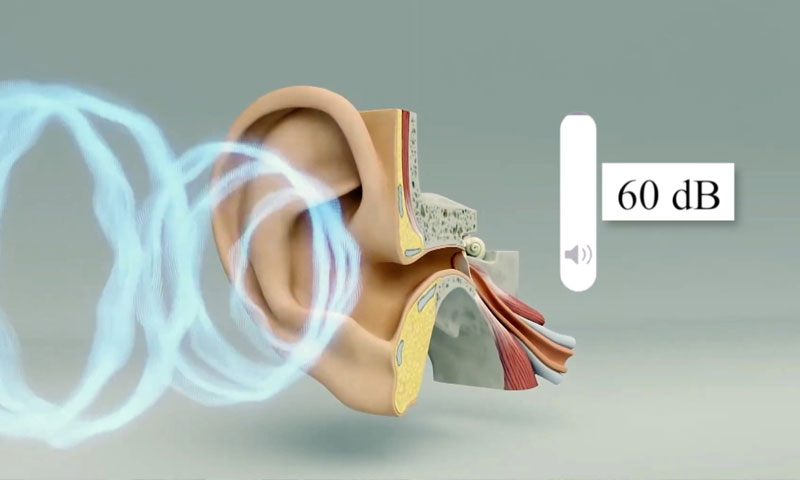
Doctors said prolonged exposure to loud noise can damage the sensitive cells and nerves responsible for hearing.
“Noise above 60 decibels can affect the auditory nerve and lead to hearing impairment,” said Dr Nakhbatullah Awan.
Noise exposure can also affect mental health, experts said, contributing to stress and irritability.
“Constant noise can keep a person in a fight-or-flight state because of increased cortisol levels. It can make people irritable and affect their relationships at home,” one expert said.
Authorities said Lahore has only a limited number of designated silence zones, including parts of Jail Road and the area around Jinnah Hospital in Faisal Town.
Environmental Protection Agency (EPA) Deputy Director Environment Ali Ejaz said the agency is conducting surveys to identify hospitals and schools that could be declared silence zones.
“There were very few areas in Lahore that had been declared silence zones. The EPA Punjab is now conducting surveys so that areas with hospitals and schools can be declared silence zones,” he said.
Pakistan’s laws already provide penalties for excessive noise from vehicles and sound systems.
Lawyer Nasir Kamboh said provisions under the Motor Vehicles Ordinance and Pakistan Penal Code provide for fines and prison sentences for certain offences involving excessive noise.
Lahore Traffic Police said it is also taking action against vehicles fitted with pressure horns.
Chief Traffic Officer Abdul Raheem Shirazi told HUM News that police issued 44,000 challans this year to vehicles using loud horns.
“We are taking action on our own. Amendments to the laws are also needed. Areas around schools and hospitals should be declared no-horn zones,” he said.
But officials and experts said enforcement alone may not be enough.
With traffic continuing to grow in one of Pakistan’s largest cities, reducing noise pollution will also require greater public awareness and changes in driving behaviour.
You May Also Like