
- Alishba Khattak
- October 21, 2026
Large quantity of flood-hit wheat found during raid at Nowshera depot
-

- Waqas Buneri
- October 21, 2026
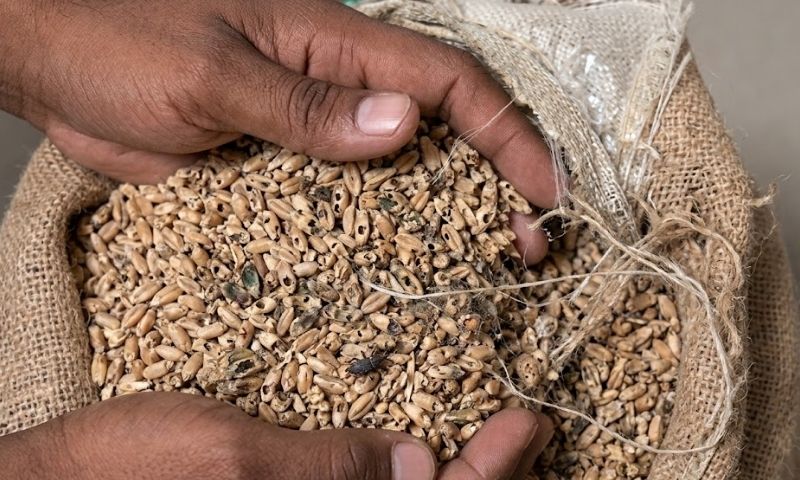
PESHAWAR: An inquiry into the supply of substandard wheat from a government warehouse in Khyber Pakhtunkhwa has found that floodwater damaged wheat stocks at the Adazai Khail depot in Nowshera, rendering the affected grain unfit for human consumption, according to an investigation report submitted to the provincial governor.
The report recommended action against officials responsible for negligence and called for the immediate suspension of supplies of the affected wheat to flour mills, following laboratory tests that found the flood-damaged grain unsuitable for human consumption.
The Governor’s Inspection Team inspected the government wheat depot, which covers about 150 kanals, and found that six warehouses located in two blocks had been affected by floodwater, according to the report.
Samples of the damaged wheat were sent to the Pakistan Council of Scientific and Industrial Research (PCSIR) laboratory for analysis. The laboratory concluded that the flood-affected and deteriorated wheat was harmful to human health and unsuitable for use as food, the report said.
The inquiry also found that adequate protective measures had not been taken to safeguard the warehouse against floodwater. Precautionary steps were not adopted despite a flood alert issued by the Provincial Disaster Management Authority (PDMA), it added.
The report further noted that the Food Department had not established a technical assessment committee after the flooding to evaluate the quality of the wheat stocks.
The findings follow complaints by the Pakistan Flour Mills Association’s Khyber Pakhtunkhwa chapter, which said earlier this week that the department was forcing flour mills to accept damaged wheat mixed with good-quality grain.
Association president Naeem Butt had alleged that government wheat worth Rs3.5 billion had been damaged by floodwater at the Adazai Khail warehouse. He said the affected grain posed a serious health risk and that flour mills would refuse to use it in flour production.
Butt also alleged that mills had been threatened with suspension of government wheat supplies if they refused to collect the damaged stocks. The association had demanded a transparent investigation and given the authorities a week to address its concerns.
The inquiry report now recommends disciplinary action against the officials found responsible for negligence. It also calls for the immediate cessation of supplies of the unfit wheat to flour mills, while the governor has directed the authorities to stop its distribution.
The report does not specify the quantity of wheat affected by the flooding or establish the total financial loss attributable to the damaged stocks.
The association had separately complained that the provincial government was releasing only 3,000 tonnes of wheat against an estimated daily requirement of 12,000 tonnes in Khyber Pakhtunkhwa. It also called for intervention to address restrictions affecting wheat transportation from Punjab to the province.
The latest findings add to concerns over the management and distribution of government wheat stocks in the province, where flour mills rely on official supplies to meet part of the demand for wheat flour.
The investigation has identified shortcomings in flood preparedness and the post-flood assessment of stored wheat. The recommended action against the responsible officials and the suspension of supplies are intended to address the immediate food-safety concerns.
The Food Department and the officials identified as responsible were not quoted in the information available about the report. Their responses to the findings and the allegations made by the flour mills association were not immediately available.
You May Also Like



- Reuters
- October 21, 2026
Australia forced to follow-on after being bowled out for 99
- AFP
- October 21, 2026
