
- WEB DESK
- October 17, 2026
Lawmakers grill PIMS officials over fire that killed 14 babies, demand arrest of suspended chief
-

- Saba Bajeer
- August 31, 2026
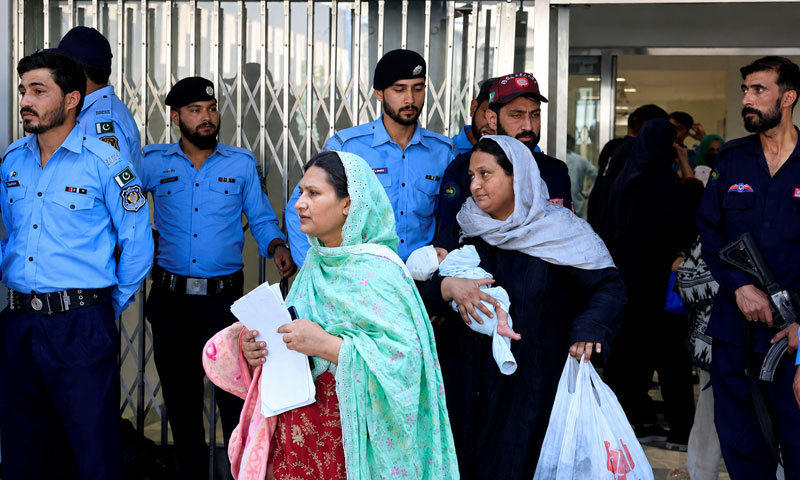
ISLAMABAD: A parliamentary committee investigating the August 26 fire at the Pakistan Institute of Medical Sciences (PIMS), in which 14 babies died, on Monday questioned the hospital’s management, emergency response and regulatory oversight, with officials unable to provide a definitive explanation for what caused the blaze. Committee members called for former PIMS Executive Director Dr Imran Sikandar to be summoned before the panel to answer questions about the hospital’s management and the circumstances surrounding the incidents.
Answering the committee, Health Minister Mustafa Kamal said that conflicting accounts had been presented about the origin of the fire, with one version blaming an air conditioner and another pointing to electrical wiring: “Some say the fire started from the wiring, while others say it was caused by the AC. We are being lied to.”
He said the committee had been given references to an air-conditioning unit, a socket and other possible sources, but had still not been able to determine how the fire started.
“The committee still does not know how the fire started,” the minister said.
According to Kamal, the committee had been told that the fire spread within around 120 seconds. He added that the staff members present at PIMS at the time of the incident were still at the hospital, while the committee had also concluded that the cause of the fire remained unclear.
Kamal said he had deliberately kept himself separate from the committee’s investigation to ensure impartiality and had also offered the ministry for scrutiny as part of the inquiry.
“We have kept ourselves separate from the committee and remained impartial,” he said. “We have also presented the ministry for the inquiry.”
The committee chairman said the priority was to ensure that such an incident did not happen again, while members indicated that reforms would be introduced following the investigation.
The proceedings also exposed wider concerns about the administration of PIMS. The committee chairman said major hospitals in Pakistan were being run by business interests rather than doctors, while other members complained about a lack of coordination between departments.
At PIMS, one department head allegedly does not communicate with another and departments do not allow others to use their resources, lawmakers were told.
“PIMS has become a fiefdom,” the committee chairman said.
Regulator questioned
The committee also sharply questioned officials of the Islamabad Healthcare Regulatory Authority over their oversight of PIMS.
The chairman asked the officials when the authority had last visited the hospital. An authority representative was unable to give a specific date and replied, “I don’t remember exactly.”
Officials said public-sector hospitals did not fall within the authority’s domain. The chairman challenged the explanation, pointing out that the regulator was responsible for licensing.
PIMS spokesperson Dr Aneesa told the committee that the healthcare authority had never issued a licence to PIMS and had never visited the hospital. Senator Rubina Khalid criticised the authority over what she described as a failure to monitor the hospital.
“You have never even asked about the condition of PIMS, yet you are giving us lectures,” she told the officials.
The committee was also informed that the head of the Islamabad Healthcare Regulatory Authority owns a medical college, adding another point of concern for lawmakers.
Members questioned the structure of the regulatory body, saying it had been designed to operate separately from the ministry. Some members said they saw little need for the institution in its current form.
Rubina Khalid urged the health minister to abolish the authority at the earliest opportunity.
July 6 hostel fire raised separately
During the proceedings, lawmakers also raised a separate incident involving a fire at the PIMS nurses’ hostel on July 6. Kamal said the ministry had not been informed about that incident at the time. He said the ministry was initially told that a sofa had caught fire and that the blaze had been extinguished by people at the scene.
The July 6 incident was raised in the context of concerns over PIMS management and alleged concealment. Senator Syed Masroor Ahsan questioned why an inquiry was being conducted if evidence from the incident had allegedly been destroyed.
“What is the purpose of the inquiry when the evidence has been erased?” Ahsan asked.
He alleged that the executive director had faced corruption allegations but that no action had been taken against him. The senator called for the suspended former executive director to be arrested and his affairs audited.
Ahsan also alleged that internal and external access routes had been blocked during the fire and that walls had to be broken to gain entry.
He further claimed that PIMS had received billions of dollars in assistance from abroad and questioned how the hospital was being managed despite those resources.
Former PIMS chief summoned
The committee members unanimously demanded that the former PIMS executive director be summoned to explain the hospital’s management and the circumstances surrounding the incidents.
“Where is the PIMS executive director?” committee member Nasir Butt asked, calling for the former official to be summoned to the next meeting immediately.
The committee also expressed dissatisfaction with the performance of the Capital Development Authority, PIMS management, the healthcare regulator and Civil Defence. The health minister said the government had limited resources to meet the country’s healthcare needs and argued that the existing system required substantial reform.
He said that despite a budget of Rs1.156 trillion, the healthcare system was unable to provide adequate treatment to 10 per cent of the country’s population, adding that the same amount could potentially be used to establish several hospitals.
The committee chairman said its objective was to introduce reforms and prevent a recurrence of the tragedy.
“Our effort is to ensure that such an incident does not happen again,” he said.
You May Also Like
- AFP
- October 17, 2026
Trump waives new Russia sanctions as Ukraine ties slump
- WEB DESK
- October 17, 2026