- Web Desk
- 24 Minutes ago
Lebanese President accuses Hezbollah of trying to ‘Collapse’ the state
-

- Web Desk
- Mar 10, 2026
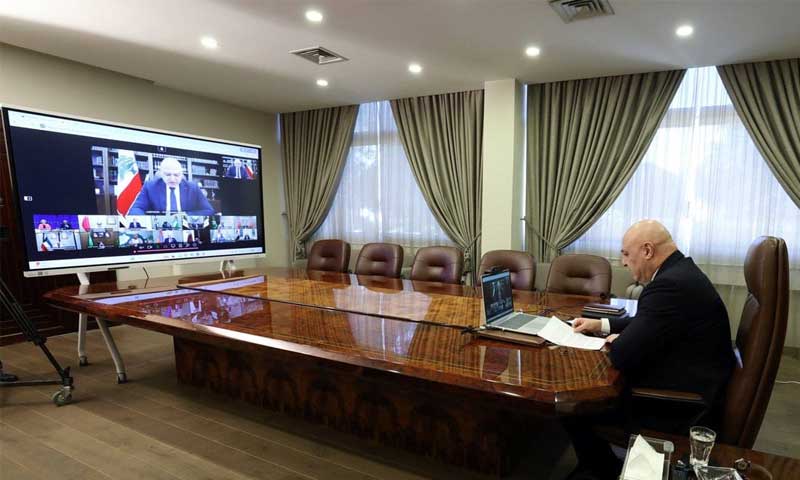
WEB DESK: Lebanese President Joseph Aoun launched a blistering verbal attack on Hezbollah during a virtual summit with European Union leaders on Monday, accusing the group of deliberately pulling Lebanon into a catastrophic confrontation with Israel to serve Iran.
According to Arab News, Aoun, the former army commander elected in early 2025 described Hezbollah’s recent barrage of rocket attacks on Israel as a “transparent trap and ambush” for the Lebanese state and its people. He told EU officials that the move to involve Lebanon in a wider conflict was intended to create chaos on Tehran’s behalf, marking one of the most direct challenges by a Lebanese head of state to the group’s influence in recent years.
Escalation after the March 1 offensive
The president’s remarks come as the fragile 2024 Lebanon–Israel ceasefire appears to be collapsing following a week of intense regional violence.
Tensions surged after Hezbollah launched a large-scale offensive on 1 March 2026, which it framed as retaliation for the death of Ali Khamenei. Since then, Lebanon has faced a heavy Israeli military response, raising fears of a wider war along the border.
Aoun’s comments signal an effort to distance the Lebanese state from Hezbollah’s military campaign and to reassert the government’s authority. The president emphasised that the state must reclaim its “monopoly on the use of force”, a longstanding demand from Western and regional partners seeking to curb the group’s armed power.
EU warns of ‘heavy-handed’ Israeli response
During the summit, Kaja Kallas expressed deep concern about the rapidly deteriorating situation. While urging Hezbollah to disarm and halt attacks on Israel, she also criticised the scale of Israel’s military retaliation.
“We must prevent Lebanon from sliding into chaos,” Kallas warned, describing Israel’s current campaign as “heavy-handed”. She called for an immediate halt to Israeli operations on Lebanese territory and a return to the 2024 ceasefire framework.
Seeking to regain control of the security situation, Aoun also presented a four-point initiative aimed at ending the crisis. The proposal includes an unconditional ceasefire, international support for the Lebanese Army to disarm non-state actors, stronger border deployments in southern Lebanon and the launch of direct negotiations with Israel under international auspices to resolve longstanding border disputes.
Western leaders have reportedly shown interest in the plan, though its success may hinge on how Hezbollah which retains a powerful military and political presence within Lebanon responds to the president’s call for its full disarmament.
You May Also Like