
- Web Desk
- 37 Minutes ago
Leopard cat mistaken for snow leopard cub rescued in Lower Chitral
-

- Web Desk
- Feb 16, 2026
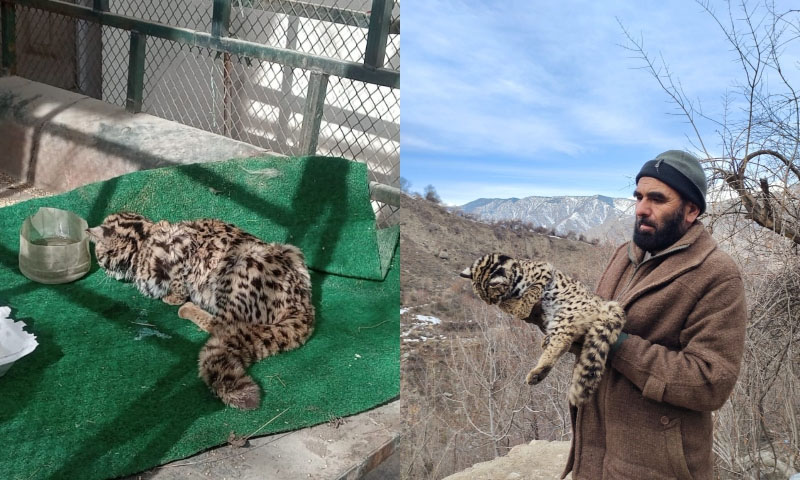
CHITRAL: A reported snow leopard cub capture in Broz village, Lower Chitral, turned out to be a leopard cat, officials said, after rapid response from the Snow Leopard Foundation Pakistan and the Khyber Pakhtunkhwa Wildlife Department ensured the animal’s safety and prevented public alarm.
On February 12, villagers reported capturing what they believed was a snow leopard cub. Given the ecological and cultural significance of snow leopards in northern Pakistan, authorities treated the report as urgent.
Wildlife experts and members of the Village Conservation Committee visited the site immediately and conducted a physical examination, confirming the animal was a leopard cat, not a snow leopard.
Medical care and monitoring
The animal was transported to Chitral Veterinary Hospital for a full medical check. Doctors reported no fractures, injuries, or internal trauma, and provided precautionary treatment. The leopard cat remains stable and under daily observation by the Wildlife Division. Authorities plan to release it back into the wild at the original location once veterinarians confirm it is fully fit.
Ecological importance of leopard cats
Although smaller than snow leopards, leopard cats play a crucial role in controlling rodent populations, which helps protect crops and reduce disease risks. Research by the Snow Leopard Foundation shows that leopard cats in northern Pakistan feed mainly on rodents from the Muridae family, but also prey on birds, amphibians, and fish, adapting to diverse habitats from temperate forests to dry mountain valleys.
Experts warn that habitat loss, hunting, and illegal trade continue to threaten leopard cat populations across Asia. Conservationists emphasize the need for regular monitoring, habitat protection, community awareness, and scientific tools such as DNA analysis to study diet and distribution.
“The Chitral incident highlights the importance of responsible community reporting and timely intervention by authorities,” said Dr Muhammad Ali Nawaz, director of the Snow Leopard Foundation. “Quick action ensures that captured animals receive medical care and can safely return to their natural habitat, strengthening practical conservation efforts.”
You May Also Like