- Reuters
- November 2, 2026
Govt signals petrol, diesel price cuts as global oil rates decline
-

- WEB DESK
- November 2, 2026
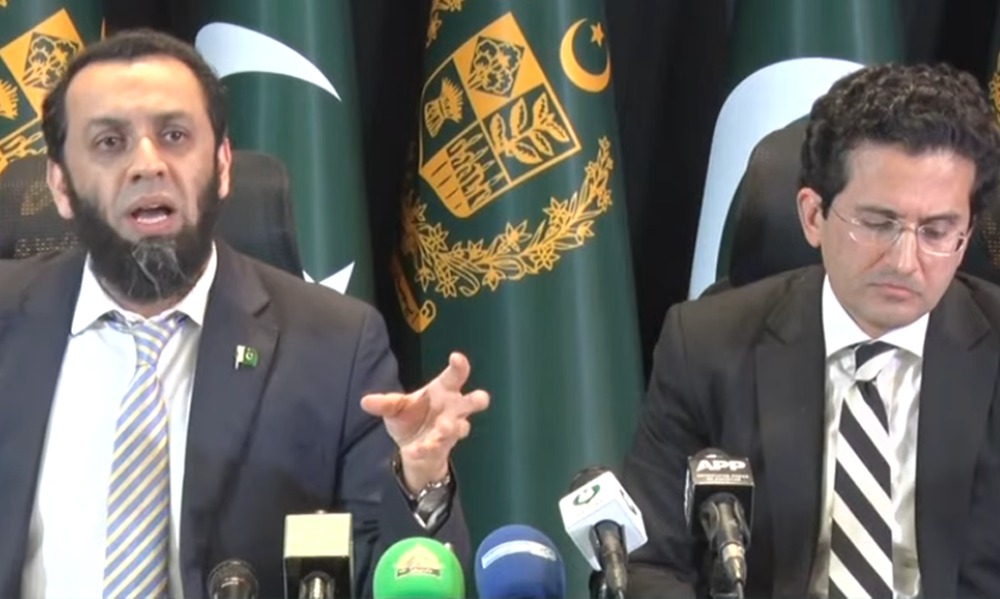
ISLAMABAD: The government on Monday indicated that petrol and diesel prices could be reduced following a decline in international oil prices, Petroleum Minister Ali Pervaiz Malik said on Monday, expressing hope that consumers would receive further relief.
Addressing a press conference alongside Information Minister Atta Tarar in Islamabad, Malik said the government was working to minimise the impact of rising fuel procurement costs while taking into account international market conditions and Pakistan’s economic constraints.
He said local refineries had agreed to absorb an expected Rs15 per litre increase in petrol prices, allowing the government to maintain the existing rate.
The arrangement will place an additional financial burden of approximately Rs15 billion per month on local refineries, he added.
Malik said the petrol price approved before October 31 included an import premium of around $20 per barrel. However, subsequent Pakistan State Oil (PSO) tenders saw petrol import premiums rise to $25-$30 per barrel and even higher.
He said the government had sought to improve procurement and minimise costs, but the regional situation had made fuel imports more expensive.
Refineries agree to absorb additional costs
The petroleum minister said Prime Minister Shehbaz Sharif had sought the cooperation of local refineries to provide relief to consumers, following a similar arrangement under which a crude oil-based pricing formula had been introduced for diesel.
Around 30% of Pakistan’s petrol is produced by local refineries, while the remaining 70% is imported, Malik said.
He said the government had explored ways to intervene in the pricing of locally produced petrol without creating an impractical system that could discourage imports and lead to fuel shortages.
Malik said refineries had agreed to absorb the expected Rs15 per litre increase following the government’s request to help consumers during difficult economic conditions.
He thanked the refineries for their cooperation, saying the government had helped ensure crude oil availability, enabling them to increase production and earn higher profits than in previous years.
He also recalled their earlier cooperation in providing relief on diesel prices and supplying aviation fuel for Hajj flights at pre-war rates after the conflict began following the announcement of the Hajj package.
The refineries had also ensured the supply of JP-8 fuel to the Pakistan Air Force at pre-war prices until June 30, he added.
Government sets refinery premium limit
Malik said the government had set a maximum petroleum premium of $20 per barrel for local refineries, compared with around $5 per barrel before the crisis.
He warned that the government would have to intervene if any sector sought to earn excessive profits during the crisis while passing the burden on to consumers.
The minister said the government would seek to resume its deregulation policy once conditions normalised and petrol import premiums returned to the $15-$20 per barrel range.
He said the government’s long-term objective was to promote competition in the petroleum sector to ensure better services and cheaper fuel for consumers.
The minister added that consultations with refineries would continue to address their concerns.
He said the government had taken the measures while considering rising international fuel prices, Pakistan’s economic constraints and its commitments to the International Monetary Fund (IMF).
Tarar highlights fuel subsidy scheme
Speaking at the same press conference, Information Minister Atta Tarar said Prime Minister Shehbaz Sharif had directed the government from the outset to minimise the burden of rising fuel prices on the public.
He said the situation in the Strait of Hormuz and Bab el-Mandeb, along with wider international developments, had affected economies around the world, including Pakistan.
However, Tarar said Pakistan’s major macroeconomic indicators had largely remained stable and its economy had not suffered as severe a setback as several other economies.
He reiterated that the prime minister had instructed officials to ensure that increases in international fuel prices were not passed on to consumers, particularly when petrol prices were expected to rise by Rs15 per litre on Friday.
Tarar also highlighted the government’s fuel subsidy scheme, under which registered motorcyclists receive a weekly subsidy of Rs500, while owners of vehicles with engines up to 800cc can purchase 10 litres of petrol every 10 days at a discount of Rs100 per litre.
He said the scheme had attracted more than 15 million unique registrations, adding that beneficiaries were increasingly using the facility.
The information minister said around Rs27 billion had so far been provided in relief through the scheme.
He said petrol pumps were reimbursed the following day for fuel sold at subsidised rates to motorcyclists, rickshaw and Qingqi users, and owners of vehicles with engines up to 800cc.
Tarar said the scheme was operating across all four provinces, as well as Gilgit-Baltistan and Azad Jammu and Kashmir.
He credited the prime minister’s commitment and a coordinated government effort involving the IT Ministry, Petroleum Ministry, Oil and Gas Regulatory Authority (Ogra) and State Bank of Pakistan for implementing the programme.
Tarar said the government intended to continue the subsidy scheme to provide relief to consumers during the difficult economic situation.
You May Also Like
- AFP
- November 2, 2026