- Web Desk
- 20 Minutes ago
Operation Ghazb Lil Haq targets militant hideouts in Afghanistan: Tarar
-

- Web Desk
- 3 Hours ago
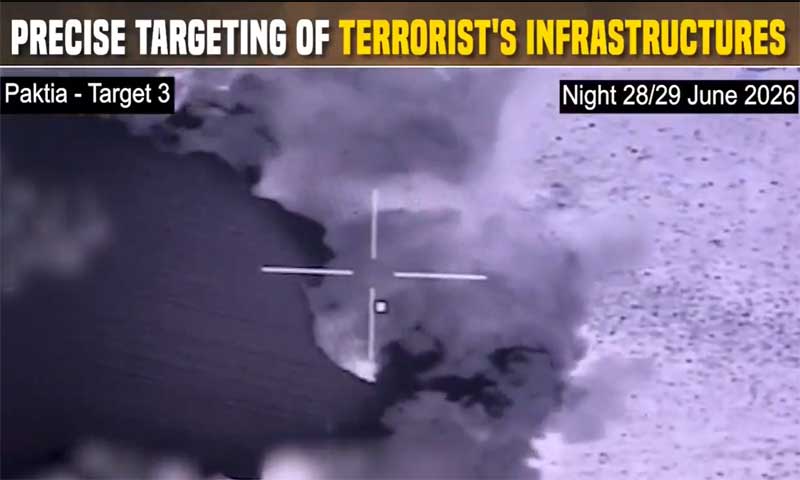
ISLAMABAD: Information Minister Attaullah Tarar said Pakistan’s security forces carried out targeted strikes on alleged militant camps and safe havens in Afghanistan under Operation Ghazb Lil Haq overnight between June 28 and 29. According to the minister, the operation targeted hideouts of Jamaat-ul-Ahrar and Tehreek-e-Taliban pakistan (TTP) also known as Fitna al-Khwarij, in the Afghan provinces of Paktia, Paktika and Kunar. Tarar claimed the strikes killed militants and destroyed weapons and ammunition stockpiles.
In an earlier statement posted on X, Tarar said security forces conducted an intelligence-based ground operation in Bajaur in which Jamaat-ul-Ahrar’s “high-value commander”, Khan Forosh alias Zabal, was killed along with three other militants. He added that several other militants were injured during the operation.
The information minister said the military also carried out air strikes under Operation Ghazab-ul-Haq in border areas along the Pakistan-Afghanistan frontier, claiming that three major militant hideouts and operational centres in Afghanistan’s Paktia, Paktika and Kunar provinces were completely destroyed.
According to Tarar, the targeted overnight strikes killed 25 militants and destroyed large quantities of weapons and ammunition stored at the militant bases. He said the operation was conducted in response to recent attacks in Khyber Pakhtunkhwa, Balochistan and on a Rangers camp in Karachi.
“National security and the protection of our citizens remain our foremost priority. Our efforts for peace should not be mistaken for weakness,” Tarar said. He added that nationwide counterterrorism operations would continue “with full force” under the federal apex committee’s Azm-i-Istehkam vision.
Karachi Rangers attack
Three Pakistan Rangers personnel were martyred and four others injured after heavily armed militants attacked a Pakistan Rangers (Sindh) camp in Karachi’s Gulistan-i-Jauhar area on night of June 27. According to the military’s media wing, the Inter-Services Public Relations (ISPR), the assault was carried out by members of Jamaatul Ahrar, which it described as an “Indian proxy”.
The attackers allegedly detonated a vehicle-borne improvised explosive device (VB-IED) at the camp’s main gate before attempting to storm the installation while opening indiscriminate fire. Rangers personnel repelled the assault in an intense gun battle, killing three attackers and capturing a fourth in an injured condition. The military identified the arrested suspect as an Afghan national. A sanitisation operation was launched to clear the area of any remaining militants.
Eyewitnesses said the powerful blast shook nearby neighbourhoods, including areas around several universities and the Pakistan Meteorological Department, before gunfire erupted and continued for about 15 minutes. Security forces sealed off the area, while emergency responders shifted the injured and authorities closed major roads around the camp.
The ISPR said Pakistan would carry out retaliatory operations against those responsible and reaffirmed that counterterrorism operations under Operation Ghazab lil-Haq would continue.
The attack drew strong condemnation from the country’s civilian and military leadership. Chief of Army Staff Field Marshal Asim Munir paid tribute to the slain Rangers personnel, saying their sacrifices strengthened the nation’s resolve against terrorism. President Asif Ali Zardari and Prime Minister Shehbaz Sharif also condemned the attack, praising the Rangers for foiling the assault and vowing that those behind the attack would be brought to justice. Interior Minister Mohsin Naqvi and the Sindh government likewise ordered investigations and directed law enforcement agencies to take all necessary measures.
The assault was the deadliest militant attack in Karachi since the October 2024 bombing targeting a convoy carrying Chinese nationals, highlighting persistent security challenges despite a decline in large-scale attacks in Pakistan’s major cities.
You May Also Like