- Web
- Feb 05, 2026
Major drop in petroleum product prices expected in Pakistan
-

- Web Desk
- Dec 12, 2025
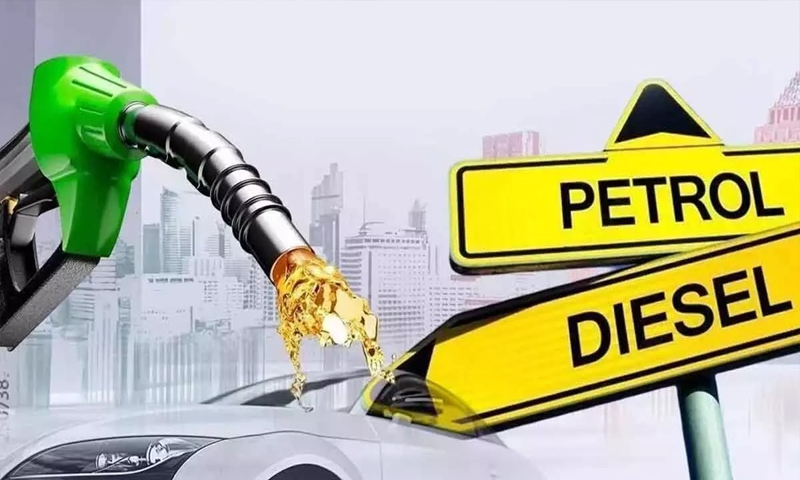
ISLAMABAD: Prices of petroleum products in Pakistan are expected to see a substantial reduction of up to Rs11 per litre starting December 16, 2025, according to sources.
Sources in the Petroleum Division said that the departments concerned have prepared preliminary calculations for the price cuts.
They said that petrol is expected to decrease by Rs0.36 per litre, while diesel could drop by Rs11.85 per litre. Additionally, the price of kerosene is projected to fall by Rs11.70 per litre and light diesel by Rs10.01 per litre.
The sources said that the Oil and Gas Regulatory Authority (OGRA) will submit a summary of the revised prices for approval on December 15, after which the Petroleum Division will issue an official notification following the prime minister’s approval.
Taxes on Petrol and Diesel
Details have emerged regarding taxes included in petrol and diesel prices.
The government is charging 37 per cent on per litre petrol under the head of taxes, which translates into Rs96.28 per litre.
The government charges 34 per cent taxes on diesel which translates into Rs94.92 per litre.
Petroleum Dealers Threaten to Close Pumps
Meanwhile, the Pakistan Petroleum Dealers’ Association (PPDA) has rejected the government’s proposed new margin and warned of possible pump closures nationwide.
In a statement, PPDA Chairman Abdul Sami Khan said that due to rising costs, the dealers had requested an 8 per cent margin instead of the current margin of 3.12 per cent.
He warned that if the government does not approve the 8 per cent margin, dealers may be forced to close petrol pumps across the country.
Sami Khan said that the government has been given 10 days to respond, after which the dealers’ core committee will convene a meeting to decide the future course of action.
He urged the government to give a written commitment for the 8 per cent margin even if it is implemented in instalments.
The association stressed that failure to meet dealers’ demands could impact fuel supply nationwide.
You May Also Like