- Umair Rana
- November 12, 2026
Makkah pact moves to practical phase after attacks on Saudi Arabia: ISPR DG
-

- WEB DESK
- November 12, 2026
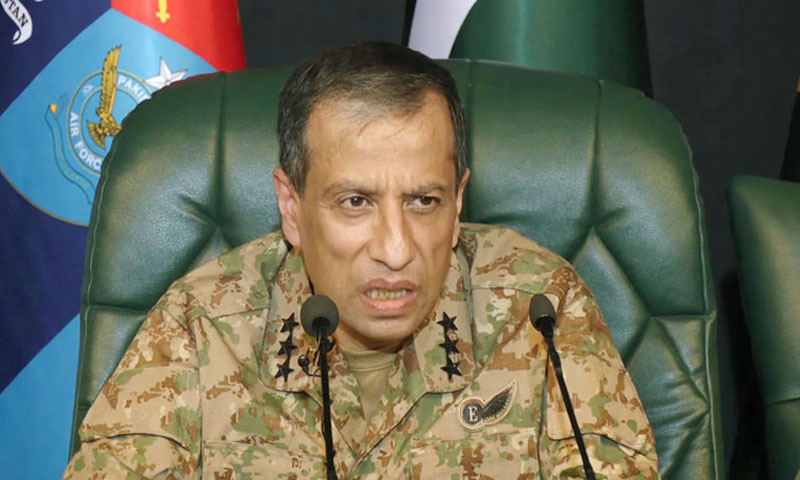
Pakistan, Saudi Arabia and Turkiye are moving towards the practical implementation of their collective defence commitments under the Makkah Joint Defence Alliance (MJDA), following recent attacks on the kingdom, Inter-Services Public Relations (ISPR) Director General Lieutenant General Ahmed Sharif Chaudhry has said.
In an interview with Saudi daily Asharq Al-Awsat, the military’s spokesperson said Islamabad’s commitment to Saudi Arabia’s security, sovereignty and territorial integrity was “absolute and non-negotiable”.
Pakistan, Saudi Arabia and Turkiye signed the trilateral agreement on August 7. It stipulates that an armed attack against any one of the three countries will be treated as an attack against all, with the aim of strengthening collective deterrence and security cooperation.
DG ISPR said operationalising the pact involved arrangements for the rapid deployment of agreed forces and capabilities inside Saudi Arabia. These included higher readiness levels, closer military integration, intelligence sharing and coordinated defensive operations.
Under both the bilateral Joint Strategic Defence Agreement and the trilateral alliance, Pakistan was ready to take all necessary defensive steps to protect the Kingdom, he added.
Troops and defensive capabilities
Regarding military presence in Saudi Arabia, he confirmed that Pakistani troops are already deployed in Saudi Arabia for defensive support, training, and joint exercises.
Islamabad will continue providing required defensive assistance in personnel, training, and logistics, he said. However, he declined to share specifics on additional air and missile defence assets, noting that military alliances do not disclose troop numbers or deployment details.
Condemning recent strikes on Saudi airports, cities, and civilian infrastructure, the ISPR chief said the attacks threaten regional stability and raise deep concern in Pakistan.
“The security of Saudi Arabia and the Two Holy Mosques is a top, non-negotiable priority,” he stressed, urging restraint and diplomacy to avoid further escalation.
Diplomatic push in Tehran
Alongside military readiness, the military’s spokesperson highlighted Islamabad’s diplomatic efforts to defuse regional tensions.
He pointed to the October 26 meeting in Tehran between Makkah pact representatives and Iran, aimed at establishing a framework for de-escalation and regional cooperation.
Chief of Defence Forces (CDF) and Chief of Army Staff (COAS) Field Marshal Asim Munir’s participation — following an earlier visit to Tehran — underscored Islamabad’s push for peaceful dispute resolution, he said. The four countries agreed to continue dialogue toward regional stability.
Clarifying the two security pacts, the military’s spokesperson said the bilateral Strategic Mutual Defence Agreement — signed by Pakistan and Saudi Arabia in September 2025 — formalised decades of defence ties for mutual security.
Building on that framework, Pakistan, Saudi Arabia, and Turkiye signed the Makkah Joint Defence Alliance in August 2026. Ratified by all three nations and taking effect this month, the pact treats an attack on one member as aggression against all.
He reiterated that both pacts are strictly defensive and hold no offensive intent against any country.
You May Also Like