- Web Desk
- Today
Massive security blanket thrown over Pakistan as mourners observe Ashura
-

- Web Desk
- Now
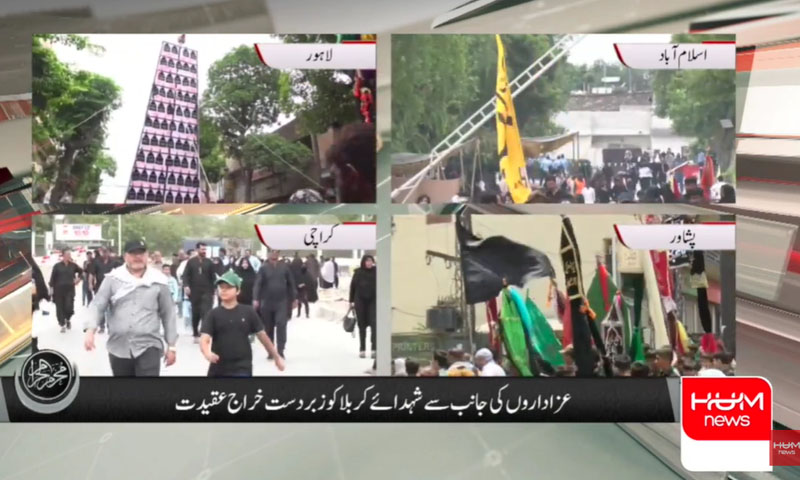
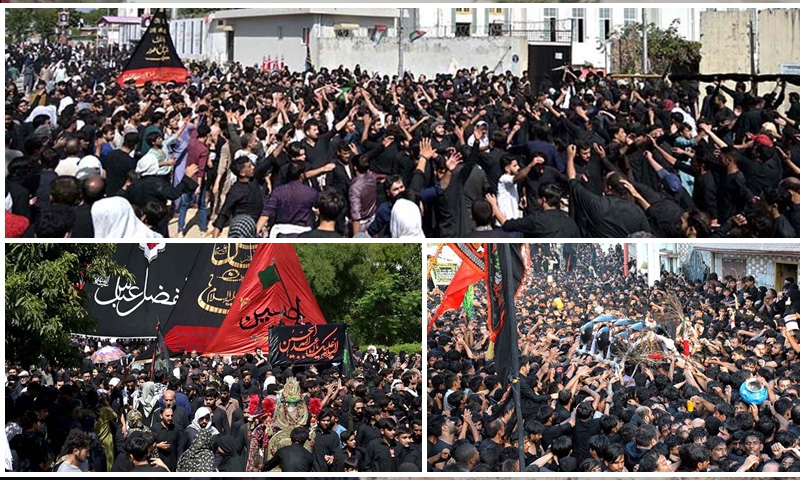
ISLAMABAD: Pakistan has deployed more than 180,000 security personnel, suspended mobile phone services, and enforced strict movement restrictions on Friday as millions of Shia Muslims gathered across the country to mark the holy day of Ashura amid heightened security concerns.
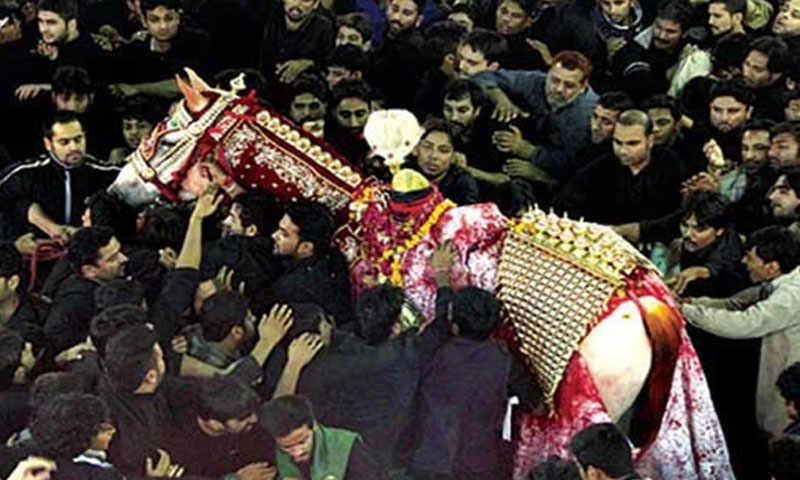
The event commemorates the 7th-century martyrdom of Imam Husain (RA), a grandson of the Holy Prophet Mohammad (PBUH), and his companions at the Battle of Karbala in Iraq.
To prevent sectarian violence and potential militant attacks, provincial governments have implemented a massive three-tiered security apparatus, cutting off cellular signals along procession routes and invoking Section 144 — an emergency law banning the public display of weapons and unauthorised assemblies.
In Punjab, authorities have deployed more than 125,000 police officers alongside 137 companies of the paramilitary Rangers and the Pakistan Army.
“Over 100,000 officers and personnel are actively maintaining security across Punjab’s processions and congregations,” a provincial police spokesperson said, adding that artificial intelligence-driven CCTV surveillance walls and over 1,000 4G event cameras were being used to monitor highly sensitive areas.
In Rawalpindi, the mass transit Metro Bus Service connecting the twin cities was suspended.
Security officials cited vulnerabilities where the main mourning route passes directly beneath the elevated transit tracks.
Snipers were stationed on high-rise buildings, and entry points were sealed with shipping containers.
In Karachi, the police chief, Azad Khan, confirmed that 20,000 personnel were deployed citywide, with 6,500 dedicated to securing the primary procession originating from Nishtar Park. Main commercial arteries, including M.A. Jinnah Road, were completely barricaded.
Security was similarly tight in the provincial capitals of Peshawar and Quetta, regions historically vulnerable to militant activity.
In Khyber Pakhtunkhwa, over 43,000 police personnel were mobilized to secure 907 distinct processions. Provincial data classified nearly half of the region’s 614 Shia prayer halls (Imambargahs) as “highly sensitive” or “sensitive.”
In Balochistan, the government has deployed 32,000 troops, including 17,000 in the provincial capital of Quetta alone.
Aerial surveillance monitored the main procession, led by Balochistan Shia Conference President Ashiq Hussain Hazara, which featured 35 traditional contingents bearing ceremonial standards and replicas of Imam Husain’s mausoleum.
Volunteers across all major cities established relief camps and distributed refreshments to participants, while emergency medical services, including the country’s rapid-response Rescue 1122 units, remained on high alert.
Following the culmination of the daytime processions at designated religious sites, mourners are expected to gather in the evening for Sham-e-Ghariban (the Night of the Forsaken), specialized majalis sermons recounting the immediate aftermath of the Karbala tragedy.
Top government leaders, including the president, prime minister, and provincial chief ministers, issued joint directives instructing law enforcement agencies to maintain a state of maximum vigilance until the conclusion of all religious proceedings.