- Web Desk
- 33 Minutes ago
Middle East erupts as US-Israel strike Iran, Tehran retaliates with missiles across Gulf
-

- Web Desk
- Feb 28, 2026
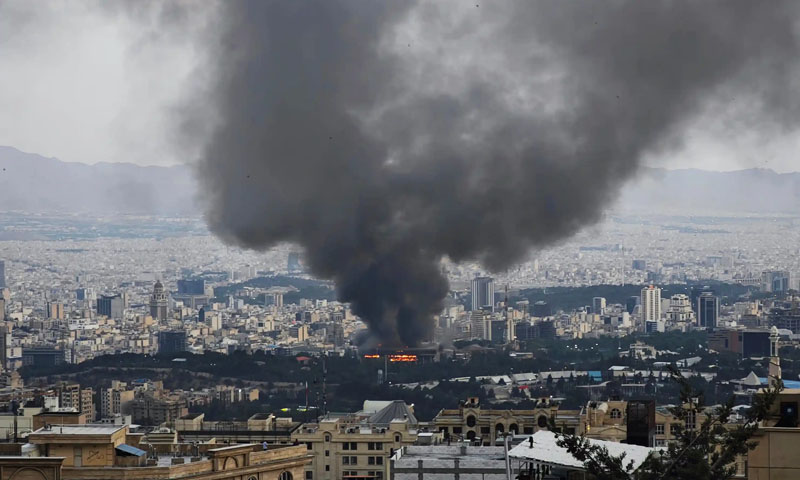
DUBAI/RIYAD/WASHINGTON: The Middle East was plunged into a dangerous new phase of conflict on Saturday after the United States and Israel launched coordinated strikes on Iran, prompting Tehran to retaliate with missile attacks targeting Israel and several Gulf Arab states hosting American military bases.
According to international media reports, the first wave of strikes was carried out by Washington and Tel Aviv under what the Pentagon named “OPERATION EPIC FURY”, primarily targeting Iran’s leadership and key military figures.
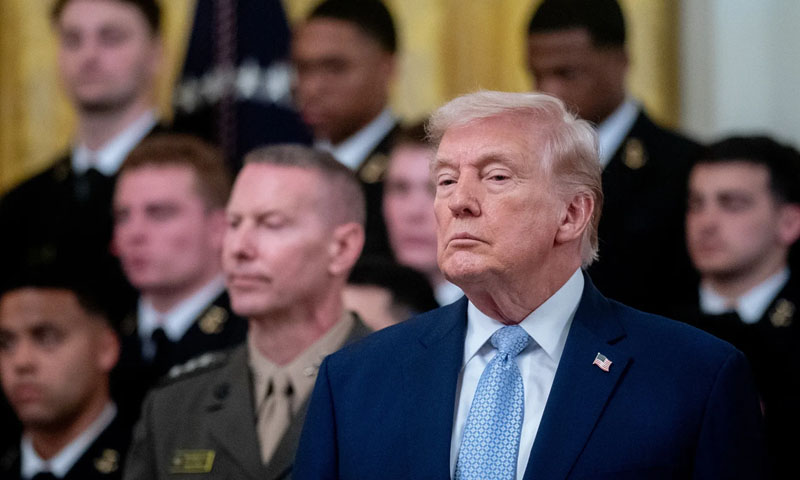
US President Donald Trump said the operation was aimed at eliminating what he described as imminent threats from the Iranian regime and preventing Tehran from obtaining a nuclear weapon.
An Israeli official said Iran’s Supreme Leader Ayatollah Ali Khamenei and President Masoud Pezeshkian were targeted in the strikes, though the outcome was not immediately clear.
Iranian sources claimed that several senior commanders of the Revolutionary Guards and political officials had been killed, but there was no independent confirmation.
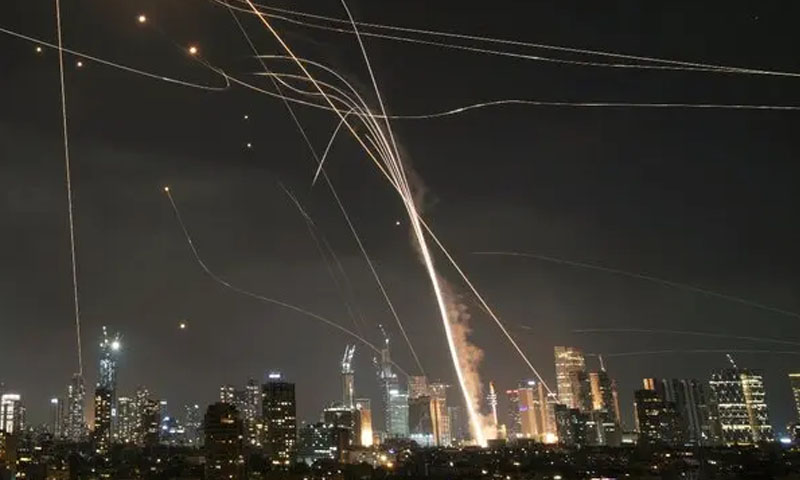
Israeli Prime Minister Benjamin Netanyahu described the joint assault as an effort to “remove the yoke of tyranny” and create conditions for Iranians to determine their own future.
The strikes followed stalled nuclear talks between Tehran and Washington and months of escalating rhetoric over Iran’s ballistic missile programme. Iran denies seeking nuclear weapons and says its programme is peaceful.
Iran retaliates, missiles target Gulf states
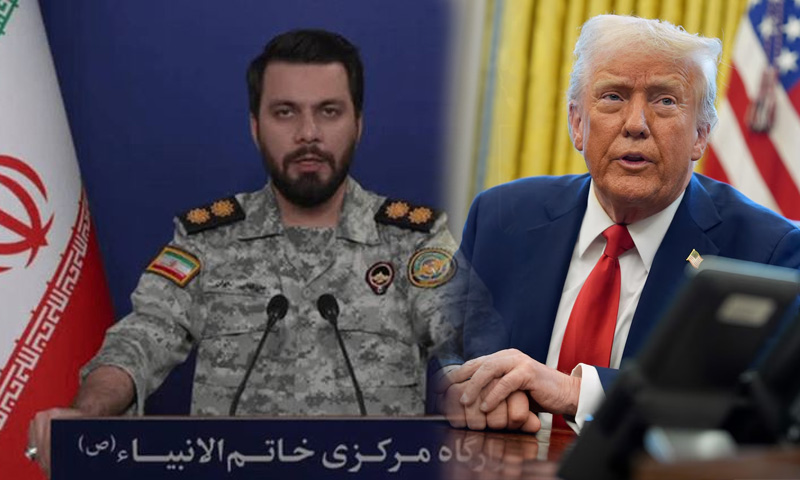
Within hours of the US-Israel assault, Iran’s Revolutionary Guards announced the launch of retaliatory missile and drone attacks, declaring that “all occupied territories and criminal US bases in the region” were within reach.
Several Gulf Arab states — including the United Arab Emirates, Qatar, Kuwait and Jordan — reported intercepting Iranian missiles over their territories. All four countries host US military facilities.
State media in the UAE said one person was killed in Abu Dhabi, though further details were not provided. Loud explosions were heard across Abu Dhabi and Dubai, with witnesses reporting multiple blasts that shook buildings and rattled windows. Fighter jets were seen flying over parts of the Emirati capital.
In Bahrain, authorities confirmed that a service centre of the US Fifth Fleet had been struck. Video footage showed a plume of grey smoke rising near the coastline as sirens wailed across the island nation.
Qatar said it had downed all incoming missiles targeting its territory and asserted its right to respond. Explosions were heard in Doha in successive waves before the interceptions were confirmed.
Kuwait’s army said it dealt with missiles in its airspace, while Jordan reported shooting down two Iranian ballistic missiles.
Iran also fired missiles toward Israel as part of its retaliation.
Oil routes, flights disrupted
Explosions were also reported near Iran’s Kharg Island, through which around 90 per cent of the country’s crude oil exports pass before transiting the Strait of Hormuz — a vital global energy chokepoint.
Global airlines suspended or rerouted flights across the Middle East, with flight tracking data showing large swathes of regional airspace nearly empty.
Regional fears mount
The escalation has rattled Gulf states that have long prided themselves on relative stability despite regional turmoil. Residents in several capitals received mobile alerts urging them to shelter indoors and avoid windows amid missile threats.
In Tehran, witnesses reported long queues at petrol stations and banks as people rushed to withdraw cash and stock up on supplies. Some families were seen leaving the capital for northern Iran amid fears of prolonged conflict.
In a video message, Trump referenced decades of hostility between Washington and Tehran, including the 1979 US embassy hostage crisis, and urged Iranians to seek shelter as military operations continued. He said the campaign could last several days.
The confrontation has dimmed hopes for a diplomatic breakthrough in Iran’s long-running nuclear dispute with the West, as both sides exchange heavy fire and threats of further escalation.
You May Also Like