- Web Desk
- 19 Minutes ago
Middle East on the brink as US rushes $16bn in arms to Gulf following Iranian strikes
-

- Web Desk
- 3 Minutes ago
WEB DESK: The Middle East moved precariously closer to a full-scale regional war on Thursday as Washington fast-tracked a $16.46b military aid package to its Gulf allies.
According to Dawn News, the move follows a series of devastating Iranian strikes on critical energy infrastructure in Qatar, Saudi Arabia, and Kuwait, prompting Tehran to warn of “zero restraint” should its own facilities be targeted again.
The escalation has sent shockwaves through global markets, with Brent crude surging to $119 a barrel and European gas prices jumping by 35pc.
The volatility comes in the wake of Iranian missile strikes on Qatar’s Ras Laffan liquefied natural gas (LNG) complex the world’s largest which officials say has knocked out a sixth of the country’s export capacity. Repairs to the site are expected to take between three and five years.
Strategic strikes and “furious” warnings
The current spike in hostilities was triggered by an Israeli strike on Iran’s South Pars gas field, an operation Prime Minister Benjamin Netanyahu claimed was conducted “unilaterally.”
While US President Donald Trump noted he had advised Israel against further hits on Iranian gas infrastructure, he issued a “furious” warning to Tehran to cease its attacks on Qatari interests.
Despite the rhetoric, the White House appears to be digging in for a protracted engagement. Defence Secretary Pete Hegseth stated there is no fixed timeline for ending the conflict, while the administration prepares to seek an additional $200b from Congress.
Although President Trump has publicly ruled out a ground troop deployment, officials suggested that reinforcements remain under active review following reports of a US F-35 fighter jet being damaged by Iranian fire a potential first in the conflict.
Regional infrastructure under fire
The reaching of a “zero restraint” policy by Tehran was evidenced by a wave of drone and missile attacks across the Gulf. In Saudi Arabia, a drone struck the Samref refinery in Yanbu, while Kuwaiti refineries at Mina Abdullah and Mina Al-Ahmadi were set ablaze.
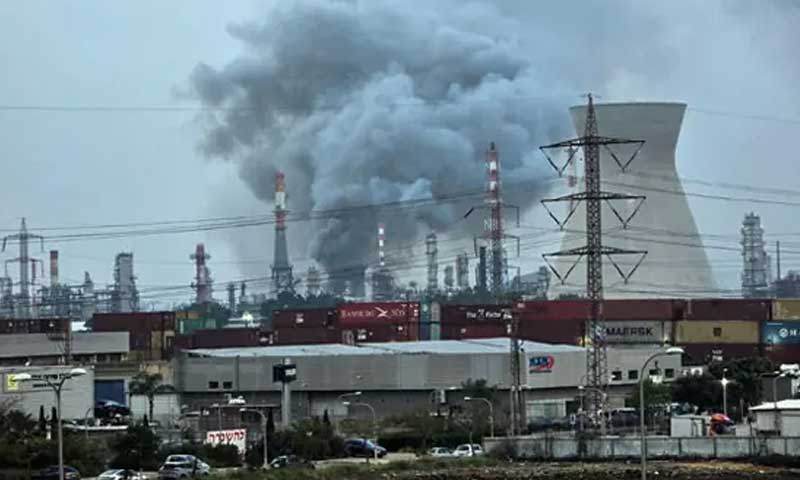
Even as far as the Mediterranean, Israeli media reported a strike on an oil refinery in the port of Haifa, accompanied by plumes of dark smoke.
In response to the deteriorating security situation, the US State Department bypassed Congressional approval to push through a massive arms sale. The package includes $8b for advanced missile defence radars and $4.5b for the United Arab Emirates to bolster its ballistic missile tracking capabilities.
As the United Nations and European leaders call for urgent restraint, the Strait of Hormuz remains a primary flashpoint. With Iran threatening the “complete destruction” of Gulf energy networks if provoked further, the global economy faces its most significant energy security threat in decades.
You May Also Like