- Farah Mehjabeen
- October 26, 2026
Mir Raza case: commission wraps up proceedings, flags major gaps in police probe
-

- Ghayas Uddin
- October 7, 2026
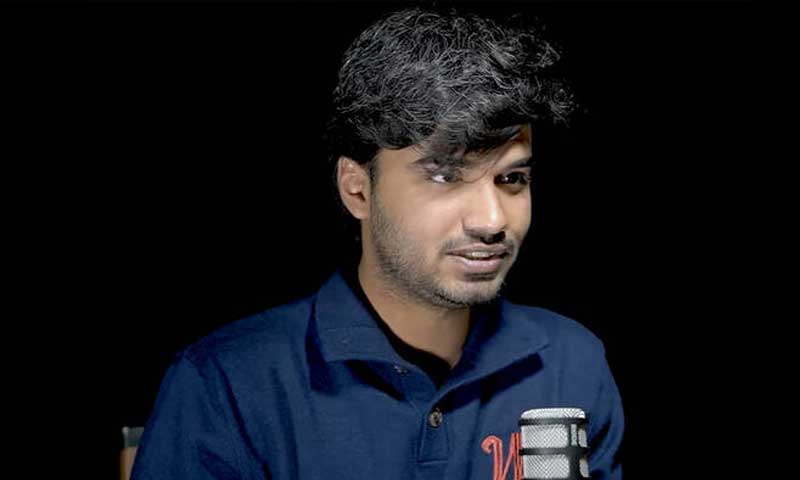
KARACHI: The judicial commission probing the death of young businessman Mir Raza Ali on Wednesday concluded its proceedings after questioning the police investigation team and the Citizens-Police Liaison Committee (CPLC) representative over alleged gaps in the probe, handling of evidence and several unexplored leads.
The commission, headed by Sindh High Court Justice Omar Sial, will now compile its findings and recommendations and submit its report to the Sindh government.
The proceedings concluded after the commission questioned CPLC representative Kashif and investigation officer DSP Siraj Lashari about geofencing, call data, CCTV footage, suspicious vehicles, witness statements, forensic evidence, crypto transactions and other aspects of the investigation.
The commission was constituted by the Sindh government on August 24 to examine the circumstances surrounding Mir Raza’s death and possible negligence in the investigation. Its tenure was subsequently extended until October 15 to enable it to complete its findings.
CPLC questioned over geofencing, phone data
During Wednesday’s proceedings, Justice Sial questioned the CPLC representative about the organisation’s involvement in the case and its analysis of call data records and geofencing.
Kashif told the commission that the CPLC had been working on the case from the outset and had analysed call data and other information provided by police.
He said geofencing covering July 28 and 29 had been conducted but no suspicious activity had been identified. Mir Raza’s phone remained connected to the internet until around 4:25am, while Apple Maps was accessed on the phone between approximately 4:10am and 4:20am.
The representative said there was no record of any outgoing call from Mir Raza’s phone, while contact with an online taxi driver was recorded at around 4:07am. Internet-based calls, he said, did not generate conventional call records.
He added that police had written to the National Cyber Crime Investigation Agency (NCCIA) and Apple seeking information linked to IP addresses.
Questions over CCTV footage and suspicious vehicles
The commission also questioned the CPLC representative about CCTV footage collected from the area.
Kashif said the CPLC had 46 cameras installed under its neighbourhood-watch system in parts of Gulistan-i-Jauhar, but the location where the incident occurred fell somewhat outside their coverage. Mir Raza was visible on only three CPLC cameras.
He said investigators had also reviewed privately owned CCTV footage, but much of it was of poor quality or had not been backed up.
The commission pointed out that it had itself observed suspicious vehicles in the available footage and questioned whether police had properly investigated them.
Kashif said the CPLC had also examined tracker information and was continuing to work on identifying vehicles. He said vehicle registration numbers could not be clearly obtained from the CCTV footage, while geofencing data had helped identify some numbers.
The commission also raised questions over missing CCTV footage from Masjid Khizra. It was told that around five hours of footage were missing and that the mosque’s surveillance system was outdated.
Investigator grilled over witness statements
The commission then questioned DSP Siraj Lashari, the current investigation officer, over the recording and handling of witnesses’ statements under Section 161 of the Code of Criminal Procedure.
Justice Sial noted that several witnesses had denied portions of statements attributed to them by the previous investigation team.
The commission observed that some witnesses appeared not even to have known what had been written in their statements and questioned whether investigators had properly read the statements back to them.
The commission also questioned why some statements appeared to focus primarily on financial transactions rather than exploring other possible motives and circumstances surrounding Mir Raza’s death.
Lashari maintained that investigators had examined all relevant aspects and were investigating the possibility of murder.
Questions over Ali Shah’s role
The commission raised particular questions about witness Ali Shah, including his travel abroad, the arrival of his brother in Karachi and his links to vehicles allegedly resembling two suspicious vehicles identified during the investigation.
Justice Sial questioned why these issues had not been properly addressed in Ali Shah’s Section 161 statement.
The investigation officer said police had not found a connection between Ali Shah and the incident and that there was no evidence placing him at the scene at the relevant time.
The commission, however, questioned whether investigators had adequately examined a voice note that had brought Ali Shah into the investigation and his subsequent travel to Baku.
Lashari said Ali Shah and others could be called again if required.
Commission criticises handling of crime scene
The commission expressed serious concern over the handling of the crime scene and evidence.
Justice Sial questioned how both operations and investigation police had been involved in the case and remarked that the crime scene appeared to have been compromised despite repeated assurances about the response time of the crime scene unit.
The commission questioned why officers allegedly responsible for lapses had not faced appropriate proceedings.
It also questioned the use of footage recorded from a mobile phone and sent by an SHO, as well as the handling of a guesthouse DVR that was reportedly found in the boot of an officer’s vehicle.
The commission observed that senior police officers had failed to adequately supervise their subordinates and questioned why procedural violations had not resulted in stronger departmental action.
Apple Watch and mobile phone evidence
The commission also examined the handling of Mir Raza’s Apple Watch and mobile phone.
Lashari said the forensic report concerning the Apple Watch had been received in September and showed the last activity on the watch at around 4:22am.
He said investigators had been unable to recover data from Mir Raza’s mobile phone and had approached Apple for further information.
The family lawyer, Jibran Nasir, questioned whether investigators had examined access to the device and iCloud after Mir Raza’s disappearance, particularly after the phone was reportedly used with another SIM.
Mir Raza’s mother told the commission that repeated attempts to access the phone had resulted in it becoming blocked.
Private chats leaked on social media
The commission also questioned how private conversations between Mir Raza and his fiancée, Salwa, had subsequently appeared on social media.
Lashari confirmed that police had taken the fiancée’s phone and extracted private chats.
Justice Sial questioned how the material had reached the media and directed the investigation officer to determine who was responsible for leaking any private correspondence.
The commission observed that the couple were to become life partners and said the unauthorised disclosure of their private conversations could itself constitute an offence.
Questions over anaesthesia and suspicious vehicle
The commission also asked investigators about a suspicious vehicle seen near Mir Raza’s home and another vehicle observed in CCTV footage.
Lashari said police had traced one vehicle and obtained an explanation from its owner that he had parked there because he could not find a parking space.
Justice Sial said the commission had reviewed the footage and that the vehicle appeared to move quickly behind Mir Raza’s vehicle rather than simply being parked.
The commission also questioned investigators about traces of anaesthesia found in connection with the case and whether they had examined possible links between any witnesses and dentists.
The investigator said the family had also been questioned about whether Mir Raza had undergone any medical or dental treatment.
Crypto accounts come under scrutiny
The commission also questioned police about Mir Raza’s crypto accounts and related financial transactions.
Lashari said transactions involving around Rs90 million had been identified across three accounts and that police had approached the NCCIA for further information.
Nasir told the commission that a review of bank accounts had identified three individuals and that payments linked to crypto transactions had also reached Mir Raza’s bank account.
He said the profit-and-loss ledger of the relevant trading platform could help establish the actual loss or gain.
The investigator said an initial review had indicated a shortfall of around Rs30 million, while the trading platform had not shown the amount as having returned to the account.
Justice Sial directed police to obtain the profit-and-loss ledger through the NCCIA and include the matter in the investigation.
Questions over medical investigation
The commission also returned to discrepancies between the initial post-mortem examination and the subsequent medical findings.
Justice Sial questioned why Dr Usama had been repeatedly called by police and why his version had been given such significance despite the fact that he had not categorically declared Mir Raza’s death a suicide.
The commission questioned the decision to seek another medical board after an eight-member board had already examined the case and said the police appeared to be giving disproportionate weight to Dr Usama’s version.
The investigator said conflicting versions in the medical reports had led to the decision to seek a super medical board.
The commission questioned what a new board would establish after the second medical examination had already been conducted and said the police’s approach had raised questions.
Commission questions police over negligence
Throughout the final proceedings, Justice Sial repeatedly questioned why police officers accused of procedural lapses had not faced appropriate action.
The commission noted that the interim challan did not hold any police officer responsible for negligence, despite evidence of investigative shortcomings.
Lashari said action had initially been taken against some officers and personnel responsible for negligence.
The commission, however, questioned why SHO Adeel Afzal, whom it accused of mishandling or compromising evidence, remained in his post.
Justice Sial observed that while junior officers had been suspended, questions remained about accountability at higher levels.
Family thanked for cooperation
At the conclusion of proceedings, the commission said it had made every effort to answer the questions raised by Mir Raza’s family.
Justice Sial told the family that its concerns about not receiving timely information had proved justified and that the situation could have been different had the family been kept informed during the investigation.
The commission also rejected criticism over allowing family lawyer Jibran Nasir to ask questions during the proceedings, saying the purpose of the inquiry was to establish the truth and that the family possessed information crucial to the investigation.
Justice Sial also thanked journalists for their role, saying they had performed their work with considerable responsibility. The commission had earlier taken briefings from investigative journalists about suspicious vehicles, an aspect it said police had not sufficiently pursued.
The commission thanked the Chief Justice of the Sindh High Court, Sindh Chief Minister Murad Ali Shah, Faryal Talpur and Zia Lanjar for their cooperation, as well as Mir Raza’s family for participating in the proceedings.
It also recommended two additional salaries for the Sindh government’s focal person and the commission’s staff.
The commission’s proceedings have now concluded. Its findings and recommendations are expected to address the circumstances surrounding Mir Raza’s death, shortcomings in the police investigation, handling of evidence and possible further forensic, legal and departmental action.
You May Also Like