- WEB DESK
- September 10, 2026
Mir Raza case: Lanjar apologises over AG’s conduct before judicial commission
-

- Ghayas Uddin
- September 10, 2026
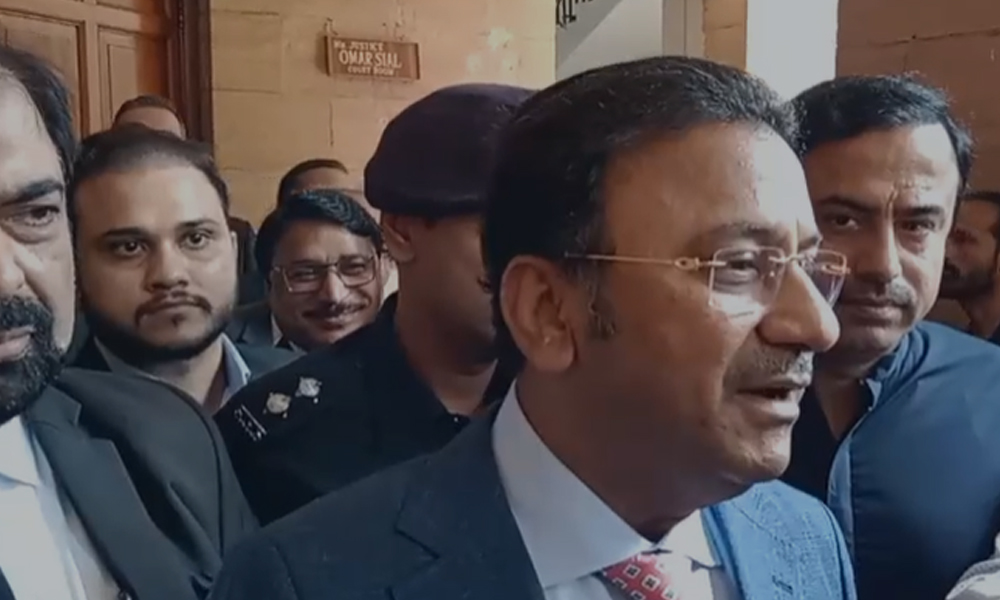
KARACHI: Sindh Home Minister Zia-ul-Hassan Lanjar appeared before the judicial commission investigating the death of businessman Mir Raza Ali on Thursday and apologised for the conduct of the provincial advocate general, after the law officer’s intervention disrupted the previous hearing.
Lanjar told the one-member commission headed by Sindh High Court Justice Omar Sial that the Sindh government had no objection to the family of the deceased asking questions through its lawyer and assured the panel that the provincial government would provide whatever assistance was required to establish the facts of the case.
The minister’s appearance came after the commission took exception to the advocate general’s objection to questions put by Jibran Nasir, counsel for Mir Raza’s family, during the police surgeon’s testimony on Tuesday.
Justice Sial had summoned Lanjar after observing that the advocate general’s intervention had interrupted the proceedings and appeared to prevent the bereaved family from seeking clarification from a witness.
The commission had specifically sought the home minister’s position on whether the family could be prevented from asking questions through its counsel.
“I am sorry on behalf of the Sindh government,” Lanjar told the commission, according to the proceedings.
He said the advocate general represented the Sindh government and expressed sympathy with Mir Raza’s family, adding that he was also a father and understood their concerns.
Lanjar said the responsibility of the police and the government was to bring the actual perpetrators before the law.
He assured the commission that he and the Sindh government would cooperate with any directions issued by it and provide whatever material or assistance was required.
Justice Sial welcomed the minister’s appearance and said the commission wanted to restore the family’s confidence in the investigation.
The commission chief said there appeared to be a lack of trust between the family and the authorities and that the purpose of the proceedings was to establish the facts transparently.
He also made it clear that the family was entitled to put questions through its lawyer rather than having to raise each question separately before the commission.
Justice Sial, however, also noted that the Advocate General was a capable lawyer and expressed the hope that he would continue in his position.
Commission examines disputed post-mortem
The dispute over the advocate general’s conduct emerged during the testimony of Karachi Police Surgeon Dr Summaiya Syed Tariq, who appeared before the commission on Tuesday.
Dr Summaiya told the commission that several important details appeared to be missing from the initial post-mortem report prepared by medico-legal officer Dr Usama Sheikh.
She also said the entry and exit wounds described in the report did not correspond, raising questions about the manner in which the examination had been conducted. The commission also examined the preservation and testing of samples collected from Mir Raza’s body.
The police surgeon explained that a proper post-mortem involves a detailed examination of the body from head to toe, documentation of injuries, photography and assessment of the nature and timing of wounds.
She said she had repeatedly sought information from Dr Usama following the discovery of Mir Raza’s body and had questioned him about the gunshot wound, including the bullet’s exit wound.
According to HUM News English, Dr Summaiya also submitted screenshots of her communications with the medico-legal officer to the commission. The panel directed that the material be made part of the record.
The commission had earlier questioned Dr Usama over discrepancies in the first post-mortem and described some of the shortcomings as serious negligence. The doctor denied being under pressure while conducting the examination.
Second post-mortem ruled out suicide
The investigation took a significant turn after Mir Raza’s body was exhumed and a second post-mortem was conducted by an eight-member medical board.
The 25-year-old businessman had gone missing on the night of July 28 after returning home from work. His body was found in bushes in Karachi’s Gulistan-e-Jauhar area the following day.
The initial investigation had raised the possibility of suicide, but his family consistently rejected that version and maintained that he had been murdered.
Following the exhumation and fresh medical examination, police added Section 302 of the Pakistan Penal Code, relating to murder, to the case. A new investigation team was also formed.
The final post-mortem report subsequently ruled out suicide and concluded that Mir Raza had died from a gunshot wound. The report was based on chemical analysis, forensic findings and evidence collected after the exhumation.
DNA testing also confirmed that the body recovered from Gulistan-e-Jauhar was Mir Raza’s.
Investigators said blood found on a broken piece of a flowerpot near the location where the body was found matched the victim’s DNA profile. A chemical examination also indicated that he had been shot from behind.
Digital evidence under scrutiny
The investigation has also expanded beyond conventional forensic evidence.
Investigators submitted reports concerning Mir Raza’s mobile phone, Apple Watch and other digital material to the judicial commission.
The Punjab Forensic Science Agency was reportedly unable to unlock his iPhone, while some screenshots and messages were recovered from the Apple Watch but were described by investigators as not significant to the case.
More recently, the National Cyber Crime Investigation Agency obtained six months of Binance and cryptocurrency-related data linked to Mir Raza.
The data has been provided to the investigation and judicial commission in a format similar to call-detail records. Investigators have asked the NCCIA to analyse the records and translate the technical information into a clearer account of transactions and the movement of funds.
It was earlier reported on Thursday that the analysis could provide investigators with fresh leads and that the agency was expected to provide its assessment to police.
The police had obtained records of Mir Raza’s crypto trading, with officials saying he had been involved in futures trading on Binance.
Family continues to seek wider investigation
Mir Raza’s family, represented by lawyer Jibran Nasir, has continued to press for a broader investigation into the circumstances surrounding his death.
Nasir said the family’s demand for a joint investigation team was not an expression of no-confidence in the judicial commission itself. He said the family wanted those responsible for Mir Raza’s death identified and arrested and the people behind the killing exposed.
He also said the family would challenge the rejection of its request for a JIT before the Sindh High Court, arguing that the provincial government itself had the authority to constitute such a team.
The family has also questioned delays and gaps in the investigation, including the handling and forensic examination of evidence.
The commission, meanwhile, has continued summoning police officials, medical officers, friends, business associates and other witnesses in an effort to reconstruct the events leading to Mir Raza’s death.
Further proceedings
Following Thursday’s hearing, the commission adjourned proceedings until September 14 and summoned the SHO Ferozabad, Head Muharrir Zeeshan and the police surgeon for the next stage of proceedings.
The commission also received a show-cause notice submitted by the dismissed medico-legal officer, Dr Usama Sheikh, and summoned him for September 15 at 11am.
A member of the medical board, Dr Naseem, has also assured the commission that he will appear through Zoom.
The judicial commission was constituted by the Sindh government in August to examine the circumstances surrounding Mir Raza’s death and possible shortcomings in the investigation. It began formal proceedings on August 27 under Justice Umar Sial.
For the family, the central questions remain who killed Mir Raza, why he was killed and whether failures in the initial investigation delayed the discovery of the circumstances surrounding his death. The commission is now examining the medical, forensic, digital and investigative evidence together as it works towards its findings.
You May Also Like

- WEB DESK
- September 10, 2026
Digital payments surge as users cross 2 million in Pakistan
- WEB DESK
- September 10, 2026