- Reuters
- October 25, 2026
No one can stop new administrative units if public wants them: Mohsin Naqvi
-

- WEB DESK | Talha Saeed
- September 5, 2026
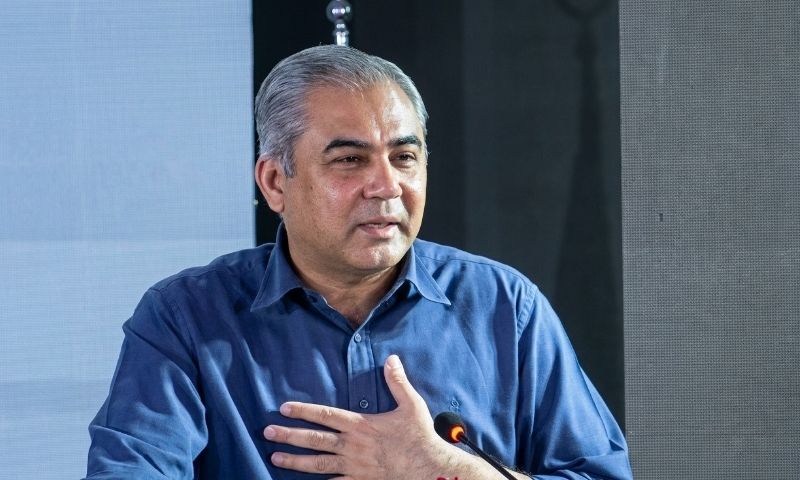
LAHORE: Interior Minister Mohsin Naqvi has backed the creation of new administrative units, saying no individual or political party can block them if they reflect the public will. “If this is the voice of the public’s heart, then it will happen in any case,” Naqvi said, adding that he remained hopeful the units would be created. He also called for the debate to continue so that a better proposal could emerge.
The minister said Pakistan’s administrative structure needed to be “reset”, comparing the state to an underperforming company whose management must sit down and identify what needs fixing.
Emphasising the need for new provinces in the country Naqvi while addressing National Policy Dialogue on New Provinces at UMT Lahore on Saturday said he would not back down from his support for creating new administrative units even if it costs him his job, arguing that Pakistan needs to bring decision-making closer to citizens: “Whether I remain in this job or not, I will not back down from this, whatever the end result may be.”
The minister who also happens to be the Pakistan Cricket Board chairman said that the administrative structure, developed over the past 79 years, had failed to keep pace with the country’s population and growing governance needs. His call for a “reset”, he stressed, was not about dismantling the system or targeting any political party, but about correcting weaknesses that had left basic services such as education, healthcare, clean water and justice out of reach for millions.
Naqvi said any restructuring must remain within the Constitution and be based on political consensus and the will of the people.
“If the people of Pakistan want new administrative units to be created, then they should be created under all circumstances. If the people of Pakistan don’t want them, then under no circumstances should these administrative units be created,” he said.
“If a company isn’t functioning properly, its people sit down and figure out how to fix it. Our system is the same way. If, despite having so many resources, we still aren’t achieving anything, then this system needs a reset,” he said.
Naqvi clarified that his earlier remarks on “resetting” the system, made a month prior, were not directed at any political party or arrangement, but at the administrative framework that has remained in place for 79 years. “My reference was not toward any one political party or political arrangement, I was talking about the system that has been running for the past seventy-nine years,” he said. “Reset does not mean dismantling the system.”
Governance failures cited
Citing government surveys, Naqvi said a fifth-grade student today could not read a basic sentence, and argued that repeated changes in governments and policies had failed to translate into meaningful delivery. He cited continuing shortfalls in nutrition and water access, saying four out of 10 children still lacked adequate food and 54 per cent of the population lacked access to clean water. “This is not the result of any one government, it is the result of seventy-nine years,” he said, adding that parents today were still waiting for education, healthcare and justice for their children, much as earlier generations had.
He said the country’s youth primarily wanted employment opportunities within their own regions, asking rhetorically whether such opportunities existed on merit.
‘People’s choice’ on administrative units
Naqvi said the question of creating new administrative units should be left entirely to the public rather than decided by any individual, government or political party. “This decision should be left to the people, if the people want administrative units to be created, let them be created; if they don’t want it, then don’t create them,” he said.
He questioned whether Pakistan’s administrative structure had kept pace with population growth, using the analogy of a family home. “My question is, the house we lived in eighty years ago — do we still live in that same house today? When a family grows, it inevitably moves from one house to two, and two to four,” he said, noting that Pakistan had been willing to create new tehsils, divisions and districts, but resisted discussion of new administrative units altogether.
He said any restructuring would remain within constitutional limits. “We will not let anything unconstitutional happen in any way. Staying within the constitution, we have a great deal of power,” he said.
On concerns that new provinces could fracture national identity, Naqvi rejected the idea. “I don’t believe our name will be divided. If I am from Khyber Pakhtunkhwa, no one can take away my status for a ‘South’ or ‘North’ designation. I am only saying that the system of governance over me should be changed,” he said, adding that decentralisation would leave people, cities and land unchanged, while improving governance and reducing costs. “Everything will remain the same, only empowerment will increase. Your hospitals will start functioning better.”
Islamabad’s provincial status, judiciary decentralisation
Reiterating his support for Islamabad’s provincial status, Naqvi said the federal capital did not receive a share of NFC funds, with the Capital Development Authority instead relying on selling land to run the city’s affairs. “The CDA runs Islamabad’s system by selling land. Are the citizens of Islamabad not citizens of Pakistan?” he said, calling on people to support the move.
He also said the judiciary was central to public relief, arguing that shifting high courts closer to the public would improve access to justice. “The judiciary is the most important thing for us. Every political party claims that justice is delivered at people’s doorstep. If the high court moves closer to the ground, people will get relief,” he said.
Naqvi cites mayors as governance model
Naqvi argued that devolving authority would allow leaders to better understand and respond to problems faced by ordinary citizens.
Referring to NYC’s Mayor Zohran Mamdani and London’s Sadiq Khan, he said mayors who operate closer to the public develop a stronger understanding of governance and local problems than politicians working through more distant administrative structures.
“I still believe that whoever comes forward as mayor understands governance far better,” Naqvi said. “They know the problems of ordinary people, problems that most politicians and rulers don’t know about.”
He said Pakistan’s large provinces had become too difficult to administer effectively from a single urban centre, questioning whether one bureaucrat could realistically manage the affairs of populations running into tens of millions.
City governance, census concerns
Drawing on his experience as Punjab’s caretaker chief minister, Naqvi said he had made efforts to visit every district in the province over the course of a year but had been unable to cover 70 per cent of the province despite his efforts. He questioned why cities such as Lahore, Peshawar, Quetta and Karachi had not been allowed to develop new administrative structures of their own.
He also raised concerns about the recent census, saying Punjab’s share of parliamentary seats had decreased as a result, and warned against inaction. “Are we waiting for this bomb to go off? Increase the population and take more resources, does this system not need to be reset?” he asked, questioning whether a single bureaucrat could realistically deliver services to a population of 70 million or 140 million.
Path forward
Naqvi said the debate should focus on how many administrative units were needed, with their costs and benefits assessed through parliamentary debate before a final decision was put to the public. “This matter should be settled once and for all, whether provinces should be created or not. You have the platform: parliament,” he said, adding that such restructuring would reduce costs while improving governance.