- Web
- 8 Hours ago
Mojtaba Hosseini Khamenei: from cleric’s son to Iran’s third supreme leader
-

- Web
- Mar 16, 2026
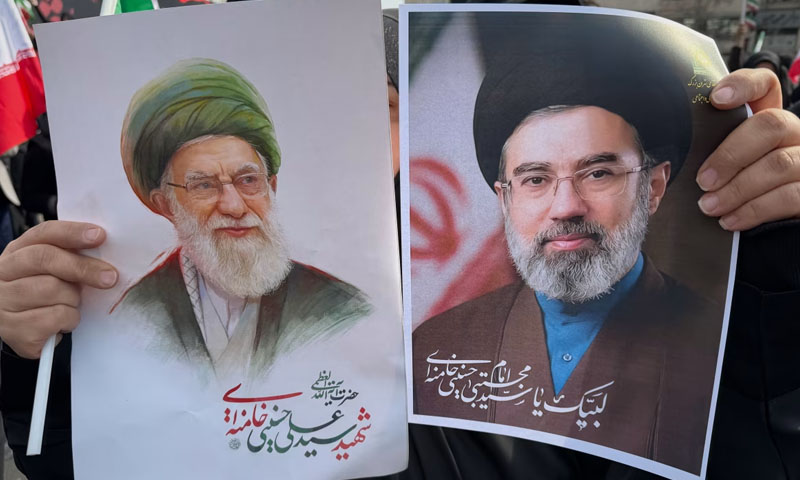
TEHRAN: The rise of Mojtaba Hosseini Khamenei to Iran’s highest political and religious position in March 2026 marked one of the most dramatic leadership transitions in the country’s modern history.
He stepped into power immediately after his father, Iran’s Supreme Leader Ali Khamenei, who continued to serve as spiritual leader, was assassinated.
The arrival of the third spiritual leader, Mojtaba, happened after the three-decade reign of the Khamenei was ended during the escalating regional conflict often referred to as the 2026 Iran War.
Born on September eight, 1969, in Mashhad, Mojtaba grew up in a family deeply embedded in Iran’s revolutionary politics.
He was still a child watching his father emerge as one of the revolution’s influential figures, when the Iranian Revolution reshaped the country after finish with the Shah’s rule in Iran.
He later studied Islamic theology, learning under senior clerics including Mahmoud Hashemi Shahroudi, and eventually became a teacher at the Qom Seminary, where he lectured on advanced jurisprudence.
Mojtaba, alongside his religious education, also built strong ties to Iran’s security institutions.
As a teenager, he joined the Islamic Revolutionary Guard Corps (IRGC) during the Iran–Iraq War, and later gained influence within the Basij, which was a powerful paramilitary force often deployed during internal unrest.
For years, analysts speculated that Mojtaba could eventually succeed his father. Yet his potential rise was controversial.
Critics warned that a father-to-son succession would resemble dynastic rule, something many believed contradicted the principles of Iran’s revolutionary system.
Despite those concerns, Iran’s Assembly of Experts announced on March 8 2026, that Mojtaba had been elected as the country’s third Supreme Leader, given the circumstances. The decision came amid wartime turmoil and reports that the assembly faced pressure from factions linked to the IRGC.
His appointment, however, was immediately followed by uncertainty.
Mojtaba largely disappeared from public view after the announcement, fueling speculation about injuries he may have suffered during the conflict.
While officials insisted he remained in control, analysts noted that the secrecy surrounding his condition only deepened questions about the stability of Iran’s leadership during a critical moment in the region.
You May Also Like