
- Web
- 6 Hours ago
Mpox resurfaces in Karachi with second confirmed case
-

- Web Desk
- Today
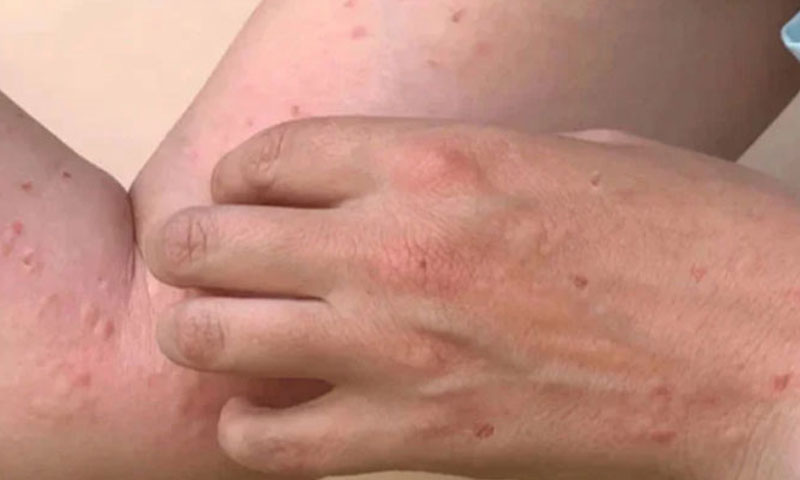
KARACHI: A second case of mpox has been reported in Karachi, with a 22-year-old man testing positive for the viral disease at the Sindh Infectious Diseases Hospital, hospital officials said on Thursday.
According to the medical superintendent, the patient, a resident of Buffer Zone, was shifted to isolation after his test results came back positive.
He said that the patient had no recent travel history, raising concerns over possible local transmission.
Health experts say the emergence of a second case in Karachi underscores the need for heightened surveillance and precautionary measures, particularly in densely populated urban centres where infectious diseases can spread rapidly.
The latest case comes months after the first mpox infection was reported in Karachi in March this year, indicating that sporadic transmission may already be present in the city.
Mpox — formerly known as monkeypox — is a viral disease that can spread through close contact and typically causes fever and a painful rash that may last for weeks. It is closely related to the smallpox virus.
Mpox was first identified in the 1950s and for decades remained largely confined to parts of sub-Saharan Africa, where it primarily circulated among rodents before occasionally infecting humans.
However, in recent years, the virus has spread beyond its traditional geographic range.
A global outbreak in 2022 saw the milder clade II strain spread to more than 100 countries, largely through human-to-human transmission involving close contact.
While global case numbers declined after the 2022 outbreak, health authorities warn that the virus has not disappeared and continues to circulate in different regions.
More severe variants, including clade I, have also seen a rise in cases in parts of central Africa since 2024, with isolated cases reported elsewhere.
Experts have cautioned that environmental changes, increasing population density and greater human mobility are contributing to the spread and evolution of viruses like mpox, increasing the risk of outbreaks in new regions.
The World Health Organization (WHO) has previously said that while a vaccine for mpox exists, there is no widely available specific treatment, making early detection and isolation key to controlling its spread.
Health authorities in Sindh are expected to continue monitoring contacts and enforcing isolation protocols to prevent further transmission.
You May Also Like