- Farah Mehjabeen
- October 26, 2026
Mustafa Kamal calls Sindhis ‘brothers’, says new provinces can be pursued constitutionally
-

- WEB DESK
- September 19, 2026
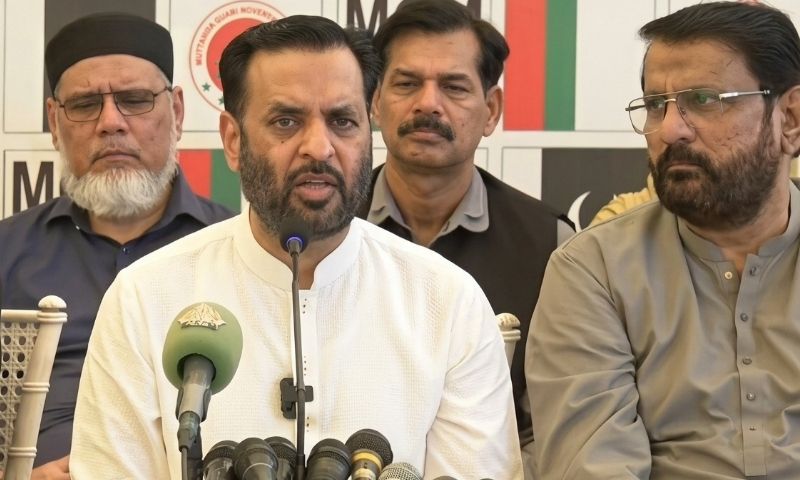
Federal Health Minister and Muttahida Qaumi Movement-Pakistan (MQM-P) leader Mustafa Kamal on Saturday called Sindhis his “brothers and sisters” and said his party’s demand for new provinces was rooted in the Constitution, seeking to counter portrayals of the campaign as a conflict between Sindhis and Urdu-speaking Muhajirs.
Kamal said political differences should not be allowed to revive ethnic divisions between communities that have lived alongside each other in Sindh for generations.
“If MQM people think ill of Sindhis, what answer will we give our elders?” Kamal asked.
“This prejudice that Sindhis and Muhajirs should fight each other will no longer work,” he added.
His remarks came as MQM-P has stepped up its campaign for the creation of new administrative units, particularly in Sindh, arguing that Pakistan’s existing administrative structure has struggled to keep pace with population growth and growing demands for public services.
The party says its proposal is based on administrative and governance considerations rather than ethnicity or language. Kamal has argued that smaller administrative units and stronger local governments could bring decision-making closer to citizens and improve the distribution of resources.
Constitutional route
Kamal said the issue should be pursued through constitutional and democratic means rather than framed as an attempt to divide Sindh or Pakistan.
MQM-P has repeatedly referred to Article 239 of the Constitution, which sets out the procedure for constitutional amendments. Changes affecting the limits of a province require approval by at least two-thirds of the total membership of the relevant provincial assembly before the amendment can proceed through the federal constitutional process.
Kamal has previously said his party would continue to pursue the issue through parliament and other constitutional forums.
The MQM-P leader has also invoked the political history of Pakistan in making the case for administrative restructuring. He argued that the Constitution provides a mechanism for changing the country’s administrative arrangements and that seeking new provinces through that mechanism cannot itself be regarded as unconstitutional.
“Caravans do not stop because dogs bark,” Kamal said, signalling that criticism would not deter the party from pursuing its campaign.
Earlier MQM-P Chairman Khalid Maqbool Siddiqui has likewise called for a broader national dialogue on new provinces, saying additional administrative units should be considered wherever population and governance requirements warrant them.
Sindh opposes territorial change
The demand has met strong opposition from the Pakistan Peoples Party (PPP), which governs Sindh and has rejected proposals to alter the province’s territorial boundaries.
The Sindh Assembly has opposed the creation of a new province out of Sindh, while PPP leaders have argued that governance problems should be addressed through better administration and devolution rather than by dividing the province.
The disagreement has placed MQM-P and the PPP on opposing sides of a debate that carries both administrative and political implications for Sindh.
MQM-P leaders, however, have sought to separate the question of administrative restructuring from ethnic politics. Kamal has repeatedly said the party does not view Sindhis as opponents and that its demand is intended to improve governance for residents across the province.
In recent remarks, he has also said MQM-P wants to “reconnect” Pakistan rather than break it apart, arguing that additional administrative units could strengthen the federation by bringing government closer to citizens.
Resources and local government
Kamal has linked the demand for new provinces to the distribution of financial resources and political authority.
At a July 25 press conference, he said the Sindh government had received Rs22 trillion over 18 years but allocated Rs680 billion to Karachi, while claiming that Karachi contributed more than 90% of Sindh’s revenue. Dawn and The Express Tribune reported the figures as claims made by Kamal.
Kamal also said Karachi would have received about Rs2 trillion if an earlier formula for distributing General Sales Tax revenues had remained in place, arguing that the additional funds could have been used for roads, water supply, public transport, schools, hospitals and employment. That figure, too, was presented as Kamal’s estimate rather than independently verified data.
He has accused the Sindh government of retaining powers and resources at the provincial level despite the devolution of responsibilities under the 18th Amendment, and has called for local governments to receive greater financial and administrative authority.
At the July press conference, Kamal also criticised the distribution of federal funds among the provinces, saying Sindh had received around Rs2.2 trillion out of Rs8.4 trillion allocated by the federation among the four provinces. He alleged that such funds were not reaching districts and local councils. Those figures and allegations were likewise reported as Kamal’s statements.
A broader restructuring debate
The MQM-P campaign comes amid renewed discussion among Pakistani political figures about whether the country should create additional provinces or administrative units.
The party says population growth and the expansion of cities have made the existing four-province structure increasingly difficult to manage. It has argued that smaller units could make governments more accountable and allow resources to be distributed more directly to local communities.
Siddiqui has said the demand should not be limited to Karachi or Sindh and that new administrative units should be considered wherever population and governance needs justify them.
The debate has nevertheless been particularly sensitive in Sindh, where questions of provincial identity, political representation and control over resources have long been intertwined.
Kamal has sought to address that sensitivity by repeatedly stressing that Sindhis and Muhajirs are not adversaries.
“If MQM people think ill of Sindhis, what answer will we give our elders?” he said, arguing that political competition should not be allowed to turn communities against one another.
He said MQM-P would continue its campaign through constitutional and democratic channels while rejecting attempts to portray its demand for adm inistrative restructuring as an ethnic confrontation.
“Caravans do not stop because dogs bark,” Kamal said.
You May Also Like