- WEB DESK
- October 18, 2026
NA panel approves Islamabad LG bill as PPP objects to election plan
-

- WEB DESK
- September 3, 2026
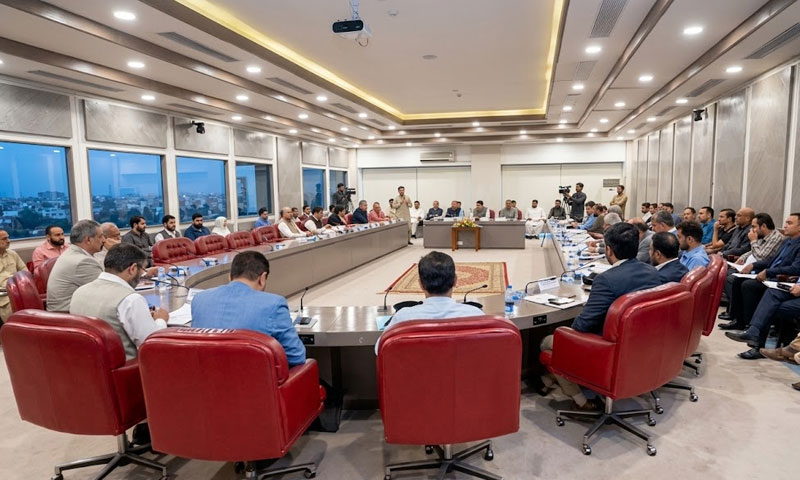
ISLAMABAD: The National Assembly Standing Committee on Interior on Thursday approved a bill aimed at replacing the existing local government system in Islamabad with a three-council system, despite strong opposition from Pakistan People’s Party (PPP) members who accused the government of delaying local elections and paving the way for powerful administrators.
Earlier, the federal cabinet approved a new local government system for Islamabad, under which the federal capital will be divided into three councils, each headed by its own mayor.
The approval came during a heated meeting of the committee, chaired by Raja Khurram Nawaz, with members questioning the government over conflicting positions on the proposed local government law.
The Ministry of Law and Justice officials also appeared unaware of a new local government bill that members said had been approved by the cabinet a day earlier.
“If the government wants to hold elections, then say it clearly,” PPP lawmaker Agha Rafiullah said during the meeting.
He questioned why the committee was still discussing the ordinance when it was due to expire on September 5, saying the government appeared to be saying one thing and doing another.
“We are still talking about passing the same ordinance, but what bill did the government approve yesterday?” Rafiullah asked.
Law ministry officials told the committee that even if the ordinance expired, the bill would remain before Parliament.
However, they said no new bill had been received by the ministry and that they were unaware whether any such legislation had been approved.
The exchange highlighted confusion over the legislative route for the proposed new local government system, which was approved by the federal cabinet on Wednesday.
The proposed framework would divide Islamabad into three councils, each headed by a mayor, with each council comprising 21 members with representation for general councillors as well as women and minorities.
The committee chairman said delimitation for local government elections had already been completed.
Rafiullah, however, criticised the government’s approach, saying the country had been “put into pieces” by repeated discussions about provinces and administrative units.
He also questioned the government’s ability to manage Islamabad’s existing institutions, saying it could not even properly manage a small city and its hospitals while discussions were being initiated about creating new administrative units.
PPP warns against powerful administrators
PPP MNA Abdul Qadir Patel strongly opposed the proposed arrangement, saying his party believed the government had no intention of holding local government elections in Punjab and Islamabad.
“You are going to appoint administrators who will be given greater powers,” Patel said.
He also alleged that there were discussions about turning Islamabad into a separate province.
Patel criticised the government’s handling of the capital, particularly after recent heavy rains caused flooding in parts of Islamabad and Rawalpindi.
“Islamabad was submerged when the floods came,” he said, questioning what powers a separate Islamabad province would have.
He said the proposed legislation was merely an attempt to secure approval through voting.
Patel also rejected any proposal to make Islamabad a separate province, saying the PPP would not support it under any circumstances.
“I will not support Islamabad becoming a separate province,” he said.
The committee chairman responded that he could hold a separate vote on the issue.
At another point, Patel accused the chairman of using the issue for political point-scoring and said the proposed system would effectively create an all-powerful administrator.
“You are going to appoint an administrator who will be a king, and there will be no fixed tenure,” he said.
Patel said the PPP would not vote for the local government bill.
The chairman again suggested that the matter could be put to a vote.
Chairman says he wants elected representation
The committee chairman said his personal preference was for Islamabad to have its own elected representatives and assembly.
“I want Islamabad to have its own representatives and its own assembly,” he said.
PPP MNA Syeda Nosheen Iftikhar also suggested that the issue be put to a vote.
Patel, however, dismissed the suggestion as “point-scoring” and an unnecessary stunt.
Rafiullah meanwhile criticised what he described as repeated and irresponsible statements about creating provinces and administrative units.
He said the priority should be strengthening existing institutions rather than creating new structures.
Minister defends Islamabad administration
Minister of State for Interior Talal Chaudhry also briefed the committee on the situation in Islamabad following recent heavy rains.
He said the city had been cleared after the rainfall and that only one roof-collapse incident had been reported.
Chaudhry rejected allegations of widespread encroachments and administrative failure in the capital.
“There are no encroachments in Islamabad and police stations are not being sold here,” he said.
He challenged members to compare Islamabad with any other city in the country, saying the government was prepared to defend its record.
“Do not criticise others merely to hide your own shortcomings,” Chaudhry told the committee.
Government’s three-council plan
The proposed structure follows amendments introduced earlier this year to the Islamabad Capital Territory Local Government Act, which replaced the Metropolitan Corporation Islamabad model with three town corporations.
The three councils broadly correspond to Islamabad’s three National Assembly constituencies.
The Election Commission of Pakistan had previously withdrawn the schedule for Islamabad’s local government elections after changes to the local government structure and electoral mechanism through an ordinance.
The changes forced the election process back into the legislative stage and required the ECP to seek fresh documentation and delimitation details from the federal authorities.
The commission had sought notifications defining the boundaries of the proposed town corporations, details of union councils and updated maps needed for delimitation.
The committee chairman said on Thursday that the delimitation process had already been completed.
However, political opposition to the proposed system and uncertainty over the legislative process continue to cast doubt over when elections will actually be held.
The committee’s approval now clears a key parliamentary hurdle, although the legislation will still have to go through the remaining parliamentary process before the new local government structure can formally take effect.
Committee seeks in-camera briefing on Balochistan
The committee also discussed the security situation in Balochistan.
Chairman Raja Khurram Nawaz said he had written to the National Assembly speaker seeking an in-camera briefing on the situation in the province.
He said the speaker had responded that the security situation in Balochistan was not conducive to holding such a briefing there.
Jamal Raisani questioned the rationale, saying that if the speaker could travel to the province, members of the committee should also be able to do so.
“We have requested the prime minister again for a briefing on the situation in Balochistan,” Minister of State Talal Chaudhry said.
He said efforts were being made to arrange a detailed briefing by the Balochistan chief minister and provincial interior minister.
The government also defended its security policy in the province, saying security forces had been given full authority by Prime Minister Shehbaz Sharif to take measures aimed at improving the situation.
The minister said the government had also obtained details of the 250 people who had travelled to Islamabad before going to Balochistan.
He said the prime minister had responded to all questions concerning the people who came to Islamabad.
Rafiullah, however, accused the government of avoiding political engagement.
“The state is ready, but democracy is looking for an escape route,” he said.
He also rejected what he described as “non-serious” statements about creating new provinces and administrative units.
Rafiullah said the government should focus on improving existing institutions instead of introducing new administrative arrangements.