- Web Desk
- 29 Minutes ago
NA passes Rs18.77tr budget for FY2026-27, rejects opposition amendments
-

- Muhammad Faizan Khan
- 1 Minute ago
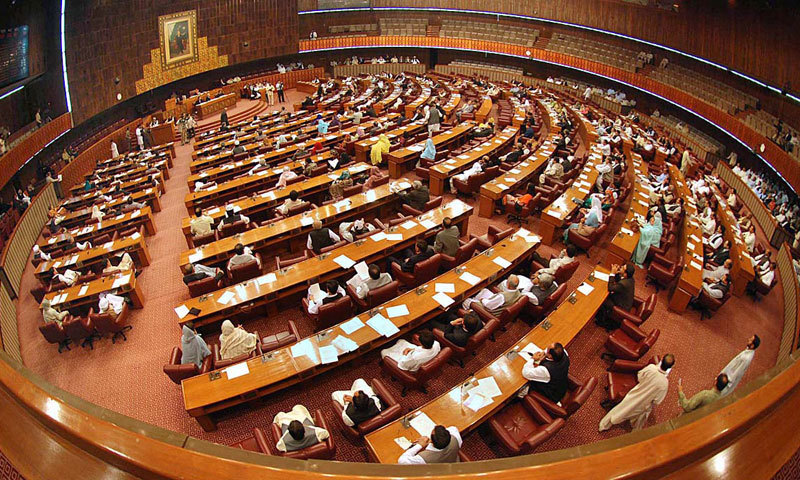
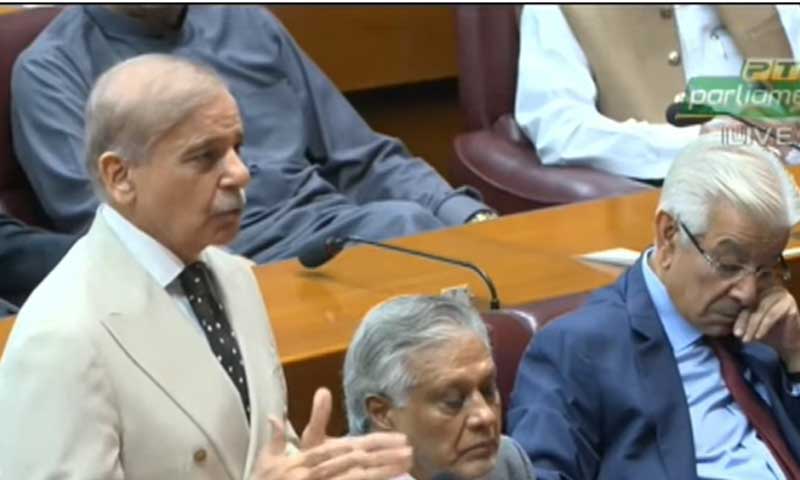
ISLAMABAD: The National Assembly on Tuesday passed a Rs18,771 billion federal budget for the fiscal year 2026-27, overwhelmingly rejecting proposed opposition amendments to the Finance Bill 2026.
The passage of the budget was marked by a partial opposition walkout, heated constitutional debates between the speaker and lawmakers, and sweeping structural modifications to the country’s customs, sales tax, and corporate tax regimes.
Amid the legislative process, the parliamentary committee deleted Clause 3 of the Finance Bill, which pertained to the implementation of a Petroleum Levy and Climate Support Levy.
Customs And Tax Reforms Passed
The approved Finance Bill introduces major operational and legal shifts within Pakistan’s tax and customs frameworks, balancing stricter enforcement with targeted industrial concessions:
Asset Seizure and Dispute Resolution
An amendment to the Customs Act now legally guarantees affected parties the right to present their defense before state authorities can seize their assets. Additionally, chartered accountants can now be included as non-voting members in customs and tax dispute resolution committees.
Aviation Sector Concessions
Expanding on initial tax exemptions previously restricted to the national carrier, the assembly approved an amendment extending an 18 per cent sales tax exemption on the import of aircraft and spare parts to all other commercial airlines operating in Pakistan, effective July 1, 2027.
Corporate and SME Adjustments
Businesses with an annual turnover of up to 200 million rupees have been granted the option to opt out of the Final Tax Regime. To support struggling enterprises, “economic losses due to financial distress” will now be formally factored into state economic viability assessments.
Automotive and EV Duty Slabs
Federal Excise Duty (FED) on imported electric vehicles (EVs) valued up to $75,000 has been set at zero per cent.
However, EVs valued between $75,000 and $110,000 will face a 30 per cent excise duty, while premium EVs exceeding $110,000 will be hit with a 40 per cent FED. For conventional imported fuel vehicles, the FED has been set at 86 per cent for engine capacities between 2000cc and 3000cc, and 92 per cent for vehicles exceeding 3001cc.
Sector-Specific Tax Rates
The minimum tax rate for distributors operating in the pharmaceutical, fertilizer, sugar, and electronics sectors has been capped at 0.5 per cent. For major exporters, Super Tax Clause C4 will no longer apply if export revenues constitute more than 80 per cent of their total corporate turnover.
Digital and Retail Incentives
Special tax concessions were approved for businesses and footwear manufacturers integrated with the Federal Board of Revenue’s (FBR) digital invoicing and Point of Sale (POS) systems. Private equity and venture capital funds were also granted conditional tax exemptions.
Banking Data and Telecom
The State Bank of Pakistan has been legally authorized to establish a centralized virtual repository for banking data.
On consumer goods, a new facility was approved allowing citizens to pay taxes on imported mobile phones through flexible installment plans.
Digital Economy and Penalties
A 5 per cent withholding tax on earnings generated from social media platforms was finalized, with the caveat that taxes deducted from non-resident individuals for social media payments will be classified as adjustable.
Conversely, financial penalties and surcharges on tax non-filers were significantly increased, though an amendment to the Federal Excise Act now mandates that the state must prove “intentional violation” before penalizing an individual.
Parliamentary Turmoil And Walkout
The budget session witnessed a major political fissure as lawmakers backed by the Pakistan Tehreek-e-Insaf (PTI) and their political allies staged a total walkout from the floor of the house, refusing to participate further in presenting amendments.
Members of the Jamiat Ulema-e-Islam-Fazl (JUI-F) opposition party chose to remain in the chamber.
JUI lawmaker Aliya Kamran presented a limited number of legislative amendments, while Speaker Sardar Ayaz Sadiq continued to call out the names of absent opposition leaders, including PTI Chairman Barrister Gohar Ali Khan, to present their motions.
The walkout followed biting floor speeches from opposition figures.
Barrister Gohar heavily criticised the government’s fiscal policy, stating that investment strategies had been completely ignored.
“No concrete measures have been taken to boost investment,” Gohar said.
“Tax exemptions are being handed out to the wealthy, while the poor are being trapped in a tightening tax web. This Finance Bill will ruin what remains of our domestic businesses and investment.”
Leader of the Opposition Mahmood Khan Achakzai delivered a sweeping condemnation of the political landscape, accusing both the ruling coalition and the Pakistan People’s Party (PPP) of systematically violating the constitution.
Achakzai questioned the judicial and political accountability in the country, highlighting cases where opposition members faced unprecedented, cumulative prison sentences.
“Is extending a hand to the opposition meant to look like sentencing five individuals to 286 years in prison? Has anyone in the world ever received a 286-year sentence?”
Achakzai asked. He criticized the weakening of parliament, state actions in Azad Kashmir, and the detention of the PTI’s founding chairman and political workers.
He noted that true cooperation would only happen under the total supremacy of the constitution, urging the military to remain subservient to the civilian government as seen in other constitutional democracies.
Furthermore, opposition member Malik Amir Dogar questioned the logic behind granting a 15-year tax holiday to Pakistan International Airlines (PIA) post-privatisation, arguing that mid-tier commercial airlines should receive equal relief instead of concentrating exemptions on elite travel.
PTI lawmaker Asad Qaiser demanded that tax exemptions for the former FATA and PATA regions be maintained and urged the government to resolve cross-border issues with Afghanistan through direct diplomatic dialogue to ensure economic stability on the western border.
Speaker And Defence Minister Respond
Responding sharply to accusations of constitutional overreach from the opposition benches, NA Speaker Ayaz Sadiq defended his management of the assembly.
“I have been told that I broke the constitution. Let someone tell me exactly which part of the constitution I have broken,” Sadiq stated.
“If you stand in this house and declare allegiance to Afghanistan over Pakistan, I will not allow you to do so. If you speak against the military and the judiciary, I will not allow it. If following the constitution of Pakistan is considered breaking it, then I will break it over and over again.”
Outside the assembly floor, Defence Minister Khawaja Asif addressed the media, framing the legislative milestone alongside major regional diplomatic breakthroughs.
Asif confirmed that Iranian President Masoud Pezeshkian would be arriving in Pakistan for a highly significant visit, reflecting growing bilateral alignment.
Asif credited Prime Minister Shehbaz Sharif and the military leadership for their historic facilitation of a major regional peace accord signed two days prior, which he noted stopped escalating warfare and established stability in the Gulf.
Turning to external security, Asif launched a scathing critique against India and Afghanistan. He accused New Delhi of continuous hostility and conspiring with Afghan elements to destabilize Pakistan’s western border due to India’s inability to digest Pakistan’s rising diplomatic influence.
“If India attempts any further aggression, Pakistan will deliver a response far more powerful than before,” Asif warned.
Addressing Kabul, the defence minister expressed deep regret over current cross-border friction, reminding Afghan leadership of Pakistan’s decades-long hospitality.
“It is a Pakistani tradition that if someone offers you a single sip of water, you remember that favor for a lifetime,” Asif said.
“We provided shelter to millions of Afghans, allowed them to build trillion-rupee businesses, provided education, and gave them homes. If Afghanistan still refuses to understand this and chooses to conspire against us alongside India, then it is deeply regrettable. Pakistan desires nothing but absolute peace on its western border.”
You May Also Like