- WEB DESK
- August 25, 2026
NADRA backs out of Pak ID facial verification facility for SIM issuance
-

- Saba Bajeer
- August 25, 2026
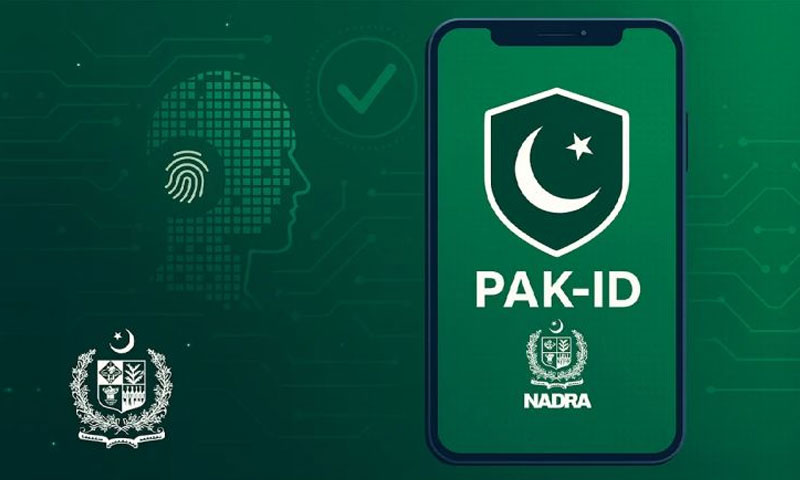
ISLAMABAD: The National Database and Registration Authority (NADRA) has withdrawn from a previously proposed arrangement to enable facial-recognition-based SIM verification through its Pak ID mobile application, forcing the Pakistan Telecommunication Authority (PTA) and cellular operators to examine alternative mechanisms for rolling out the technology nationwide.
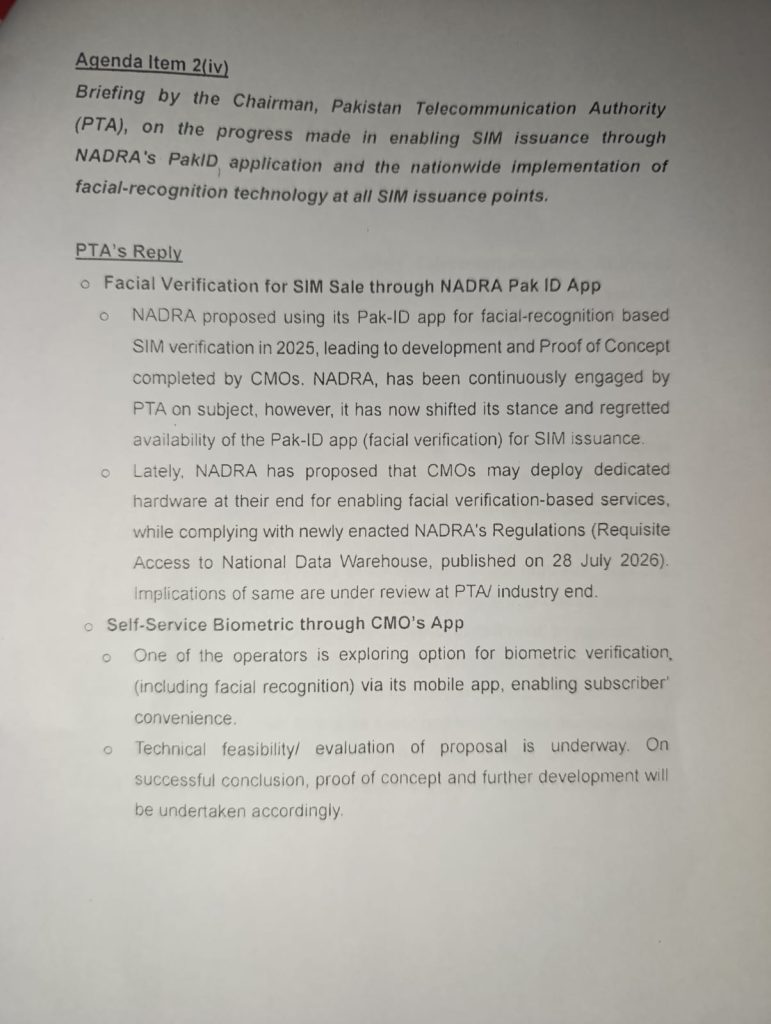
According to a briefing submitted by the PTA to the Senate Standing Committee on Cabinet Secretariat, NADRA had proposed in 2025 that its Pak ID application be used for facial-recognition-based SIM verification.
The proposal subsequently led to the development of the system and completion of a proof of concept by cellular mobile operators. However, after remaining engaged with the PTA on the matter, NADRA has now changed its position and expressed regret that the Pak ID application’s facial-verification facility would not be available for SIM issuance, according to documents available with HUM English.
The development could delay the planned introduction of a digital mechanism that would allow subscribers to complete SIM verification using facial recognition rather than depending entirely on conventional biometric verification at SIM issuance points.
NADRA proposes dedicated hardware
Following its decision not to make facial verification available through the Pak ID application, NADRA has now asked cellular mobile operators to deploy dedicated hardware at their own end to enable facial-verification-based services.
The PTA briefing states that the implications of this proposal are currently being examined by both the regulator and the telecom industry.
The proposed arrangement would also have to comply with NADRA’s newly enacted “Regulations on Requisite Access to National Data Warehouse”, which were published on July 28, 2026.
The new regulatory requirements and the question of access to NADRA’s National Data Warehouse are therefore also part of the ongoing review.
The shift in NADRA’s position has affected the mechanism initially envisaged for facial-recognition-based SIM verification through the Pak ID application, according to the PTA briefing.
The regulator and cellular operators are now assessing the technical, operational and financial implications of NADRA’s alternative proposal before determining the way forward.
Operators explore own apps
With the Pak ID option currently unavailable, at least one cellular operator is exploring a separate self-service mechanism through its own mobile application.
According to the PTA briefing, the operator is examining an option that would allow subscribers to complete biometric verification, including facial recognition, through its mobile app.
The proposal is currently undergoing a technical feasibility assessment.
If found viable, the operator will undertake a proof of concept followed by further development of the system, the briefing said.
The initiative could provide an alternative route for introducing facial-recognition-based verification without relying on facial verification through the Pak ID application.
The Senate committee briefing was prepared in response to an agenda item concerning progress on enabling SIM issuance through NADRA’s Pak ID application and the nationwide implementation of facial-recognition technology at all SIM issuance points.
The PTA said that the objective remains under consideration, with alternative methods being examined following NADRA’s changed position.
The regulator and telecom industry will have to determine whether dedicated hardware at cellular operators’ premises or operator-based mobile applications can provide a technically feasible and secure mechanism for facial verification.
The process is expected to involve further technical assessment and proof-of-concept testing before any broader implementation.
PTA clarifies position on mobile phone taxes
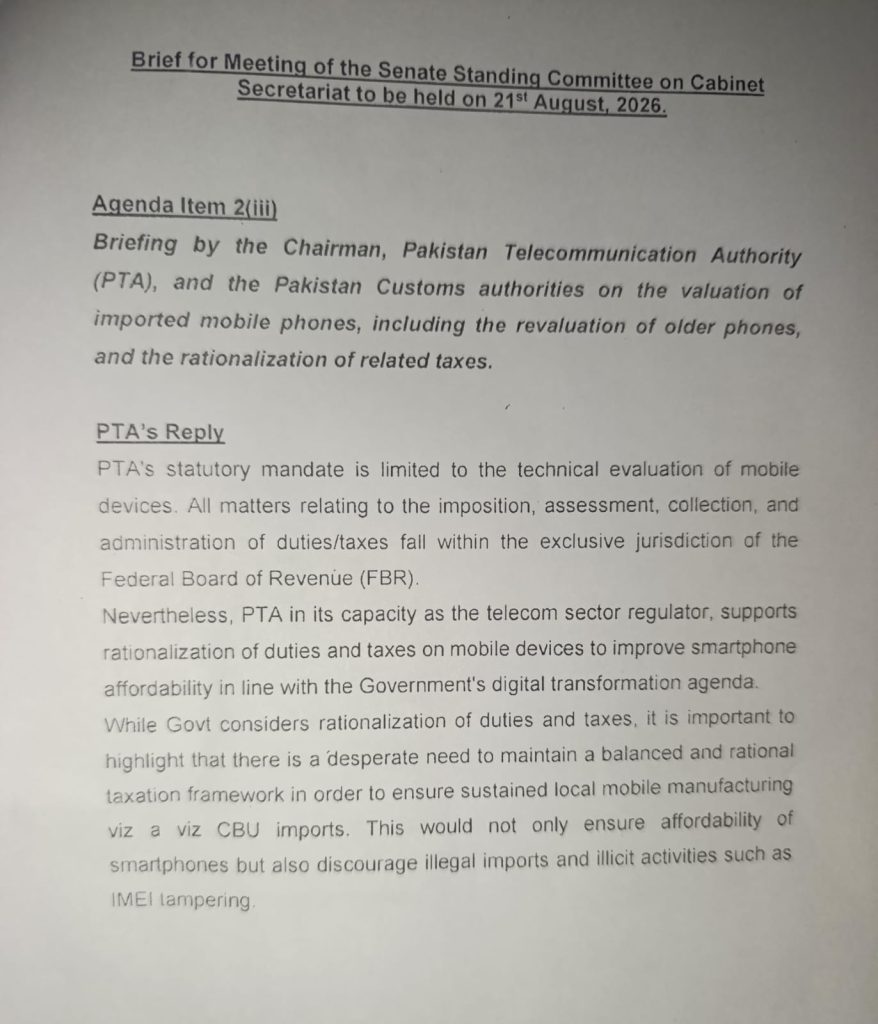
The Senate briefing also covered the valuation of imported mobile phones, including the revaluation of older devices and the rationalisation of related duties and taxes.
The PTA clarified that its statutory mandate is limited to the technical evaluation of mobile devices.
According to the briefing, matters relating to the imposition, assessment, collection and administration of duties and taxes fall within the exclusive jurisdiction of the Federal Board of Revenue (FBR).
The PTA nevertheless told the committee that, in its capacity as the telecom sector regulator, it supports the rationalisation of duties and taxes on mobile devices to improve smartphone affordability in line with the government’s digital transformation agenda.
The regulator, however, stressed the need for a balanced and rational taxation framework.
The PTA said that there was a need to maintain a balanced taxation framework to ensure sustained local mobile-phone manufacturing vis-à-vis completely built-up (CBU) imports.
According to the briefing, such a framework should not only help make smartphones more affordable but also discourage illegal imports and illicit practices such as IMEI tampering.
The PTA’s position therefore combines support for reducing or rationalising the tax burden on mobile devices with the need to protect the domestic mobile manufacturing sector.
The regulator said that the taxation framework should strike a balance between consumer affordability, local manufacturing and efforts to curb illegal imports and related unlawful activities.
Senate committee briefed on telecom reforms
The PTA’s briefing was submitted for a meeting of the Senate Standing Committee on Cabinet Secretariat held on August 21, 2026.
The committee was briefed on both the progress towards facial-recognition-based SIM issuance and the valuation and taxation of imported mobile phones.
The developments highlight two parallel challenges for Pakistan’s telecom sector: introducing easier and more secure digital identity verification for SIM issuance while ensuring that mobile-device taxation supports affordability without undermining local manufacturing or encouraging illegal imports.
For facial-recognition-based SIM verification, however, the immediate challenge remains NADRA’s decision not to make the required facility available through its Pak ID application, despite the proposal having originated with NADRA and operators having already completed proof-of-concept work.
The PTA and telecom industry are now assessing alternative arrangements, including dedicated hardware and self-service verification through cellular operators’ own applications, before deciding on a mechanism for broader implementation.