- Web Desk
- 4 Minutes ago
NDMA’s emergency operations center warns of severe weather ahead
-

- Web Desk
- Now
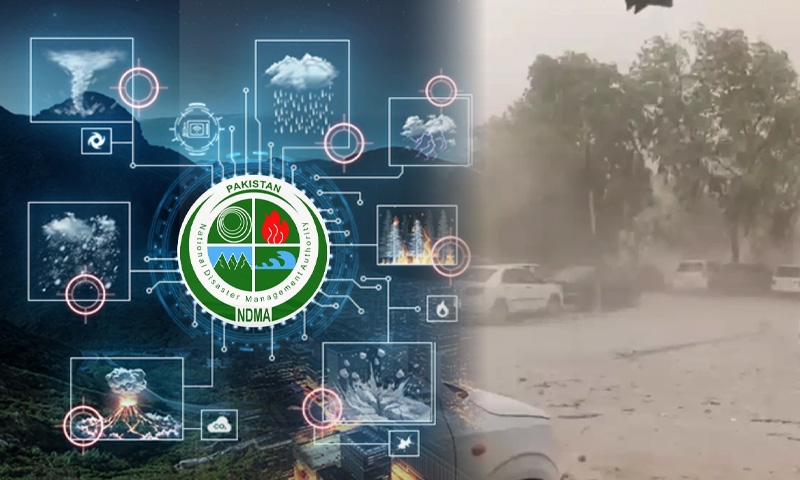
The National Disaster Management Authority (NDMA) has issued a critical weather alert, forecasting severe weather conditions across Pakistan in the coming days. The alert, which is in line with the weather forecast released by the National Emergency Operations Center (NEOC) earlier this year, warns of continued heavy rainfall, thunderstorms, and snowfall in several regions.
The NEOC’s latest review, which covers the period from April to June, suggests that the country will continue to experience adverse weather patterns, with westerly winds triggering widespread rain, strong winds, and thunderstorms. The conditions are expected to intensify over the next 12 to 24 hours, posing significant risks to both life and property.
KEY AREAS AFFECTED BY RAIN, STORMS, AND SNOWFALL
The NEOC has identified numerous regions that will be severely impacted by the ongoing weather event:
Khyber Pakhtunkhwa: Provinces including Peshawar, Nowshera, Charsadda, Mardan, and several other districts are at high risk of flooding due to the expected rainfall. These areas may experience rising water levels through April 5. Snowfall is also predicted in the upper and mountainous areas, including regions of Khyber Pakhtunkhwa, Azad Kashmir, and Gilgit-Baltistan.
Punjab: Cities such as Lahore, Faisalabad, Multan, Sialkot, and Mandi Bahauddin are expected to witness rain, strong winds, and thunderstorms over the next 12 to 24 hours. Stormy weather is also expected in Rawalpindi, Murree, Jhelum, and other nearby districts.
Sindh: Karachi and other major cities, including Hyderabad, Sukkur, and Larkana, will likely experience rain accompanied by strong winds and thundershowers. The weather conditions are expected to continue throughout the next 12 to 24 hours.
Balochistan: Quetta, Zhob, Kalat, and several other cities in the province are predicted to see rain, gusty winds, and thunderstorms. These conditions are expected to worsen in the coming days, impacting the region’s infrastructure and transport systems.
Gilgit-Baltistan and Azad Kashmir: Snowfall is predicted to continue in the mountainous areas of Gilgit-Baltistan, including Skardu, Hunza, and Ghanche, as well as in Azad Kashmir’s Muzaffarabad, Bagh, and Neelum Valley. Travelers in these areas are urged to exercise caution due to hazardous road conditions caused by snow and landslides.
POTENTIAL HAZARDS
The NEOC has raised concerns about several potential dangers due to the ongoing weather conditions:
Flooding: Heavy rainfall, particularly in Khyber Pakhtunkhwa, Punjab, and Sindh, is likely to lead to flooding in low-lying areas. Water levels are expected to rise rapidly, posing a risk to homes, roads, and infrastructure.
Snow and landslides: In the mountainous regions of Gilgit-Baltistan, Azad Kashmir, and Khyber Pakhtunkhwa, snowfall could trigger landslides, which may block roads and disrupt travel.
Storms and hail: Thunderstorms, accompanied by strong winds and hail, are expected to cause damage to crops, trees, and power lines. In some cases, weak structures may collapse under the pressure of the severe weather.
Travel disruptions: The intense weather conditions are likely to cause slippery roads and poor visibility, affecting traffic flow. Citizens are urged to limit travel, especially in areas prone to flooding and landslides, and to follow any road advisories.
SAFETY INSTRUCTIONS FOR CITIZENS
The NDMA has issued the following safety guidelines for citizens to minimize risks during the ongoing weather conditions:
Avoid unnecessary travel: Stay indoors unless travel is absolutely necessary, particularly in areas under flood watch or in the path of strong storms.
Drive cautiously: Roads are expected to be slippery due to rain, and drivers should be extra cautious. Slow down, use headlights, and maintain a safe distance from other vehicles.
Stay away from trees and weak structures: In stormy conditions, falling trees and debris can cause injuries. Seek shelter in strong, secure buildings.
Check weather updates regularly: Citizens are encouraged to download the Pak NDMA Disaster Alert app for real-time weather alerts and updates. The app provides vital information on impending weather conditions and safety measures.
Tourists and travelers: Those planning to visit northern regions, including the mountainous areas, should check the weather and road conditions before departure. Due to the risk of snow, landslides, and blocked roads, only essential travel should be undertaken.
ALERT ISSUED TO PROVINCIAL AND DISTRICT AGENCIES
In preparation for the adverse weather, the NDMA has directed all provincial and district agencies to remain on high alert. Local authorities are advised to deploy emergency teams, ensure the readiness of relief efforts, and stay in constant communication with the central command to manage any developing situations.
The NDMA’s swift response and early warning system are intended to reduce the impact of these extreme weather conditions. The public is urged to cooperate with emergency services and follow all weather-related instructions.
For further updates, individuals are encouraged to stay informed through official channels, including the NDMA’s Pak NDMA Disaster Alert app, and to heed all advisories issued by local authorities.
You May Also Like