- WEB DESK
- August 28, 2026
Nepal floods: 117 tourists rescued as authorities monitor upstream lakes amid continued risks
-

- Reuters
- August 28, 2026
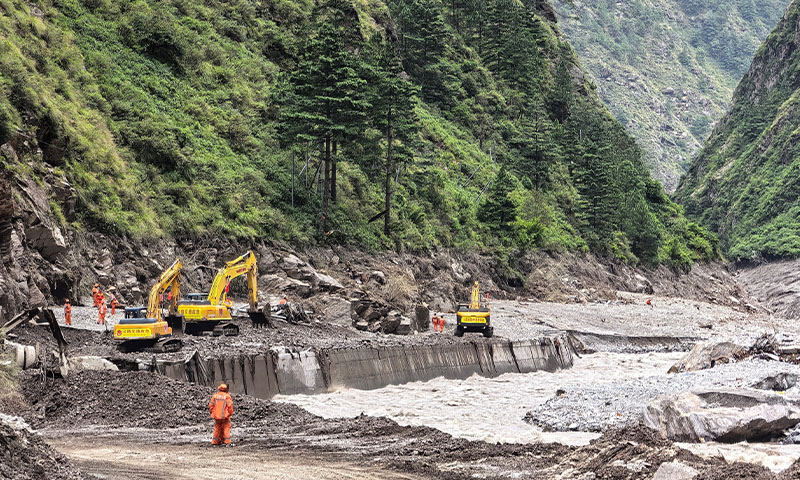
Nepalese authorities have rescued 117 tourists following severe flooding in the country, including 85 Indians, 16 Chinese, nine South Koreans, two Italians and two US nationals, according to a Tourism Ministry source. Meanwhile the death toll has reached 469, Nepal police said on Friday.
Authorities are monitoring two lakes upstream of the flood-affected area, one of which began overflowing on Friday, a Disaster Management Authority official said.
The official said authorities were relying on satellite imagery to monitor conditions, although their ability to track developments remained limited by the availability of updated images.
Flood risks are expected to persist until both lakes have fully drained, the official said, underscoring continued concerns over further flooding downstream.
Nepal also plans to install cameras and sensors at locations downstream, including near the border town of Timure, to improve monitoring and provide early warnings. Authorities are assessing whether the equipment can be deployed by helicopter, the official said.
Nepal ‘declines’ foreign rescue teams
Nepal has declined offers from several countries to send search-and-rescue teams following devastating flash floods that have killed nearly 500 people, saying its own security agencies are capable of handling the ongoing operation.
Nepal’s Foreign Ministry said that it was managing rescue efforts in the flood-hit areas and did not currently require international assistance. “The offer for help is natural. Our security agencies are doing the search and rescue operation. For now we don’t require such help,” ministry spokesperson Lok Bahadur Chhetri said, without elaborating.
The floods swept through several towns, particularly in Rasuwa district near the Chinese border, destroying settlements, damaging hydropower infrastructure and leaving hundreds of people missing, including foreign nationals.
According to Nepal’s Kathmandu Post, India, China, the United States, Britain, Japan, South Korea, Sri Lanka and Bangladesh have approached Kathmandu seeking permission to deploy search-and-rescue teams.
South Korea said Nepal had indicated that it was not yet prepared to accept foreign rescue teams, but Seoul would continue discussions with Kathmandu. South Korea has also pledged $1 million in humanitarian assistance through international organisations.
Nine South Koreans working at a hydropower project were reported missing, while another 10 were stranded, according to South Korea’s Foreign Ministry.
The decision by Nepal has raised questions given the scale of the disaster and the number of foreign nationals still unaccounted for. Dinesh Bhattarai, a former Nepali ambassador to the United Nations in Geneva, suggested that the location of Rasuwa, which borders China’s Tibet region, could have influenced the decision.
“They may have thought about the locational sensitivity of the region and decided not to accept foreign teams,” Bhattarai said.
Chhetri, however, rejected the suggestion, saying Nepal’s decision was unrelated to Chinese sensitivities and was based on its assessment that domestic rescue agencies could manage the operation.
China’s Foreign Ministry had not immediately responded to a request for comment on Nepal’s decision. Chinese state media reported that President Xi Jinping had conveyed condolences to Nepal’s president over the disaster.
You May Also Like