
- Web Desk
- 1 Hour ago
Newly released ‘Epstein files’ show him with Kaaba-like cloth with Emirati leader
-

- Web Desk
- Feb 10, 2026
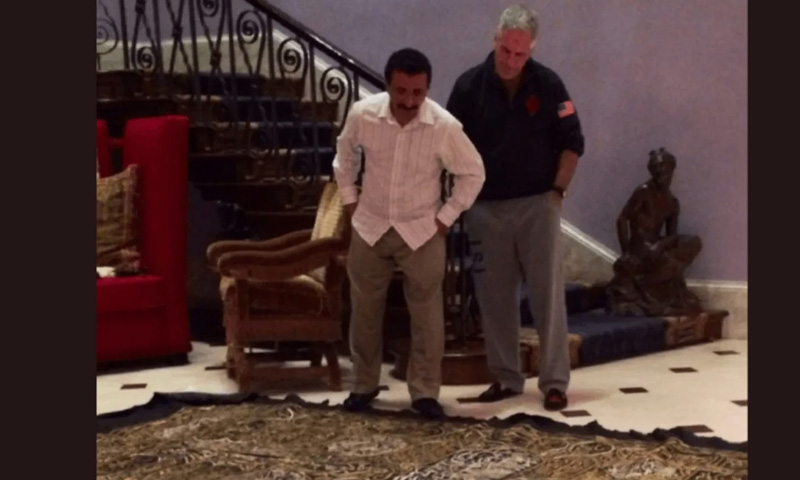
Newly disclosed documents from the US Department of Justice include an image showing convicted sex offender Jeffrey Epstein standing beside prominent Emirati businessman Sultan Ahmed bin Sulayem while both appear to examine a black-and-gold cloth laid out on the floor that closely resembles the Kaaba’s ceremonial covering from Mecca.
The photograph, dated May 2014, shows the two men positioned at the foot of a staircase with their hands in their pockets, looking down at the fabric. According to the released emails, the image was circulated as an attachment between redacted email addresses connected to Epstein.
Inside the Haramain, an independent online publication that reports on developments at Islam’s holy sites, cast doubt on the cloth’s authenticity as a Kaaba covering.
The cloth in the image bears a strong resemblance to the Kiswa – the sacred textile embroidered with Quranic verses that covers the Kaaba, Islam’s holiest site in Saudi Arabia. The origin and authenticity of the fabric shown in the image, however, remain unverified.
An accompanying email included a crude remark that appears unrelated to the photograph itself. Authorities have not clarified the context in which the image was taken or where the meeting occurred.
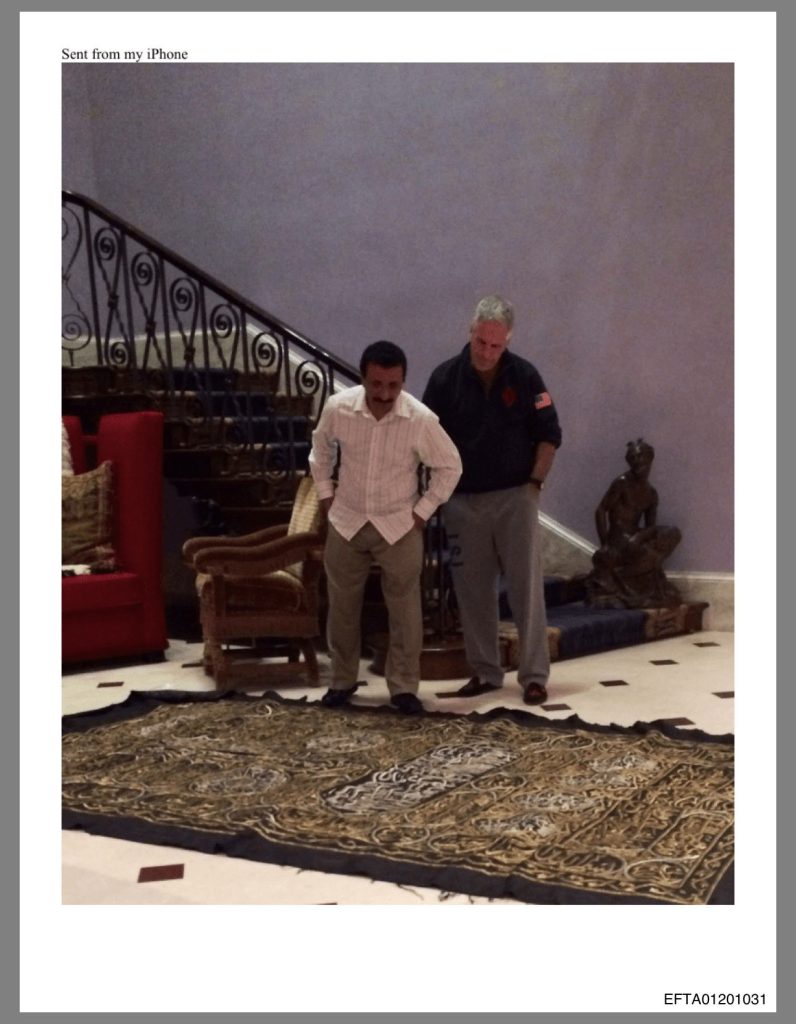
Meanwhile, Inside the Haramain, an independent online publication that reports on developments at Islam’s holy sites, cast doubt on claims that the cloth shown is an authentic piece of the Kaaba covering. The outlet said an internal expert review found inconsistencies in the size, material, decorative borders, and patterns when compared to the original Kiswa. The publication is not affiliated with Saudi authorities.
The image has resurfaced amid broader revelations from the so-called “Epstein files.” Emails released last week indicate that fragments of the Kaaba’s cloth were sent to Epstein in 2017 through intermediaries linked to the UAE. Correspondence shows a UAE-based businesswoman, Aziza al-Ahmadi, coordinating with others to arrange the shipment of three pieces associated with the Kiswa.
Those emails detail how the items were transported by air freight from Saudi Arabia to Florida via British Airways, with customs and delivery logistics handled over several weeks. The shipment reportedly arrived at Epstein’s residence in March 2017, years after he had served a prison sentence and was registered as a sex offender.
In one message, al-Ahmadi described the religious significance of the cloth, telling Epstein that millions of worshippers had touched it while performing circumambulations around the Kaaba, leaving behind prayers and hopes.
The Kaaba’s covering is replaced annually during the Hajj pilgrimage. Older cloths are traditionally cut into smaller sections and treated as religious artefacts, sometimes gifted by Saudi authorities to museums or institutions.
Given its sacred status, religious observers note that placing the Kiswa on the ground would generally be considered disrespectful.
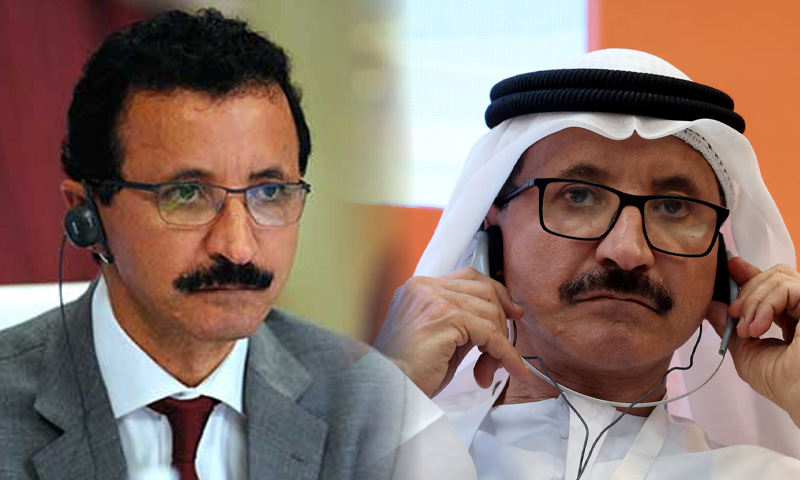
The newly released emails also highlight the long-standing relationship between Epstein and bin Sulayem, which continued well beyond Epstein’s 2008 conviction. Several exchanges between the two contain explicit language, sexual commentary, and derogatory remarks about women. Other emails include jokes disparaging Muslim worshippers and references to escort services.
Bin Sulayem is among the UAE’s most influential business figures and has served as chair of DP World since 2007 and its chief executive since 2016.