
- Reuters
- October 16, 2026
Supreme Court upholds death sentence of Zahir Jaffer in Noor Mukadam murder case
-

- Ahsan Wahid
- June 4, 2026
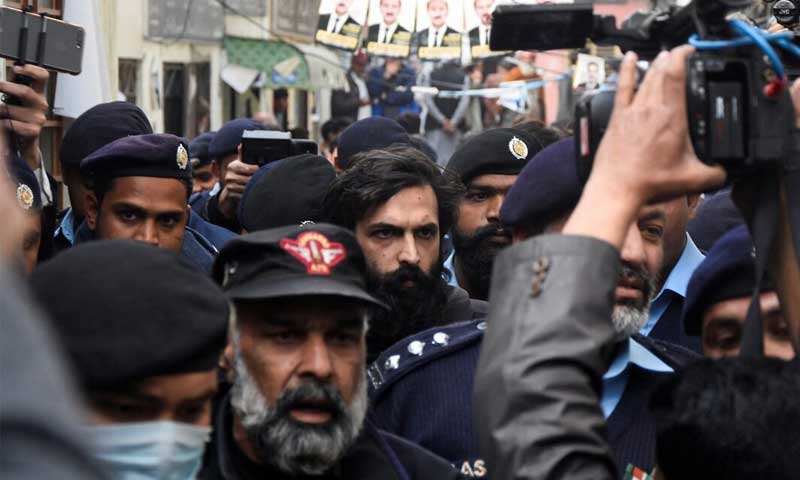
ISLAMABAD: The Supreme Court of Pakistan has dismissed the review petition filed by convict Zahir Jaffer and upheld his death sentence in the Noor Mukadam murder case. Following this, the only recourse for Jaffer is a presidential pardon under Article 45 of the Constitution of the Islamic Republic of Pakistan.
A three-member bench headed by Justice Hashim Kakar announced the verdict after a four-hour-long hearing. During the proceedings, Khawaja Haris appeared as counsel for convict Zahir Jaffer, while Advocate Shah Khawar represented the parents of Noor Mukadam. Noor Mukadam’s father Shaukat Mukadam alongside his counsel was also present outside the SC when the decision was announced.
The defence counsel for convicted murderer Zahir Jaffer on Thursday told the Supreme Court (SC) that there was no dispute that Noor Mukadam had been subjected to a horrific crime, but argued that the key question before the court was the accused’s mental condition at the time of the murder and during the trial.
Opening his arguments, senior lawyer Khawaja Haris acknowledged the suffering of Noor Mukadam and her family. “First of all, I accept that Noor Mukadam was subjected to a grave injustice,” he told the court, adding that he was sorry for the pain endured by her family.
The defence counsel made it clear that he was not challenging the basic facts of the case. “I accept that my client was present at the scene,” Haris said, before adding, “I am not going to argue that my client did not commit the murder.”
Instead, he argued that Zahir Jaffer was suffering from serious mental illnesses, including bipolar disorder, schizophrenia and depression, at the time of the incident. According to Haris, the accused had been receiving treatment for these conditions and continued to be given medication during his incarceration throughout the trial.
“These are illnesses that can make a patient aggressive,” he argued, maintaining that the court must carefully examine Jaffer’s mental state when assessing criminal responsibility.
Defence questions absence of drug test
During the hearing, defence counsel Khawaja Haris questioned why investigators had not conducted a drug screening of Zahir Jaffer following the murder. He told the court it was “surprising” that the victim had undergone testing while the accused had not.
“My question is why the prosecution never carried out a drug test on the accused,” Haris said, arguing that intense media scrutiny surrounding the case had influenced the prosecution’s approach. According to the defence lawyer, there was widespread speculation on social media at the time that any attempt to examine Jaffer for substance abuse would be portrayed as an effort to shield him from accountability.
Haris further contended that the trial court may also have been affected by public pressure. “With due respect, even the trial judge came under media pressure during the proceedings,” he remarked.
Justice Hashim Kakar firmly rejected the suggestion that judicial decisions could be influenced by media narratives. “This court does not decide cases on the basis of newspaper reports, nor do we come under pressure from social media,” he said, adding that the issue had recently been settled in the court’s ruling in the Sunny Masih case.
The bench also pointed to inconsistencies in the defence’s arguments. Justice Salahuddin Panhwar observed that Haris was simultaneously arguing that Jaffer was mentally unwell at the time of the murder while criticising social media claims that sought to explain the crime through his mental state or alleged substance abuse.
“Your arguments appear contradictory,” Justice Panhwar remarked. “If you say his mental condition was impaired at the time of the incident, then you are effectively endorsing the same narrative you say was circulating on social media.”
When Justice Hashim Kakar asked what relief the defence sought even if the court accepted that Jaffer was mentally unwell, Haris replied that he was not seeking a retrial but a reduction in sentence. He argued that courts must consider all relevant facts before imposing the death penalty.
The lawyer also noted that both the trial court and the Supreme Court had rejected requests for the formation of a medical board to examine Jaffer. However, Justice Ishtiaq Ibrahim pointed out that the trial court’s decision had never been challenged before the Islamabad High Court and had therefore attained finality.
The exchange grew tense at times, with Justice Kakar remarking that the court had been listening to the defence for hours and urging counsel to show some restraint. “For the last three hours, you have kept us chasing one argument after another,” the judge observed.
Bench questions evidence of mental illness
The bench, however, repeatedly questioned the defence over the evidence supporting those claims. Justice Ishtiaq Ibrahim asked counsel to establish when treatment had begun and whether it was ongoing at the time of the murder. “Show us when the treatment started and whether it was continuing when the incident occurred,” the judge remarked.
Justice Salahuddin Panhwar also sought details regarding the accused’s medical history, asking when he was first diagnosed, who treated him and whether records from his school, college and university years existed. Observing that such a history should be traceable, the judge noted that Jaffer’s educational institutions would likely have relevant medical records.
During the hearing, Haris submitted a letter from a Harley Street clinic in London in support of his arguments. However, Justice Panhwar pointed out that the document was dated 2022, after the murder had taken place.
“This letter bears the date 2022,” the judge observed, before questioning how it had been obtained. Referring to the defence’s claim that Jaffer had not been provided counsel of his choice, Justice Panhwar remarked: “It is rather surprising that while the accused allegedly did not get a lawyer of his choice, a letter from London somehow arrived on his behalf.”
The court continued hearing arguments on whether Jaffer’s mental health history could have a bearing on his criminal liability and the validity of the trial proceedings.
Court refuses adjournment request
The Supreme Court rejected a request by Zahir Jaffer’s counsel, Khawaja Haris, to adjourn the hearing until Monday. Instead, the court granted the defence an additional hour to conclude its arguments, a timeframe Advocate Haris stated would be sufficient to complete his presentation. Representing Noor Mukadam’s family, Shah Khawar noted that the prosecution would require only 10 minutes to deliver its closing remarks.
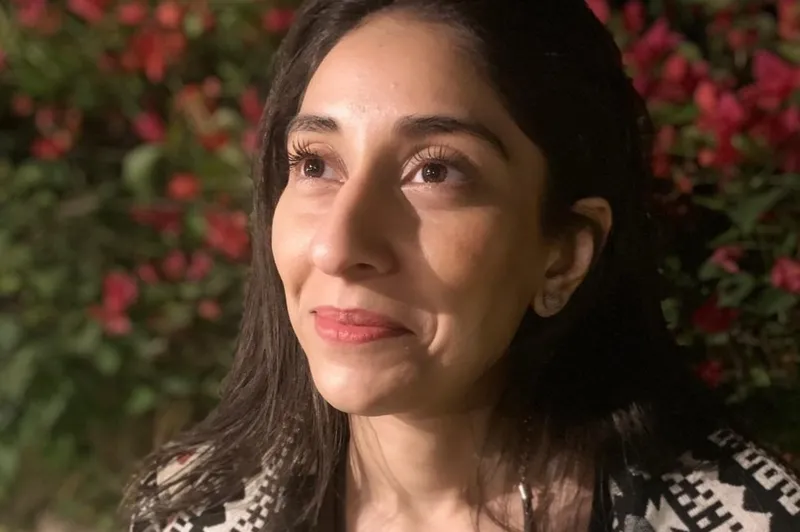
The Supreme Court convened on Wednesday for a crucial hearing in the Noor Mukadam murder case, reviewing a petition filed by Jaffer, who was sentenced to death for the brutal murder and beheading of 27-year-old Noor Mukadam at his Islamabad residence in July 2021.
The hearing, which had previously been deferred from April and May, is expected to play a key role in determining the outcome of Jaffer’s review petition against his conviction and sentence.
Grounds for review: ‘mental’ capacity and digital evidence
In his 47-page review petition filed under Article 188 of the Constitution, Jaffer’s legal team, led by Advocate Khawaja Haris, has challenged the SC’s previous verdict on several technical and procedural grounds.
A central pillar of the petition is the contention that Jaffer’s “unsoundness of mind or mental capacity” was never adequately addressed by the court. The defense argues that the trial court failed to follow the mandates set in legal precedents, such as the Safia Bano case, which require a serious assessment of a defendant’s mental health to ensure they are capable of defending themselves. While Jaffer was previously treated at a jail hospital for two months before being shifted to a death cell, jail officials have maintained that he was mentally sound at the time of his initial incarceration.
Furthermore, the petition seeks to discredit the digital evidence, specifically CCTV footage stored on a Digital Video Recorder (DVR), that served as a “silent witness” in the original conviction. Jaffer’s counsel argues that these recordings were never properly proved during the trial, as the forensic experts who authored the reports were not called to authenticate them under oath. The defense maintains that if this digital “link in the chain of circumstances” is excluded, the case for capital punishment collapses.
Judicial controversy and victim-blaming
The case has also been marked by significant controversy regarding the language used within the judiciary. In late 2025, the National Commission on the Status of Women (NCSW) issued a strong condemnation of remarks made by Justice Ali Baqar Najafi. In an additional note to the verdict upholding Jaffer’s death penalty, Justice Najafi had attributed the murder to the “vice” of “living relationships” in upper society.
The NCSW characterised these remarks as “misogynistic and irresponsible,” stating that they reflected a harmful mindset that shifts responsibility from the perpetrator to the victim. The commission emphasized that a woman’s personal choices can never justify brutality and that judicial language must remain impartial and free from moralizing stereotypes.
Trial history and current status
Jaffer was first sentenced to death by a district and sessions court in February 2022, a verdict that was later upheld and expanded upon by the Islamabad High Court (IHC). While the SC previously commuted a death sentence related to rape charges to life imprisonment, it maintained the capital punishment for the murder.
As today’s hearing proceeds, the court must weigh the defense’s claims of procedural errors and mental illness against the “silent witness” evidence that has defined one of Pakistan’s most high-profile criminal cases. The outcome will determine whether the conviction stands or if the legal process will be reopened to address the questions raised by the convict’s legal team.
You May Also Like

- WEB DESK
- October 16, 2026
Maryam Nawaz takes aim at Maulana Fazl over PTI support

- Reuters
- October 16, 2026
Tesla unveils flying car with rocket thrusters
- WEB DESK
- October 16, 2026
