- Web Desk
- Now
Oil prices fall 2pc as Hormuz shipments resume despite fresh Oman vessel attack
-

- Reuters
- 30 Minutes ago
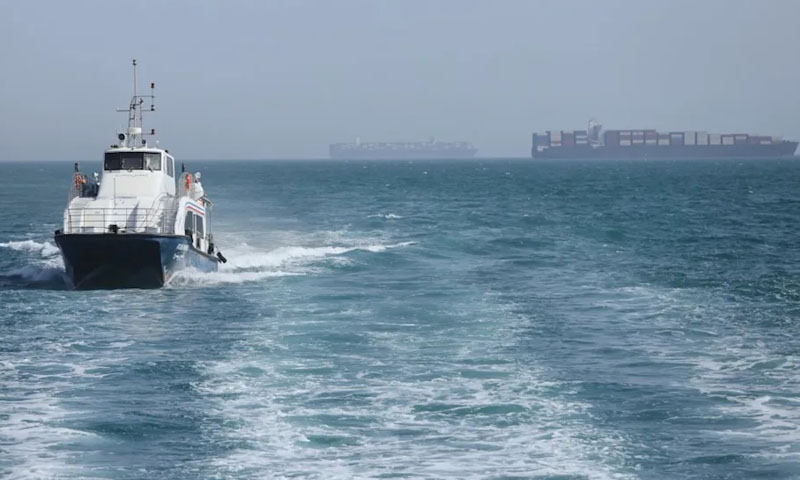
NEW DELHI: Global oil prices fell by around two per cent on Friday and were set for their biggest weekly decline in months as concerns over supply disruptions eased, with more oil tankers resuming transit through the Strait of Hormuz despite a fresh attack on a cargo vessel near Oman.
Brent crude futures fell $1.50, or 1.99pc, to $73.76 a barrel by 0649 GMT, while US West Texas Intermediate (WTI) crude dropped $1.49, or 2.07pc, to $70.43 a barrel.
The decline followed signs that oil exports through the Strait of Hormuz were gradually returning to normal after a ceasefire allowed previously stranded tankers to leave the Persian Gulf.
Saudi Aramco resumed crude loading operations at its Ras Tanura export terminal on Friday after a suspension of nearly four months, according to shipping data from LSEG. Two Very Large Crude Carriers, each capable of carrying around two million barrels of crude oil, were seen loading cargoes at the terminal while another tanker waited offshore.
“There is a general sell-off as the market reacts to the increased flows exiting the Strait of Hormuz and China not yet picking up crude demand,” said June Goh, senior oil market analyst at Sparta Commodities.
However, oil markets remained sensitive to security developments in the region after both Brent and WTI prices rose by more than two per cent on Thursday when a cargo vessel was struck by an unidentified projectile near Oman.
The attack prompted the United Nations’ shipping agency to suspend its voluntary evacuation scheme in the area.
Two US officials told Reuters that Iran had fired on the cargo vessel as it attempted to pass through the Strait of Hormuz. Iranian authorities later warned that they could not guarantee the safety of vessels travelling outside designated shipping routes.
Despite Friday’s decline, traders continued to monitor the security situation closely as Brent and WTI crude remained on course to record weekly losses of around eight per cent.
Venezuela earthquakes add fresh uncertainty to global oil supply
Data released on Thursday showed that crude shipments through the Strait of Hormuz climbed this week to their highest level since fighting between the United States, Israel and Iran erupted in February. The reopening of the waterway under a ceasefire agreement encouraged more vessels to resume operations, although shipping volumes remain well below normal.
Current traffic is still only a fraction of the average 125 ships that passed through the strait each day before the conflict began on February 28.
Analysts at ING said the recent rise in tanker movements was largely due to vessels that had been stranded during the conflict finally leaving the Gulf, rather than a full recovery in oil trade.
“Much of the increase reflects previously stranded vessels leaving the Persian Gulf. Vessel flows into the Gulf remain much more modest. It suggests that once stranded vessels have moved out, we could see a pullback in flows,” the bank said in a research note.
Meanwhile, fresh concerns over oil supplies emerged after earthquakes struck Venezuela on Thursday.
Initial assessments suggested that the country’s major oilfields, refineries, pipelines and export terminals had escaped significant damage, as most of the energy infrastructure lies far from the worst-affected areas.
However, widespread power outages have raised doubts over whether Venezuela can maintain crude production at its pre-earthquake level of nearly 1.2 million barrels per day, according to industry sources.
While improving oil flows through the Strait of Hormuz have eased immediate supply concerns, ongoing geopolitical tensions in the Middle East and uncertainty over Venezuelan production continue to keep global energy markets on alert.
IMO pauses Hormuz evacuation as fresh security fears emerge
The International Maritime Organisation (IMO) has temporarily suspended its ship evacuation operation through the Strait of Hormuz after a commercial vessel reported being struck near Oman, raising fresh concerns over the stability of the preliminary Iran ceasefire agreement.
The incident has renewed uncertainty over the safety of one of the world’s busiest energy shipping routes as Iran tightened its control over shipping in the strategic waterway.
Taiwan’s Evergreen Marine said its Singapore-flagged vessel Ever Lovely was hit by an “unknown object” while sailing along a route recommended by the UK Maritime Trade Operations (UKMTO).
US officials told Reuters they believed Iran had fired on the ship, while Iran’s Persian Gulf Strait Authority (PGSA) warned that vessels using routes not authorised by Tehran would not be guaranteed safe passage, saying ship owners, operators and captains would bear responsibility for any consequences.
The vessel sustained minor damage, but the crew and cargo remained safe.
You May Also Like