- Web
- 31 Minutes ago
Oil prices plunge 11 per cent after Trump predicts Middle East de-escalation
-

- Web Desk
- 3 Minutes ago
NEW YORK: Global oil prices plunged by about 11 per cent on Tuesday after U.S. President Donald Trump said the war in the Middle East could end soon, easing fears of prolonged disruptions to oil supplies.
International benchmark Brent crude fell by $10.45, or 10.6 per cent, to $88.51 per barrel by 1504 GMT. Meanwhile, U.S. crude West Texas Intermediate dropped by $10.61, or 11.2 per cent, to $84.16 per barrel.
The sharp decline came a day after oil prices surged to more than $119 per barrel — their highest level since mid-2022 — amid concerns that supply disruptions could worsen due to the conflict involving Iran.
Markets, however, eased after Trump and Russian President Vladimir Putin held a phone call and discussed proposals aimed at quickly ending the war, according to a Kremlin aide.
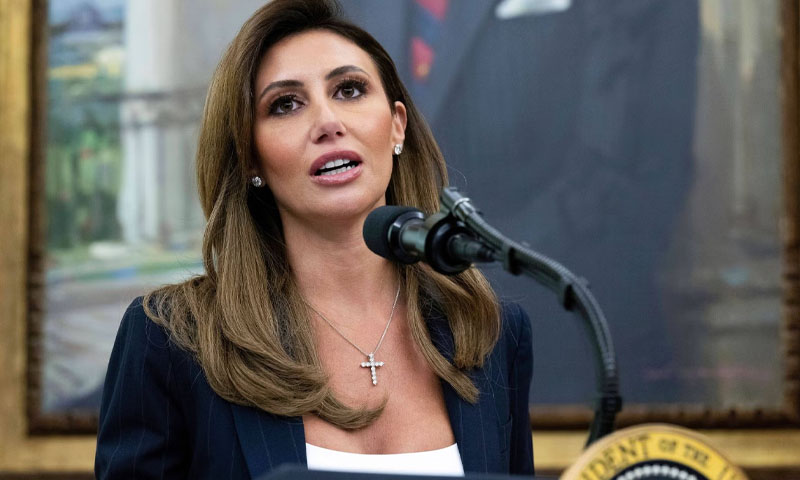
In an interview with CBS News, Trump said the military campaign against Iran was “very complete” and progressing much faster than the four-to-five-week timeline he had initially expected.
Analysts said the remarks helped calm markets after Monday’s surge in prices.
“Clearly Trump’s comments about a short-lived war have calmed markets,” said Suvro Sarkar, energy sector team lead at DBS Bank. “While there was an overreaction to the upside yesterday, we think there is an overreaction to the downside today.”
Energy analysts cautioned that even if the war ends soon, restoring oil supplies could take time.
Simon Flowers, chairman and chief analyst at Wood Mackenzie, said restarting production at oil wells that have been shut for a prolonged period could take weeks or even longer.
Meanwhile, Iran’s Islamic Revolutionary Guard Corps warned that Tehran would not allow “one litre of oil” to be exported from the region if U.S. and Israeli attacks continued, according to Iranian state media.
Sources also said the United States was considering easing sanctions on Russian oil and releasing emergency crude stockpiles to help stabilise markets.
Analysts at Phillip Nova said discussions about easing restrictions on Russian oil, along with expectations of de-escalation, signalled that global supplies were likely to continue reaching the market.
Energy ministers from the G7 countries discussed the possibility of releasing strategic reserves but stopped short of announcing any decision.
Saudi Arabia’s state oil giant Saudi Aramco warned that continued disruption to shipping in the strategic Strait of Hormuz due to the Iran war could have “catastrophic consequences” for global oil markets.
Analysts at JPMorgan said oil prices would remain highly sensitive unless safe passage through the Strait of Hormuz was ensured, warning that potential losses could reach up to 12 million barrels per day over the next two weeks.
In another supply disruption, Abu Dhabi’s state oil company Abu Dhabi National Oil Company shut its Ruwais refinery after a fire broke out at a facility in the complex following a drone strike, a source said.
Investment bank Goldman Sachs said it was maintaining its forecast for Brent crude at $66 per barrel and West Texas Intermediate at $62 per barrel for the fourth quarter, citing uncertainty surrounding the evolving geopolitical situation.
You May Also Like