- Web Desk
- 51 Minutes ago
On rare China visit, Taiwan opposition leader pledges reconciliation
-

- Web Desk
- 2 Minutes ago
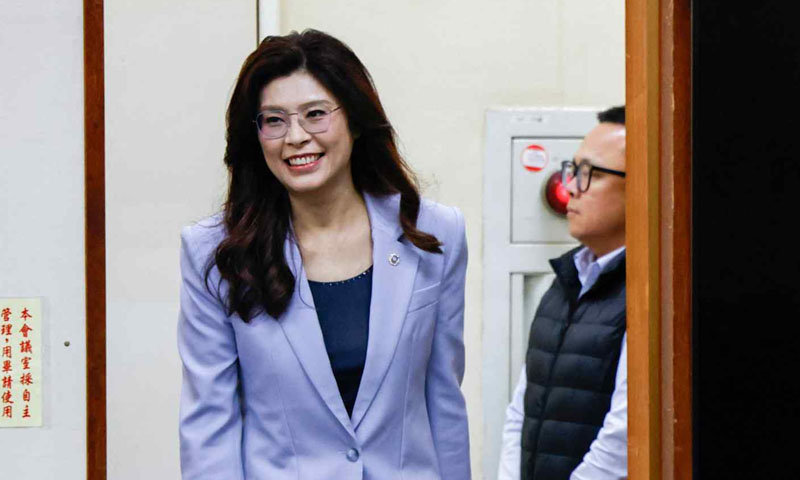
BEIJING: Taiwan’s main opposition leader Cheng Li-wun pledged to pursue reconciliation with China during a rare visit to the mainland, as cross-strait tensions remain high and political divisions deepen at home.
Cheng, chairwoman of the Kuomintang (KMT), laid a wreath at the mausoleum of Sun Yat-sen in the eastern Chinese city of Nanjing on Wednesday, invoking shared historical ties and calling for dialogue between the two sides.
“This is a journey for peace,” Cheng said, stressing the need for reconciliation both within Taiwan’s divided political landscape and across the Taiwan Strait, as the risk of conflict continues to loom.
Her visit — the first by a KMT leader to China in a decade — comes at a time of increased military pressure from Beijing, which considers democratically governed Taiwan as its own territory and has not ruled out the use of force.
During the trip, which began in Shanghai and is expected to include high-level meetings, Cheng has signalled openness to engaging Chinese leadership, potentially including President Xi Jinping, in an effort to revive stalled dialogue mechanisms.
Cheng praised both Taiwan’s democratic evolution and China’s economic rise, framing her outreach as an attempt to reduce tensions through engagement rather than confrontation.
However, her visit has drawn sharp criticism from Taiwan’s ruling Democratic Progressive Party (DPP), which warned that engagement without deterrence could undermine the island’s security.
President Lai Ching-te has maintained that Taiwan’s future must be decided by its people and has called for stronger defence capabilities in response to Beijing’s growing military activity.
The trip also coincides with a domestic political standoff, as the opposition-controlled parliament has stalled a proposed $40 billion defence spending package backed by the government, arguing that greater oversight and balance with diplomatic efforts are needed.
Analysts say Cheng’s outreach reflects the KMT’s longstanding position favouring engagement with China under frameworks such as the “1992 Consensus,” which allows both sides to interpret the concept of “one China” differently.
Cross-strait relations have deteriorated in recent years, particularly under the DPP leadership, with Beijing increasing military drills and diplomatic pressure while rejecting Taipei’s calls for dialogue unless it accepts its sovereignty claims.
Cheng has defended her approach, arguing that Taiwan should not become a flashpoint for global conflict and that diplomacy remains essential in avoiding escalation.
“The world does not need a crisis over Taiwan,” she said ahead of the trip, underscoring her push for peaceful engagement at a time of heightened geopolitical tensions.
Her visit also comes ahead of a potential summit between Washington and Beijing, where Taiwan is expected to be a key issue, adding further significance to her efforts to position the opposition as a channel for dialogue.
While markets and regional observers are closely watching the developments, the outcome of Cheng’s visit remains uncertain, with deep mistrust persisting between Taipei and Beijing.
For now, her trip underscores a widening divide within Taiwan itself — between those who see dialogue as a path to stability and those who view it as a risk in the face of mounting pressure from China.
You May Also Like