- Web Desk
- 16 Minutes ago
Once Libya’s future, now history: The death of Saif al-Islam Gaddafi
-

- Web Desk
- Feb 04, 2026
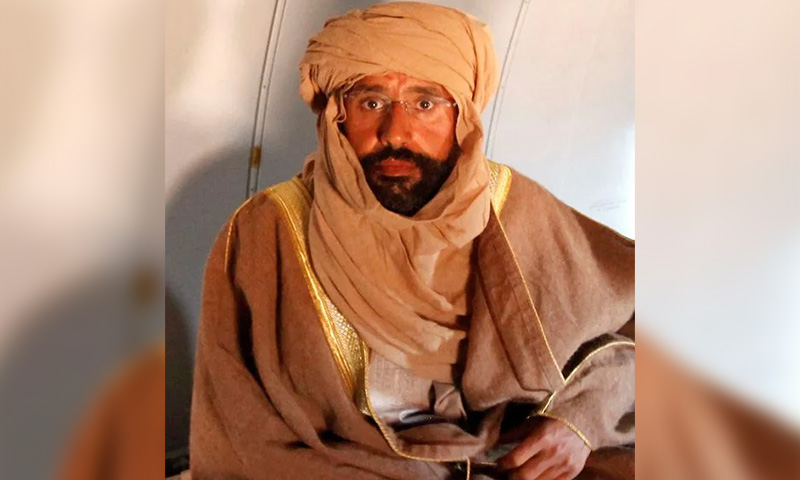
WEB DESK: Saif al-Islam Gaddafi, once seen as the modern face and presumed heir of Libya’s long-ruling strongman Muammar Gaddafi, was killed on February 3, 2026, at the age of 53. His death in the western Libyan town of Zintan, where he had remained based since his capture during the 2011 uprising, brings to an end one of the most controversial and paradoxical lives in Libya’s recent history one that mirrored the country’s own descent from authoritarian stability into prolonged fragmentation.
Born in the early 1970s, Saif al-Islam was the second son of Muammar Gaddafi and grew up at the heart of an eccentric but tightly controlled political system. Unlike many in Libya’s ruling elite, he cultivated a distinctly Western profile. He earned a PhD from the London School of Economics in 2008, focusing his research on civil society and global governance, and for years projected himself as a reform-minded intellectual capable of steering Libya toward gradual openness after decades of isolation.
Throughout the early 2000s, Saif al-Islam emerged as Libya’s key interlocutor with the West. He played a central role in negotiating the dismantling of Libya’s nuclear weapons programme, a breakthrough that led to the lifting of international sanctions imposed during the 1980s and 1990s. He was also instrumental in securing compensation deals for victims of attacks linked to Libyan agents, including the 1988 Lockerbie bombing, and helped broker the release of foreign medical workers jailed in Libya on controversial HIV-related charges. These efforts won him cautious praise abroad and positioned him as Libya’s unofficial second-in-command.
The 2011 Uprising: From Reformer to Accused War Criminal
Saif al-Islam’s carefully cultivated reformist image collapsed with the outbreak of the Arab Spring in 2011. As protests spread across Libya and escalated into armed rebellion, he publicly defended his father’s rule, warning that the regime’s fall would plunge the country into chaos. Human rights groups and international bodies soon accused him of involvement in violent crackdowns against protesters. The United Nations imposed sanctions, and in June 2011 the International Criminal Court issued a warrant for his arrest on charges of crimes against humanity.
Captured by rebel forces later that year, Saif al-Islam was detained in Zintan, beyond the control of Libya’s internationally recognised authorities. Although a Tripoli court sentenced him to death in absentia in 2015, he was released in 2017 under an amnesty issued by eastern-based officials a move rejected by the ICC and many international actors. After his release, he largely disappeared from public view, resurfacing only occasionally with hints of a political comeback.
In 2021, he made a dramatic re-entry into Libya’s fractured political scene by registering as a presidential candidate, portraying himself as a unifying figure in a country exhausted by years of militia rule and rival governments. The election, however, was postponed indefinitely, and his ambitions remained unrealised amid persistent instability.
Saif al-Islam’s life ended violently in Zintan when masked gunmen stormed his residence and shot him dead, according to close associates and legal advisers. The killing underscores the enduring lawlessness and factional rivalries that continue to define Libya more than a decade after the fall of the Gaddafi regime.
His legacy remains deeply contested. To some, he was a would-be reformer who helped pull Libya back from international isolation; to others, he was inseparable from the repression and violence of his father’s rule. In death, as in life, Saif al-Islam Gaddafi leaves behind a complex and unresolved chapter in Libya’s turbulent modern history.
You May Also Like