
- WEB DESK
- November 27, 2026
Saudi-led coalition intercepts drone over Riyadh as Dammam attack death toll rises to two
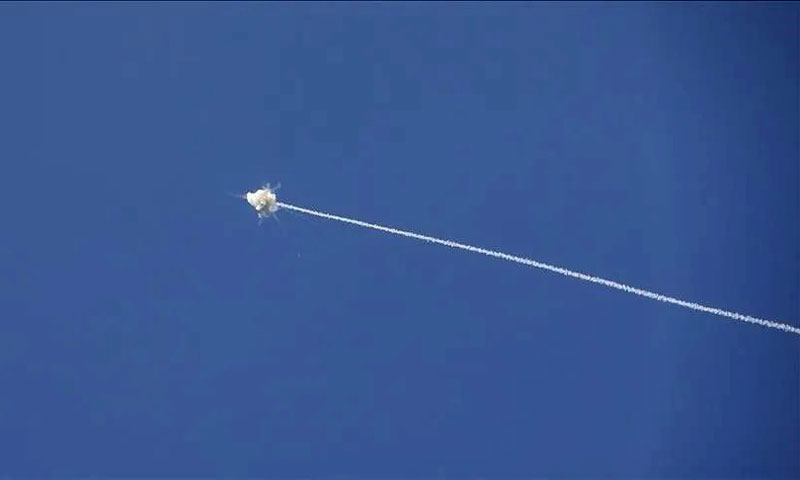
RIYADH/ISLAMABAD: Saudi Arabia’s air defences intercepted and destroyed a drone over Riyadh, the Saudi-led coalition said, as the kingdom’s General Authority of Civil Aviation reported that the death toll from Wednesday’s attack on King Fahd International Airport in Dammam had risen to two.
The latest developments come amid a widening wave of missile and drone attacks targeting Saudi airports, energy infrastructure and other strategic sites, raising concerns about the security of the kingdom’s critical facilities and the risk of further regional escalation.
The civil aviation authority had initially reported that one person was killed and eight others injured in an attack on King Fahd International Airport in Dammam, in eastern Saudi Arabia, on Wednesday evening. The authority said the injured had sustained injuries ranging from minor to serious, while officials were assessing the material damage caused by the incident.
The latest statement raised the death toll to two but did not provide further details about the circumstances surrounding the additional fatality. It was also not immediately clear what type of drone was intercepted over Riyadh or whether it was linked to the attack in Dammam.
Saudi airports have faced repeated aerial threats in recent days, with attacks attributed to Yemen’s Iran-aligned Houthi movement. The incidents have coincided with attacks on oil facilities and other strategic infrastructure, prompting Saudi air defences to intercept incoming threats and the kingdom to step up efforts to protect its territory.
Drone interception near Shaybah oilfield kills two
In a separate incident on Wednesday, two people were killed and two others injured after Saudi air defences intercepted a drone targeting a facility at Saudi Aramco’s Shaybah oilfield, the kingdom’s Energy Ministry said.
The ministry said the interception caused a fire in a vehicle outside the facility’s perimeter but did not affect operations at the oilfield, a major energy installation in Saudi Arabia’s eastern region.
The two people killed were residents of Saudi Arabia, one Filipino and one Nepali, while the injured were a Pakistani and an Indian national. The ministry said the two injured people were hurt by falling debris following the interception.
The incident highlighted the risks posed by aerial attacks even when Saudi air defences successfully destroy incoming drones. Falling debris can cause casualties and damage on the ground, particularly near industrial facilities and populated areas.
The Energy Ministry said operations at Shaybah remained unaffected despite the incident. Saudi authorities have not indicated that the oilfield’s production was disrupted.
Saudi Arabia reports repeated aerial threats
The latest incidents follow a series of attacks on Saudi airports during October, including reported strikes on King Khalid International Airport in Riyadh and Abha airport in the kingdom’s southwest.
Reports of the attacks have described fatalities and injuries among Saudi and foreign nationals, as well as fires and damage to airport facilities. Some incidents reportedly involved aircraft or areas near parked planes, while others affected airport terminals and other infrastructure.
Saudi civil aviation authorities have issued updates following several of the incidents, although details about the weapons used and the precise circumstances of individual attacks have not always been disclosed immediately.
The Houthis have claimed responsibility for some attacks on Saudi targets, including airport and energy infrastructure. Saudi authorities have reported intercepting ballistic missiles and drones and have vowed to defend the kingdom’s territory and strategic installations.
On Wednesday, Saudi forces also reported intercepting four drones over Madina and the kingdom’s eastern regions. No casualties or damage were immediately reported in that incident.
The continued reports of aerial threats have raised concerns about the vulnerability of airports and energy facilities, which are critical to Saudi Arabia’s transport links, economic activity and oil exports.
Escalation follows renewed regional tensions
The latest violence comes amid renewed fighting involving Yemen’s Houthis and forces aligned with Yemen’s internationally recognised government, following the breakdown of a truce that had largely contained the conflict since 2022.
The Houthis control Sanaa and large parts of northern Yemen and have previously launched missiles and drones towards Saudi territory. Saudi Arabia has responded to threats with air-defence interceptions and strikes against sites associated with missile launches.
The expanding attacks have increased pressure on Riyadh to strengthen its air defences and coordinate with regional partners. Saudi Arabia’s security concerns also extend to its energy infrastructure, given the importance of oil production and exports to the kingdom and global markets.
Egypt has indicated that it is prepared to provide assistance to protect Saudi Arabia’s security if Riyadh makes a formal request. Egyptian President Abdel Fattah al-Sisi has also called for an urgent parliamentary session to consider authorising military assistance, although any deployment would depend on Saudi Arabia seeking such support.
Pakistan has separately reiterated its commitment to Saudi security under the Makkah Joint Defence Agreement, signed by Pakistan, Saudi Arabia and Turkiye on August 6.
Inter-Services Public Relations Director General Lieutenant General Ahmed Sharif Chaudhry has said an attack on one member would be treated as an attack against all three, triggering a collective response. He has described the arrangement as defensive and reaffirmed Pakistan’s commitment to Saudi Arabia’s sovereignty and territorial integrity.
The latest drone interceptions and reported casualties are likely to intensify regional security concerns as Saudi Arabia seeks to prevent further attacks on its airports, oil installations and other critical infrastructure. However, further details are needed to establish the circumstances of the second death reported in Dammam and whether the drone intercepted over Riyadh was connected to any of the other incidents.
You May Also Like


- Abdul Basit
- November 26, 2026