
- Farah Mehjabeen
- October 26, 2026
Over 300 foreign vessels pay Iran tolls to cross Strait of Hormuz under new rules
-

- Sadia Basharat
- June 3, 2026
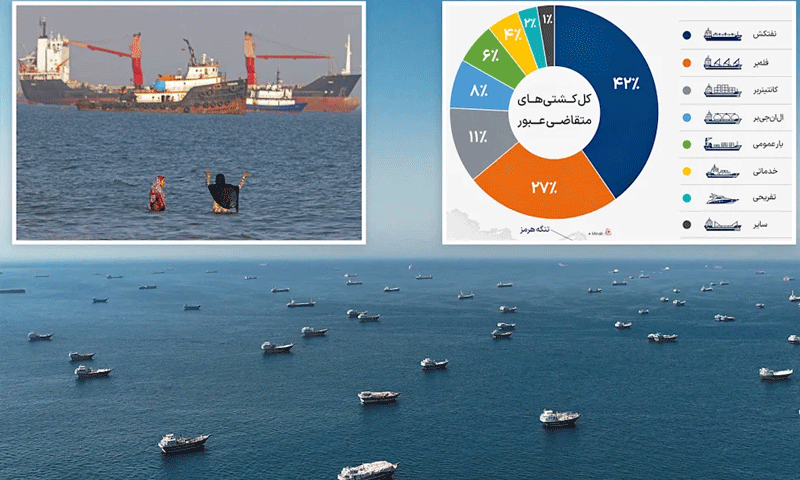
WEB DESK: More than 300 non-Iranian commercial vessels have successfully transited the critical Strait of Hormuz after complying with registration requirements and paying mandated transit fees under a newly introduced maritime framework, official data revealed on Wednesday.
The figures, released by the newly operational Persian Gulf Strait Authority (PGSA) an administrative body established by Tehran to oversee regional passage indicate that a substantial segment of the international shipping community is actively formalising operations within the strategic corridor.
According to maritime logs, the transits were conducted in close coordination with Iranian coastal authorities following the settlement of applicable regulatory tariffs by foreign vessel operators.
Energy and commodity shipments dominate traffic
A granular breakdown of the commercial traffic passing through the strategic choke point highlights a continued global reliance on the corridor for essential commodities, with energy-related shipping making up the vast majority of regulated movements.
Oil tankers constituted the single largest category, accounting for 42pc of the total documented transits, while liquid natural gas (LNG) carriers represented 8pc.
In addition to energy infrastructure, industrial dry bulk carriers formed 27pc of the total fleet movement, followed by container vessels at 11pc.
General cargo, service vessels, and miscellaneous maritime transport comprised the remaining 13pc of the newly regularised traffic.
Shifting geopolitical trade flows mapped
The statistical brief also mapped the primary geographical distribution of trade corridors, highlighting distinct import and export trajectories within the Persian Gulf.
Inbound maritime traffic navigating into the Gulf was predominantly destined for industrial and logistics hubs in the United Arab Emirates, Qatar, Iraq, and Kuwait, reflecting sustained regional demand for inbound consumer and industrial freight.
Conversely, outbound voyages originating from Gulf ports were heavily weighted towards global energy markets and manufacturing bases. China and broader Asian economies emerged as the primary destinations for outbound vessels, followed by sustained cargo routing toward European ports.
Maritime analysts note that the compliance of these international fleets highlights the commercial pressure on global logistics firms to secure safe passage through the vital trade lane, balancing strict Western regulatory environments against immediate operational security on the high seas.
You May Also Like