- Web Desk
- Feb 24, 2026
Pakistan accepts Trump’s invitation to join Gaza ‘Board of Peace’
-

- Web Desk
- Jan 21, 2026
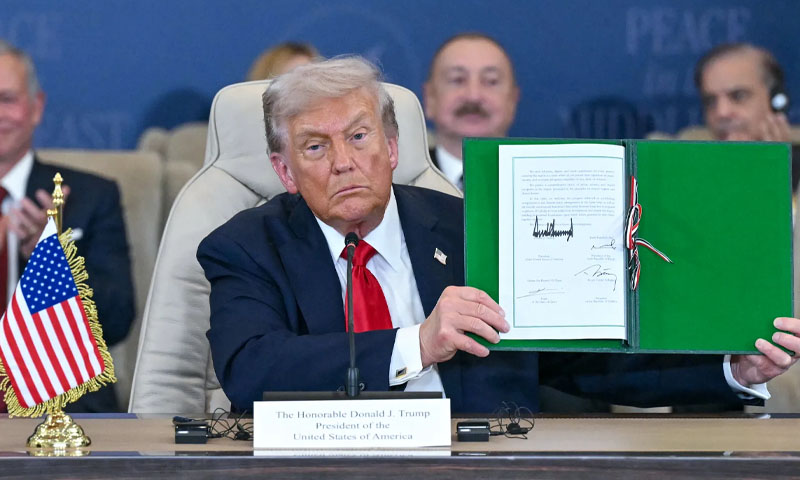
ISLAMABAD: Pakistan has accepted an invitation from United States President Donald Trump to join the proposed “Board of Peace”, a US-backed international initiative aimed at stabilisation, humanitarian relief and post-war reconstruction in Gaza, the Foreign Office said on Wednesday.
The invitation was extended under a proposed international framework that seeks to bring together selected countries and global leaders to coordinate efforts following a fragile ceasefire in Gaza.
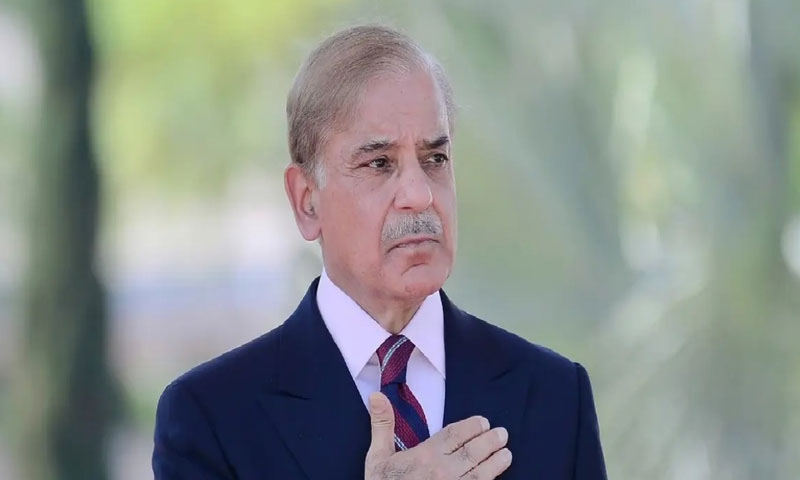
“In response to the invitation extended to Prime Minister Muhammad Shehbaz Sharif by the President of the United States, H.E. Donald J. Trump, Pakistan would like to announce its decision to join the Board of Peace (BoP) as part of its ongoing efforts to support the implementation of the Gaza Peace Plan under the framework of the United Nations Security Council Resolution 2803,” the FO said in a statement.
“Pakistan expresses the hope that with the creation of this framework, concrete steps will be taken towards the implementation of a permanent ceasefire, further scaling up of humanitarian aid for the Palestinians, as well as reconstruction of Gaza,” it said.
The FO further said: Pakistan also hopes that these efforts will lead to the realization of the right to self-determination of the people of Palestine, through a credible, time-bound political process, consistent with international legitimacy and relevant UN resolutions, resulting in the establishment of an independent, sovereign, and contiguous State of Palestine, based on the pre-1967 borders with Al-Quds Al-Sharif as its capital.
“Pakistan looks forward to continue playing a constructive role as part of the Board of Peace for the achievement of these goals as well as to end the suffering of our Palestinian brothers and sisters.”
Islamabad said its engagement with the initiative would be guided by Pakistan’s long-standing position on the Palestine issue, stressing that an immediate ceasefire, protection of Palestinian civilians and uninterrupted humanitarian assistance remain its top priorities.
Earlier, the Ministry of Foreign Affairs had said that Pakistan would continue to support international efforts for peace and security in Gaza, leading to a lasting and just solution in accordance with United Nations resolutions.
Pakistan’s position and diplomatic calculus
Responding to the invitation, Pakistan’s Foreign Office earlier made it clear that its acceptance or positive engagement was not aligned with the politics of any particular bloc.
Officials had said that Pakistan’s approach is based on practical humanitarian considerations and the urgent need to alleviate the suffering of the Palestinian people, especially innocent and defenceless civilians in Gaza.
The statement added that Pakistan supports initiatives that contribute to peace and stability but will remain consistent in advocating for a political settlement that ensures Palestinian rights under international law. Islamabad has repeatedly called for an immediate and permanent ceasefire, access for humanitarian aid and a credible political process leading to a two-state solution.
Diplomatic sources say Pakistan views the invitation as recognition of its principled stance on Palestine at international forums, while also weighing the sensitivities surrounding any framework that could dilute the role of the UN or reshape governance arrangements in Gaza without broad consensus.
What is the ‘Board of Peace’?
The proposed Board of Peace is a Trump administration initiative designed to oversee Gaza during a transitional phase following months of devastating conflict. According to officials familiar with the proposal, the board’s mandate includes coordinating humanitarian aid, supervising reconstruction, restoring basic services and supporting governance arrangements in the post-ceasefire period.
The initiative is being presented as a global platform involving political leaders, financial institutions and key regional stakeholders. The proposed panel includes US Secretary of State Marco Rubio, World Bank President Ajay Banga, former British prime minister Tony Blair and Turkish Foreign Minister Hakan Fidan, among others.
US officials say the board is intended to complement — not replace — existing international mechanisms, although its scope and authority have triggered debate among diplomats, particularly over its relationship with the United Nations.
Mixed international response to the initiative
The Board of Peace proposal has drawn mixed reactions globally. Several countries, including the United Arab Emirates, have publicly confirmed receiving and accepting invitations, signalling support for US-led coordination on Gaza’s reconstruction and stabilisation.
However, others have expressed reservations. Italy has declined to join the initiative, citing concerns about bypassing established multilateral institutions, while some European voices have questioned whether the board could undermine the UN’s central role in conflict resolution and humanitarian coordination.
President Trump has acknowledged these concerns, saying the United Nations must be allowed to continue its work, even as his administration promotes the Board of Peace as a mechanism to deliver faster and more coordinated outcomes on the ground.
Israeli Prime Minister Benjamin Netanyahu has accepted an invitation from US President Donald Trump to become a member of the newly formed “Board of Peace,” designed to address conflicts and promote stability in regions affected or threatened by war, Netanyahu’s office announced Wednesday.
In a statement, the Prime Minister’s office said Netanyahu “has accepted the invitation to join as a member of the Board of Peace, which will include leaders from around the world.” The initiative aims to bring together international figures to support peace-building efforts, with an initial focus on post-war reconstruction in Gaza.
Board’s Structure and Membership
The charter of the Board, reviewed by AFP, indicates that its role is not limited to Palestinian territories. Membership requires a financial contribution of up to $1 billion for permanent inclusion. According to the document, the Board seeks to “promote stability, restore dependable governance, and secure enduring peace” in conflict-affected areas. President Trump will chair the Board and represent the United States in an official capacity.
Several global leaders have reportedly received invitations, including both US allies and nations historically at odds with Washington. UAE President and Bahrain’s King have already accepted, while France has publicly declined participation.
Executive Board Controversy
Alongside the Board, Trump plans to establish a Gaza Executive Board, featuring Turkish Foreign Minister Hakan Fidan and Qatari diplomat Ali Al-Thawadi. Netanyahu has expressed strong objections to their inclusion, citing longstanding tensions between Israel and Turkey following the October 2023 Gaza conflict sparked by Hamas attacks.
The initiative reflects Trump’s ongoing efforts to position himself as a central mediator in international conflicts, drawing attention from a mix of supporters and critics worldwide. Netanyahu’s participation marks a high-profile endorsement, though challenges remain in balancing regional politics and historical rivalries within the Board’s framework.
You May Also Like