
- Web Desk
- Now
Pakistan accuses India of renewed attempt to violate IWT, divert Chenab river flow
-

- Web Desk
- Dec 18, 2025
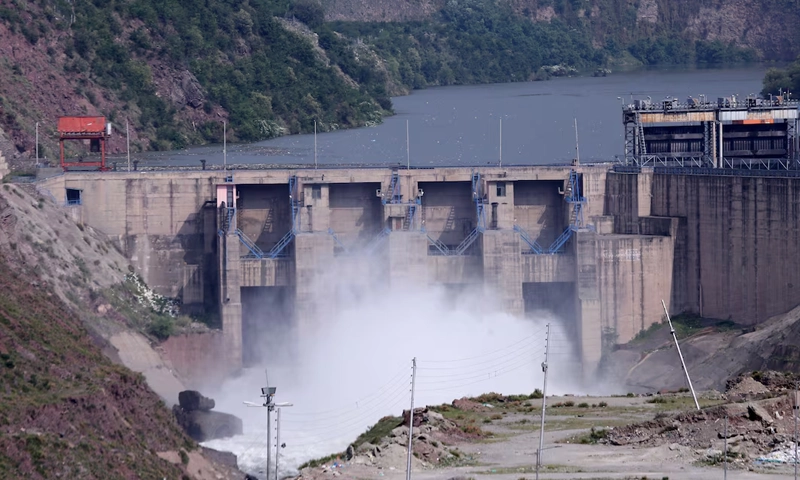
ISLAMABAD: Pakistan has accused India of deliberately manipulating water flows in the Chenab River, calling the move a renewed attempt to exert pressure through water control in violation of the Indus Waters Treaty (IWT).
According to Pakistani officials, India sharply altered the river’s flow pattern earlier this month by first releasing an unusually large volume of water and then drastically reducing it to critically low levels for several days. Authorities say the sudden fluctuations amount to a breach of the 1960 IWT, which governs the use of shared rivers between the two countries.
An article published by Geo News quoted officials as saying that during the night of December 7 and 8, India released around 58,000 cusecs of water into the Chenab at Head Marala. However, from December 13 onward, the flow was cut back to between 870 and 1,000 cusecs, a level that persisted for four consecutive days until December 17. By comparison, average Chenab flows during this period over the past decade have ranged between 4,000 and 10,000 cusecs.
Pakistan maintains that the sharp reduction followed the emptying and refilling of the Baglihar Hydropower Project reservoir, a practice Islamabad says is not permitted under the treaty for run-of-the-river projects on rivers allocated to Pakistan.
The Court of Arbitration, in a ruling issued on August 8, 2025, had earlier stated that manipulating river flows through the filling and emptying of such dams amounts to the weaponisation of water and is inconsistent with treaty obligations.
Confirming the latest development, Pakistan’s Commissioner for Indus Waters, Syed Mehr Ali Shah, said he had formally raised the issue with his Indian counterpart through an official letter. He stressed that the Indus Waters Treaty remains fully enforceable, despite India’s earlier declaration to suspend it unilaterally.
Shah said the correspondence included technical and scientific evidence showing that the changes in water flow were not the result of natural or climatic factors, but rather deliberate operational decisions at the Baglihar Dam. He added that Pakistan has sought detailed data on water releases under Article VI of the treaty and has called for immediate consultations under Article VIII to address the issue.
India had announced the suspension of the IWT on April 23, 2024, but the Court of Arbitration later clarified that no party has the authority to unilaterally put the treaty on hold, reaffirming its legal validity.
Pakistan’s National Security Committee, which met a day after India’s announcement last year, rejected New Delhi’s stance and warned that any attempt to block or divert Pakistan’s share of water would be viewed as an act of aggression.
Islamabad says it will continue to pursue the matter through diplomatic and legal channels to safeguard its water rights under the treaty. Meanwhile, Foreign Office (FO) spokesperson Tahir Hussain Andrabi said that Pakistan’s Indus water commissioner has written a letter to his Indian counterpart “seeking clarification on the matters in accordance with the procedures enshrined in the IWT”.
You May Also Like