- Farah Mehjabeen
- October 26, 2026
Pakistan aims for $21bn reserves, 4pc-plus growth this fiscal year: Aurangzeb
-

- WEB DESK
- September 4, 2026
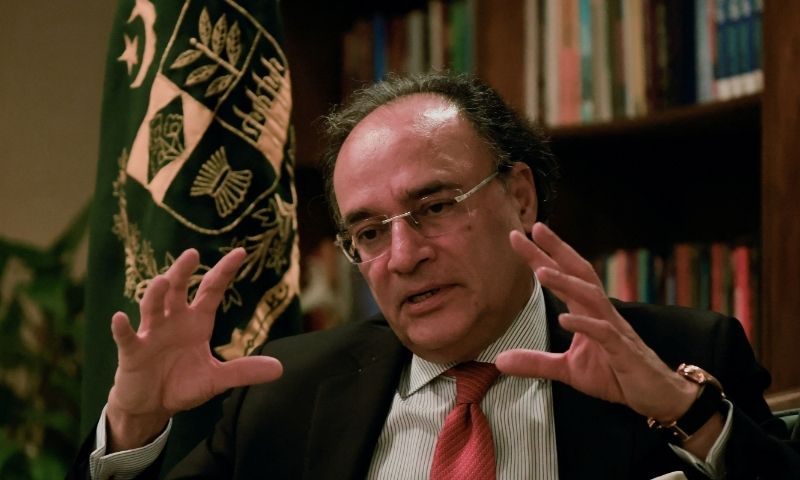
ISLAMABAD: Finance Minister Muhammad Aurangzeb said Pakistan was targeting economic growth of “north of 4 per cent” this fiscal year, along with an increase in foreign exchange reserves to $21 billion by the end of the fiscal year, up from $18.4 billion recorded on June 30.
Speaking at an a conference organised by Asian Development Bank (ADB) on Friday, Aurangzeb said the higher reserves target would provide “a little over three months of import cover,” which he called “a good international benchmark,” though he added there was “more to do as we consolidate the discussion on that front.”
The minister said Pakistan’s recent return to international capital markets, culminating in a $3 billion Eurobond issuance, reflected growing external validation of the country’s economic direction. “There have been three sovereign upgrades since April of ’25, and on the back of that, that has allowed us to get back into the international capital markets after a hiatus of about four years,” he said. He noted that the order book for the transaction was “twice” the $3 billion printed, with a diverse investor base “from Asian investors to Middle Eastern investors and majority being from Europe and the US.” He called this “a great vote of confidence in terms of our direction of travel as far as the economy is concerned.”
Aurangzeb said structural reforms across energy, state-owned enterprises (SOEs) and privatisation were “all interlinked,” explaining that progress on SOE restructuring and privatisation depended on parallel reforms in the energy sector. He said 27 transactions had been submitted to the privatisation commission, while some loss-making entities had been shut down entirely. “Those SOEs, very frankly, they were beyond repair, we decided to close them down. Whether it was Utility Stores Corporation, whether it was Passco, whether it’s PWD, these are tough decisions but you have to move on as we move forward,” he said.
On public finances, the minister said debt servicing costs and pension reforms remained a priority, alongside the broader push to reduce reliance on the banking sector for government borrowing. “Our reliance or over-reliance on the banking system with respect to our borrowing needs, that is not sustainable anymore,” he said, adding that the government was working to diversify its investor base through insurance companies and non-bank financial institutions.
He pointed to a recent collaboration between the Ministry of Finance, JazzCash and the State Bank of Pakistan enabling retail investors to buy government securities through mobile apps with as little as Rs5,000. He said the government also planned to introduce a rupee-denominated, dollar-settled bond, for which institutions had already been mandated, and was exploring the tokenisation of existing Eurobond debt, following a model used in Hong Kong.
Aurangzeb also addressed the ongoing regional conflict, saying the government was “watching very carefully” its potential impact on growth and inflation projections. “Our leadership is at it. We are not giving up because it’s absolutely critical not only for Pakistan’s economy, not only for the region, but for the global economy,” he said, noting that the prime minister and the chief of defence forces were engaging with both the Trump administration and Iranian leadership.
On privatisation, Aurangzeb praised the leadership of the privatisation adviser, citing the recent PIA transaction as a positive signal, particularly the participation of large local conglomerates. “We always talk about FDI, but the reality is the local investors first have to come in and show their determination that they want to work, they want to invest, and that is it then sends a huge signal to the external world with respect to the foreign investors,” he said. He added that competing local consortiums were increasingly willing to collaborate rather than “work in isolation,” a trend he said would support upcoming transactions involving power distribution companies (DISCOs).
The minister also welcomed the government’s decision to bring public-private partnerships under the privatisation commission, saying he had asked the privatisation adviser to draw on the Sindh government’s experience with successful PPP projects to help shape a similar approach at the federal level. He said efforts were also underway to strengthen the private equity and venture capital ecosystem, noting that discussions on the related taxation and regulatory framework were ongoing.
You May Also Like