- WEB DESK
- November 7, 2026
Pakistan aims to boost auto exports to $6 billion under new policy
-

- WEB DESK
- November 7, 2026
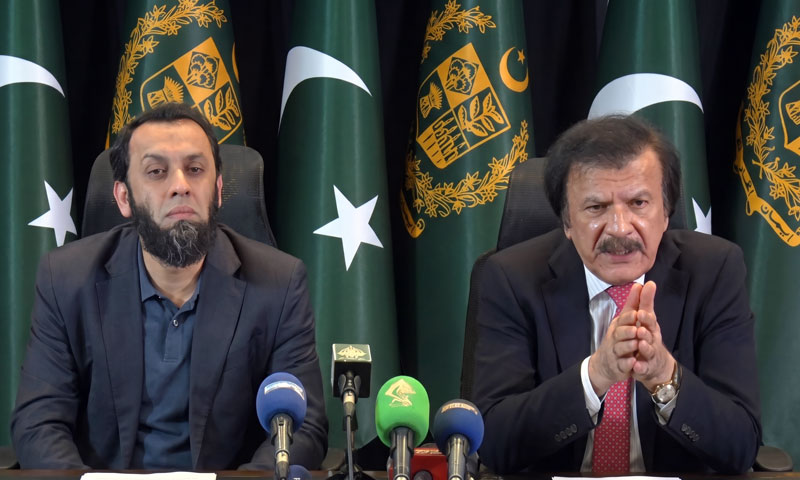
ISLAMABAD: Pakistan aims to increase its automotive exports to $6 billion over the next five years under a new auto policy that links export incentives to mandatory localisation targets, Special Assistant to the Prime Minister on Industries Haroon Akhtar Khan said on Saturday.
Addressing a press conference in Islamabad alongside Information and Broadcasting Minister Attaullah Tarar, Akhtar said the government had introduced a reward-and-penalty mechanism to encourage manufacturers to increase exports and use more locally produced components.
He said Pakistan recorded around $200 million in automotive exports in the previous financial year, most of which came from auto parts manufacturers, while vehicle manufacturers contributed very little.
The government aims to raise cumulative automotive exports to $6 billion over the next five years, a target set by Prime Minister Shehbaz Sharif, he added.
Under the new policy, manufacturers achieving their export targets will receive a 5% drawback of local taxes and levies (DLTL), with an additional 10% incentive on incremental exports.
However, companies failing to meet their export commitments will face penalties and will also be required to fulfil minimum localisation targets.
Akhtar said manufacturers would not qualify for export rebates unless they achieved both their export and local manufacturing targets.
Localisation and lower vehicle prices
The special assistant said the policy also aimed to reduce vehicle prices by lowering duties on completely knocked-down (CKD) kits, components, sub-components and raw materials.
He said reducing the cost of imported inputs would bring down manufacturing costs and make vehicles more affordable for consumers.
The duty reductions would be implemented gradually over five years, bringing Pakistan’s automotive tariff structure closer to internationally competitive levels.
The government was particularly focused on making vehicles in the 850cc, 1,000cc and 1,300cc categories more affordable, alongside electric vehicles (EVs) priced below $15,000, he added.
Akhtar said original equipment manufacturers (OEMs) would not be allowed to collect advance payments exceeding 20% of a vehicle’s price.
He added that the policy would make localisation mandatory for manufacturers, with specific targets to be introduced for local production.
EV incentives and financing
Akhtar said the government was offering several incentives to accelerate electric vehicle adoption, with a target of making 30% of all new cars and two-wheelers electric within five years.
He said the government was proposing three sales tax categories for electric vehicles: 1% for fully electric vehicles, 6% for range-extended electric vehicles and 9% for plug-in hybrid electric vehicles.
However, the proposed sales tax rates are subject to approval from the International Monetary Fund (IMF).
Electric vehicles would also be exempt from capital value tax (CVT), withholding tax and federal excise duty (FED), provided their prices remained below $50,000.
The government would increase financing limits for electric vehicles from Rs3 million to Rs10 million and extend the repayment period from three to five years, Akhtar said.
To address concerns over limited charging infrastructure, the government would introduce viability gap financing for charging stations. Sales tax on charging station equipment would be reduced to 1%, while customs duty would be brought down to zero.
Additional safety standards
Akhtar said the government would introduce 45 additional vehicle safety standards under the United Nations’ WP.29 framework.
He said the measures would bring Pakistan’s automotive safety requirements closer to international standards.
The policy would also introduce third-party audits every six months to ensure transparency in its implementation.
Akhtar said the incentives would be structured to maintain revenue neutrality under Pakistan’s IMF programme, with revenue collected from vehicles powered by internal combustion engines rather than electric vehicles.
However, vehicles with engine capacities of 1,000cc or below would not face additional taxes under the proposed arrangements, as the government considered them affordable options for lower- and middle-income households.
The revenue generated would also support export rebates, research and development, and vendor development.
Akhtar said the government wanted local auto parts manufacturers to become part of international automotive supply chains rather than limiting their sales to domestic vehicle assemblers.
He also cited growth in electric vehicle sales following the launch of the National Electric Vehicle Policy.
Electric two-wheeler sales increased from 60,000 in 2024-25 to 242,000 in 2025-26, while electric four-wheeler sales rose tenfold over the same period, he said.
He added that electric two-wheeler sales during July and August were five times higher than in the corresponding period last year.
Tarar criticises decades of protectionist policies
Speaking at the press conference, Attaullah Tarar said the new policy had been formulated after extensive consultations with stakeholders, analysis of technical data and a comparative study of different international models.
He criticised decades of protectionist policies that kept import duties on vehicles high to support the local automotive industry, saying manufacturers had failed to deliver sufficient innovation and value addition despite receiving government protection.
Tarar said the industry had also failed to provide ordinary consumers with the facilities and features available to vehicle buyers in other countries.
He said the protection had been extended to local manufacturers for decades with the expectation that they would improve vehicle quality and introduce modern features, particularly for ordinary consumers.
The information minister said Prime Minister Shehbaz Sharif was particularly focused on providing affordable transport options for middle- and lower-middle-income households.
He pointed to the growing use of electric scooters and motorcycles, particularly among women travelling to schools, colleges and workplaces.
Tarar said the shift towards electric vehicles was necessary to reduce carbon emissions, improve the environment and help Pakistan earn carbon credits.
He also said greater adoption of electric vehicles could reduce the country’s import bill by lowering dependence on imported fuel.
The minister said rising import costs placed an additional burden on ordinary citizens, while fluctuations in petrol prices affected households across the country.
He argued that reducing the import bill would allow the government to redirect resources towards public facilities, infrastructure, healthcare and education.
Tarar stressed that localisation was essential for the policy to deliver its intended benefits, saying vehicles needed to be manufactured domestically and exported to create jobs and strengthen the economy.
He added that the government had also ensured that petrol-powered vehicles with engine capacities below 1,000cc, including 800cc cars, were not subjected to additional taxes under the policy.
You May Also Like

- AFP
- November 7, 2026