- Web Desk
- 16 Minutes ago
Pakistan among key partners in Washington’s global push for critical minerals
-

- Web Desk
- Feb 05, 2026
WASHINGTON: The United States has launched a sweeping diplomatic and financial effort to reshape the global market for critical minerals and rare earth elements, signaling a major escalation in Washington’s campaign to secure supply chains essential to advanced technologies and national security.
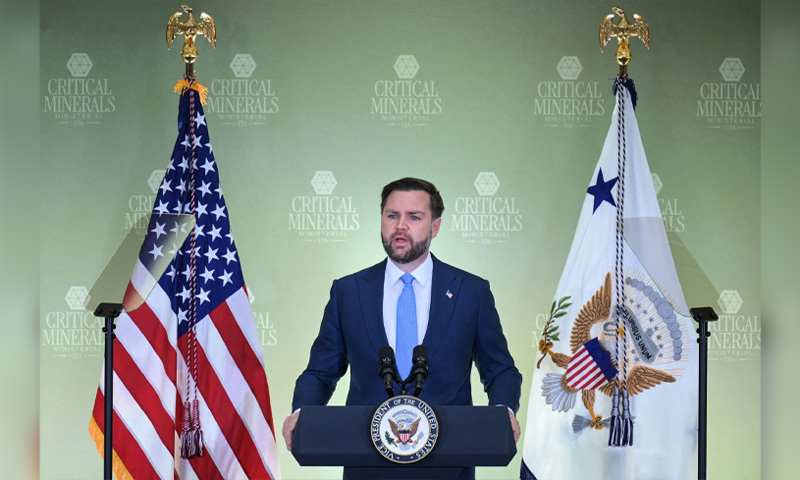
Secretary of State Marco Rubio, joined by Vice President JD Vance and senior Cabinet officials, hosted representatives from 54 countries and the European Commission at the 2026 Critical Minerals Ministerial. The meeting brought together 43 foreign and other ministers from across the Americas, Europe, Africa, the Middle East, and the Indo-Pacific, making it one of the largest international gatherings ever focused on critical minerals.
US officials warned that global production and processing of minerals such as lithium, cobalt, rare earths, graphite, and nickel remains highly concentrated, leaving supply chains vulnerable to political pressure and disruption. Demand for these materials is expected to surge as artificial intelligence, robotics, batteries, autonomous systems, and advanced manufacturing expand.
“This market has become a strategic vulnerability,” the State Department said, adding that the United States and its partners aim to build diversified, secure, and resilient supply chains from extraction through processing and end use.
NEW AGREEMENTS AND GLOBAL COORDINATION
During the ministerial, the United States signed 11 new bilateral critical minerals frameworks or memorandums of understanding with countries including Argentina, Ecuador, Guinea, Morocco, Peru, the Philippines, the United Arab Emirates, and Uzbekistan. Ten similar agreements were concluded over the previous five months, and negotiations have been completed with 17 additional countries.
US officials said the agreements establish cooperation on pricing challenges, market transparency, investment standards, financing access, and closing gaps in priority supply chains, marking what they described as unprecedented leadership in critical minerals diplomacy.
Secretary Rubio also announced the creation of the Forum on Resource Geostrategic Engagement (FORGE), which will replace the Minerals Security Partnership. FORGE will be chaired initially by the Republic of Korea and will coordinate policy and project-level collaboration among partners to strengthen diversified and secure supply chains.
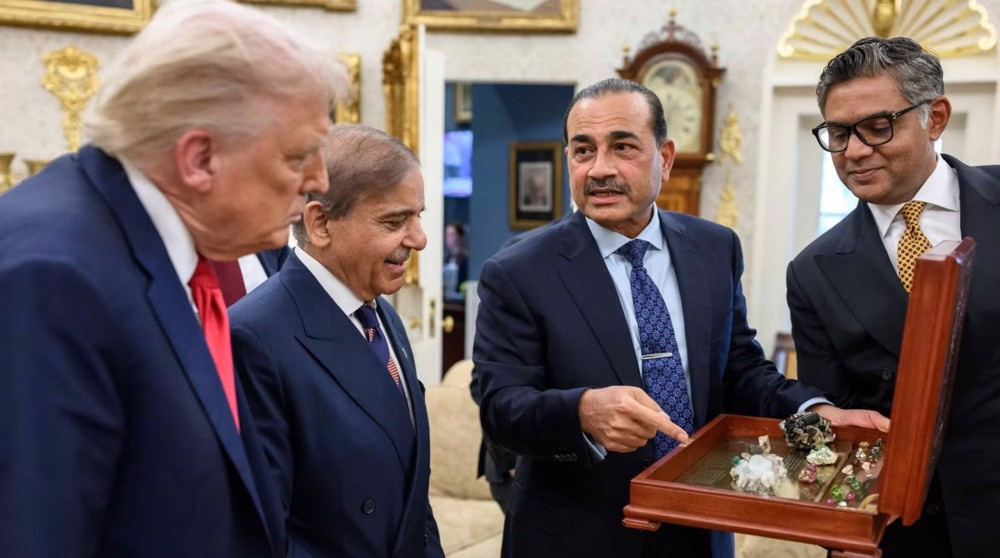
Pakistan has emerged as a notable partner in the US strategy, with Washington highlighting cooperation on copper and gold development as part of broader efforts to diversify critical mineral supply chains. US officials pointed to ongoing and proposed investments in Pakistan as evidence of growing alignment with countries that can provide reliable alternatives to concentrated global mineral markets.
PRIVATE SECTOR ENGAGEMENT AND INVESTMENT
The ministerial followed a February 3 forum that brought together governments and leading private-sector firms. Deputy Secretary of State Christopher Landau witnessed the signing of a memorandum of understanding between Glencore and the US-backed Orion Critical Minerals Consortium tied to a potential acquisition of assets in the Democratic Republic of the Congo.
US officials said the agreement aligns with the US–DRC Strategic Partnership and is intended to encourage greater US investment in Congolese mining while promoting reliable copper and cobalt supplies to the United States. After the ministerial, US officials convened a task force of mining industry leaders to advance priority projects with partner countries.
BILLIONS MOBILISED ACROSS GOVERNMENT
The administration said the US government has mobilized more than $30 billion in letters of interest, loans, investments, and other support for critical minerals projects over the past six months, leveraging significantly larger flows of private capital.
The Export-Import Bank of the United States (EXIM) plays a central role. On February 2, President Trump announced Project Vault, a $10 billion EXIM-backed initiative to establish a domestic strategic reserve for critical minerals – the largest financing in the bank’s history. Over the past year, EXIM has issued $14.8 billion in letters of interest for projects spanning rare earths, lithium, cobalt, nickel, tin, and advanced materials.
The Department of Energy has committed billions more through its Loan Programs Office to lithium, graphite, battery recycling, and advanced materials projects, while also launching new competitive funding programs to advance mining technology, rare earth processing, and battery manufacturing.
The Department of Defense has added equity and debt commitments to domestic and international projects, frequently crowding in substantial private investment.
TRADE AND DEVELOPMENT ALIGNMENT
Internationally, the US International Development Finance Corporation has invested in or is exploring more than $1 billion in critical mineral projects in countries including Brazil, Kazakhstan, and Ukraine, while pursuing partnerships with Gulf and African firms.
The Office of the US Trade Representative announced a new Action Plan on Critical Minerals with Mexico and said the United States, the European Commission, and Japan intend to develop coordinated action plans to bolster supply chain resilience.
Administration officials framed the ministerial as the opening phase of a long-term effort.
“Under the Trump Administration, America is leading the global race for strategic minerals and advanced manufacturing,” the State Department said. “This is only the beginning.”
You May Also Like