
- Reuters
- October 27, 2026
Pakistan-brokered Iran-US framework accord text surfaces
-

- Zafar Ali
- June 18, 2026
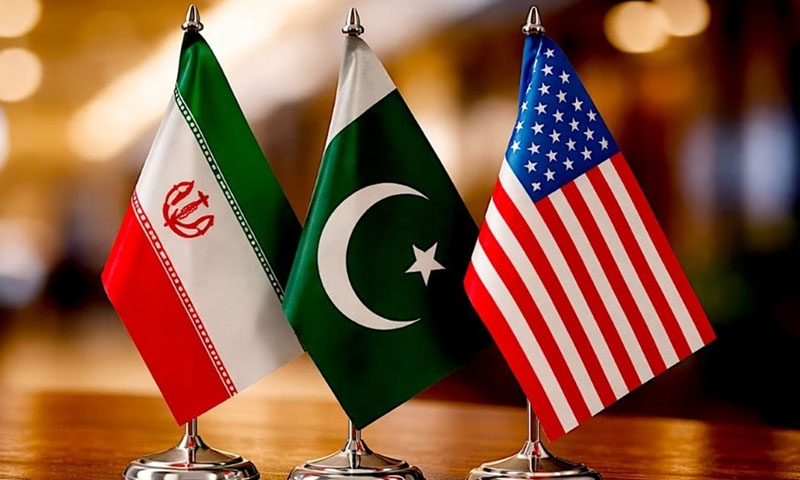
ISLAMABAD: Iran and the United States have reached a landmark preliminary agreement to permanently cease all military operations against each other and their allies, according to the text of a Memorandum of Understanding (MoU) mediated by Pakistan.
The breakthrough, framework document — dubbed the “Islamabad Memorandum of Understanding” —comes ahead of a formal signing ceremony scheduled to take place in Geneva on Friday.
The Pakistan-facilitated agreement aimed at ending months of conflict between the United States and Iran formally came into force on Wednesday after US President Donald Trump and Iranian President Masoud Pezeshkian signed the accord.
Prime Minister Shehbaz Sharif also signed the Memorandum of Understanding (MoU) electronically on Thursday along with the US and Iran in his capacity as a mediator.
Under the goodwill pact, both Washington and Tehran have committed to a strict framework of non-aggression, sanctions relief, nuclear oversight, and a massive $300 billion reconstruction plan in Iran to unwind years of isolation.
The text outlines a 60-day window to finalise a binding peace treaty, which will ultimately be ratified by a mandatory United Nations Security Council resolution.
Cessation of Hostilities and Sovereignty Guarantees
Under the MoU, both countries and their respective allies will immediately and permanently terminate all military actions across all fronts, including an explicit halt to ongoing military operations in Lebanon.
The two sides are legally bound to abstain from any future warfare, military campaigns, threats, or the use of force against one another.
The agreement guarantees the sovereignty and territorial integrity of Lebanon, while compelling both the US and Iran to respect each other’s domestic sovereignty and refrain from interfering in internal affairs.
Naval De-escalation and Maritime Transit
Immediately upon signature, the United States will begin dismantling its naval blockade on Iran, with a binding commitment to lift it completely within 30 days.
Commercial maritime traffic will be gradually restored during this period.
Iran will guarantee the safe and unhindered passage of commercial vessels traveling between the Strait of Hormuz and the Sea of Oman. To facilitate global trade, Iran will waive all tolls and transit fees in these waters for a period of 60 days.
Demining and Troop Pullback
Iran has 30 days to clear all technical and military obstacles, including naval mines, from key shipping lanes.
Furthermore, the US will withdraw its armed forces from territories adjacent to Iran within 30 days of the execution of the final treaty.
Iran will enter into formal bilateral talks with Oman regarding the future administrative and security structure of the Strait of Hormuz.
Sanctions Relief and a $300 Billion Reconstruction Fund
The US will immediately issue executive waivers on sanctions targeting Iranian crude oil, petroleum products, and international financial transactions.
Sequestered or restricted Iranian sovereign assets will be progressively unfrozen and restored to the direct operational control of the Bank of Iran.
A phased, step-by-step lifting of all unilateral and multilateral sanctions imposed by the United Nations, the European Union, and the United States will be carried out in accordance with the timelines established in the final treaty.
The United States and its regional partners will design a massive $300 billion joint investment project aimed at the reconstruction and economic development of Iran.
The framework requires the US to issue all necessary regulatory permits and operational licences to execute the plan within 60 days.
Nuclear Non-Proliferation and Implementation
Iran explicitly confirms that it will neither acquire nor develop nuclear weapons.
Both parties have agreed to a regulated system to safely dispose of or transfer Iran’s existing stockpiles of enriched fissile material under the strict monitoring of the International Atomic Energy Agency (IAEA).
Until the final treaty is signed, Iran will maintain its current nuclear programme status, while the United States is barred from implementing new economic sanctions or deploying additional military personnel to the Middle East region.
A joint administrative mechanism comprising representatives from both sides will be established to monitor compliance and oversee the implementation of the MoU’s transitional clauses.
You May Also Like

- WEB DESK
- October 27, 2026
Punjab govt moves to provide life insurance cover to employees
- AFP
- October 27, 2026
