- WEB DESK
- 1 Hour ago
Pakistan charts new export path to Central Asia via Iran transit route
-

- Sadia Basharat
- Apr 14, 2026
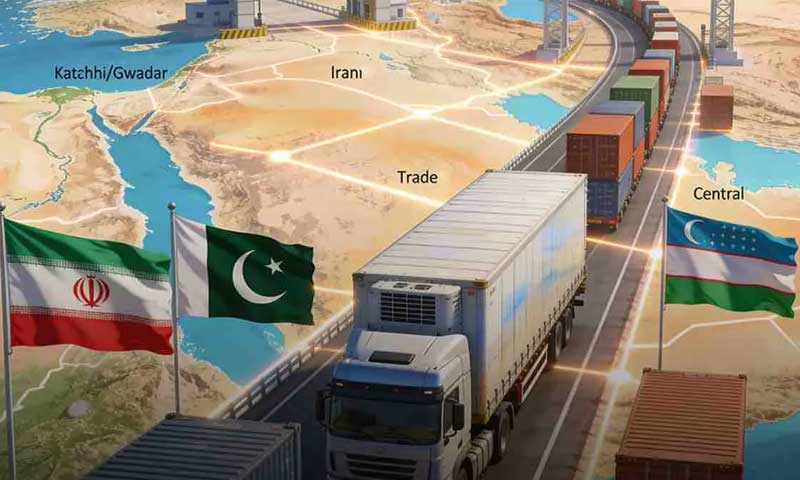
WEB DESK: Pakistan has marked a significant milestone in its regional connectivity ambitions with the successful dispatch of the first export shipment to Uzbekistan via a newly operationalised transit corridor through Iran.
In a move designed to bypass traditional logistical bottlenecks, a fleet of refrigerated trucks carrying frozen beef departed from Karachi, crossing the Gabd-Rimdan border into Iran.
The consignment is currently en route to Tashkent under the Transports Internationaux Routiers (TIR) convention, a global customs transit system that allows for the seamless movement of goods across international borders with minimal regulatory delay.
Strengthening regional trade links
The activation of this land route represents a strategic shift in Islamabad’s trade policy, providing a reliable alternative to the often-volatile routes through Afghanistan.
By utilizing the Gabd-Rimdan crossing located near the deep-sea port of Gwadar Pakistan is effectively linking its maritime infrastructure with the landlocked markets of Central Asia.
Experts suggest that this corridor will serve as a vital artery for the export of perishable goods, including meat and agricultural produce, which require the speed and efficiency that this streamlined path provides.
Furthermore, the route significantly enhances the commercial utility of both Karachi and Gwadar ports, positioning them as primary gateways for regional commerce.
Economic integration and the CPEC framework
This development is a practical extension of Pakistan’s broader economic vision, which seeks to transform the country into a hub of regional integration under the evolving framework of the China-Pakistan Economic Corridor (CPEC).
By securing access to a market of over 70 million consumers in Central Asia, Pakistan is poised to diversify its export portfolio and reduce its dependence on traditional shipping lanes.
The success of this inaugural shipment is expected to pave the way for increased bilateral trade volumes, fostering deeper diplomatic and economic ties between Islamabad, Tehran, and Tashkent, while ensuring more cost-effective transit for the nation’s burgeoning export sector.
You May Also Like