- WEB DESK
- October 25, 2026
Pakistan hits back at Afghan, Indian claims in UNSC right of reply
-

- Sadia Basharat
- June 9, 2026
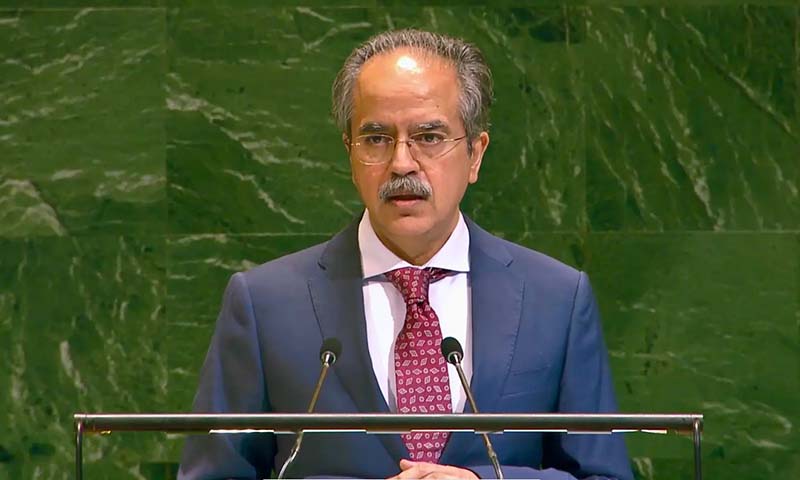
WEB DESK: Pakistan’s Permanent Representative to the United Nations, Ambassador Asim Iftikhar Ahmad, exercised the right of reply on 8 June 2026 during a UN Security Council meeting on Afghanistan, firmly rejecting allegations made by the Afghan representative and launching a sharp critique of India’s position.
Speaking after interventions from various Council members and other participants, Ambassador Ahmad clarified that Pakistan’s recent counterterrorism operations inside Afghanistan, including those conducted in March, were strictly limited to terrorist and military support infrastructure used by groups attacking Pakistan.
He emphasised that the strikes targeted drone storage, technical support facilities, and ammunition depots, and were not directed against the Afghan people.
“No hospital or drug rehabilitation centre or civilian facility was targeted,” the ambassador stated, adding that video footage of all six strikes was promptly released by Pakistan’s Ministry of Information, showing secondary explosions consistent with ammunition storage sites. He dismissed contrary claims as “propaganda” not based on facts.
International concerns and criticism of India
The ambassador noted that the Council discussion, informed by the Secretary-General’s report, highlighted broad international expectations from the Afghan Taliban regime, including inclusive governance, respect for human rights particularly those of women and girls and a firm commitment that Afghan soil would not be used for terrorism against other countries. He observed widespread concern and calls for compliance on these issues.
In his remarks, Ambassador Ahmad responded pointedly to the Indian representative’s intervention, which he described as using the platform to target Pakistan under the guise of highlighting humanitarian and development efforts.
He accused India of pursuing a singular goal of destabilising Pakistan by supporting terrorist groups such as the Tehrik-i-Taliban Pakistan (TTP) and the Baloch Liberation Army (BLA), also known as Fitna al Hindustan.
The ambassador highlighted that while the Afghan representative had condemned terrorism emanating from Afghan soil targeting Pakistan, the Indian side had failed to do so.
He described India’s recent expressions of support for the Taliban as a policy shift timed to counter Pakistan’s successful operations against terrorist hideouts allegedly backed by Indian elements.
Broader Accusations and Call for Introspection
Ambassador Ahmad further alleged that India’s actions reflect a pattern of hostility, including its support for terrorism not only against Pakistan but elsewhere, citing reported extraterritorial activities.
He reminded the Council of India’s “illegal occupation” of Jammu and Kashmir, documented human rights violations there, and its treatment of minorities within India.
Referring to India’s invocation of international law, democracy, and sportsmanship, the ambassador contrasted these claims with India’s record, including alleged breaches of Security Council resolutions and the Indus Waters Treaty.
He advised India to engage in introspection, discontinue policies of “aggression, subversion and sabotage” against neighbours, and address its domestic challenges rather than spreading disinformation.
Pakistan, he concluded, would continue to take all necessary measures in self-defence against threats to its national security.
The right of reply came amid ongoing tensions over cross-border militancy and differing regional positions on the Afghan situation.
You May Also Like